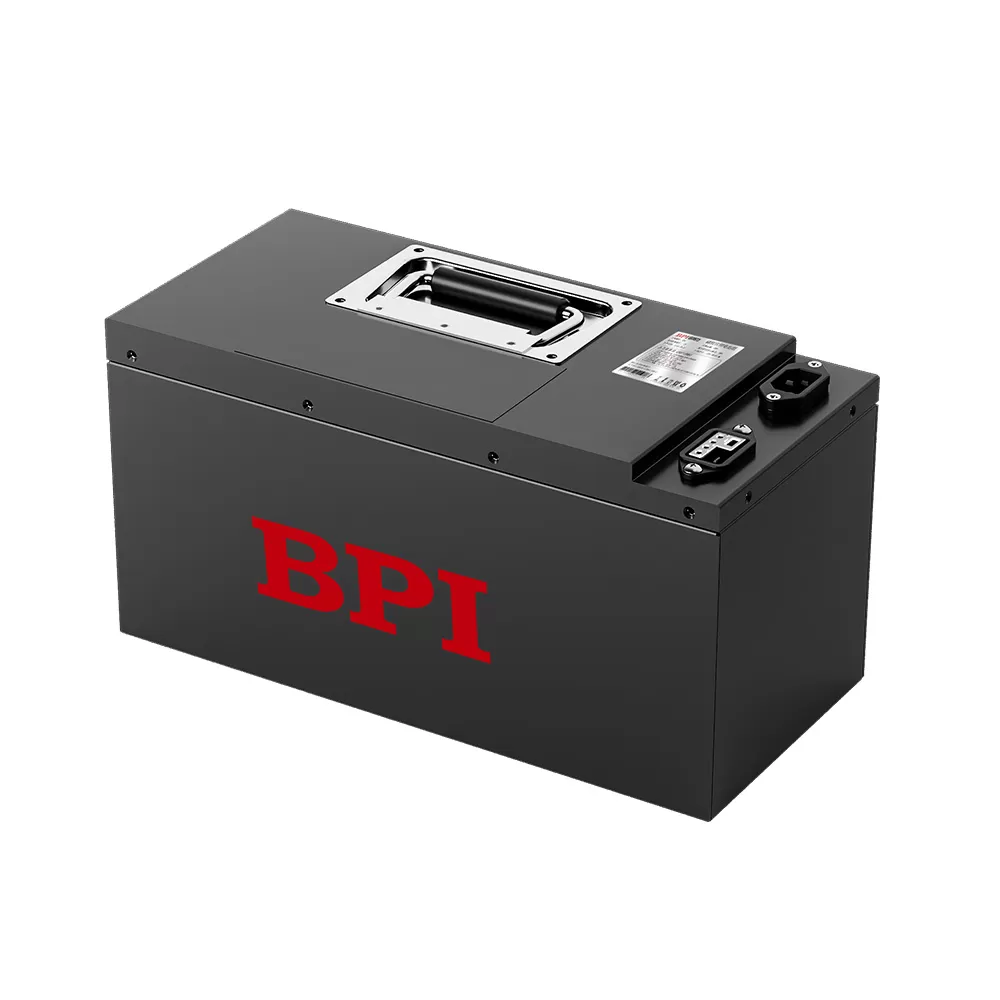
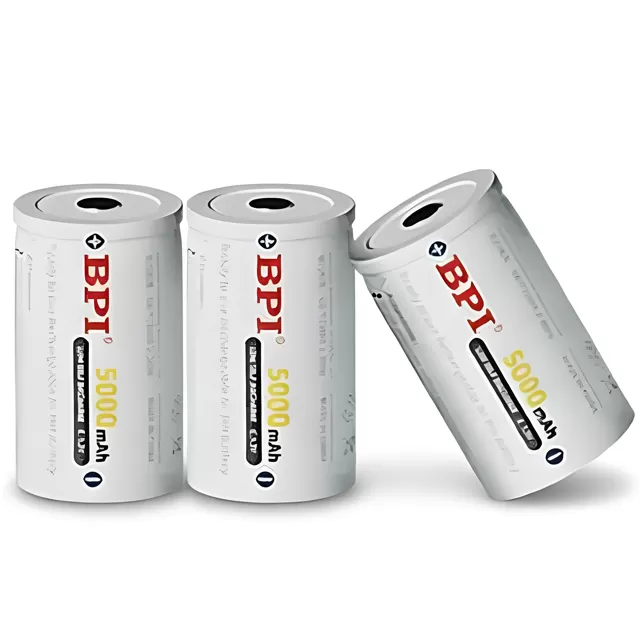
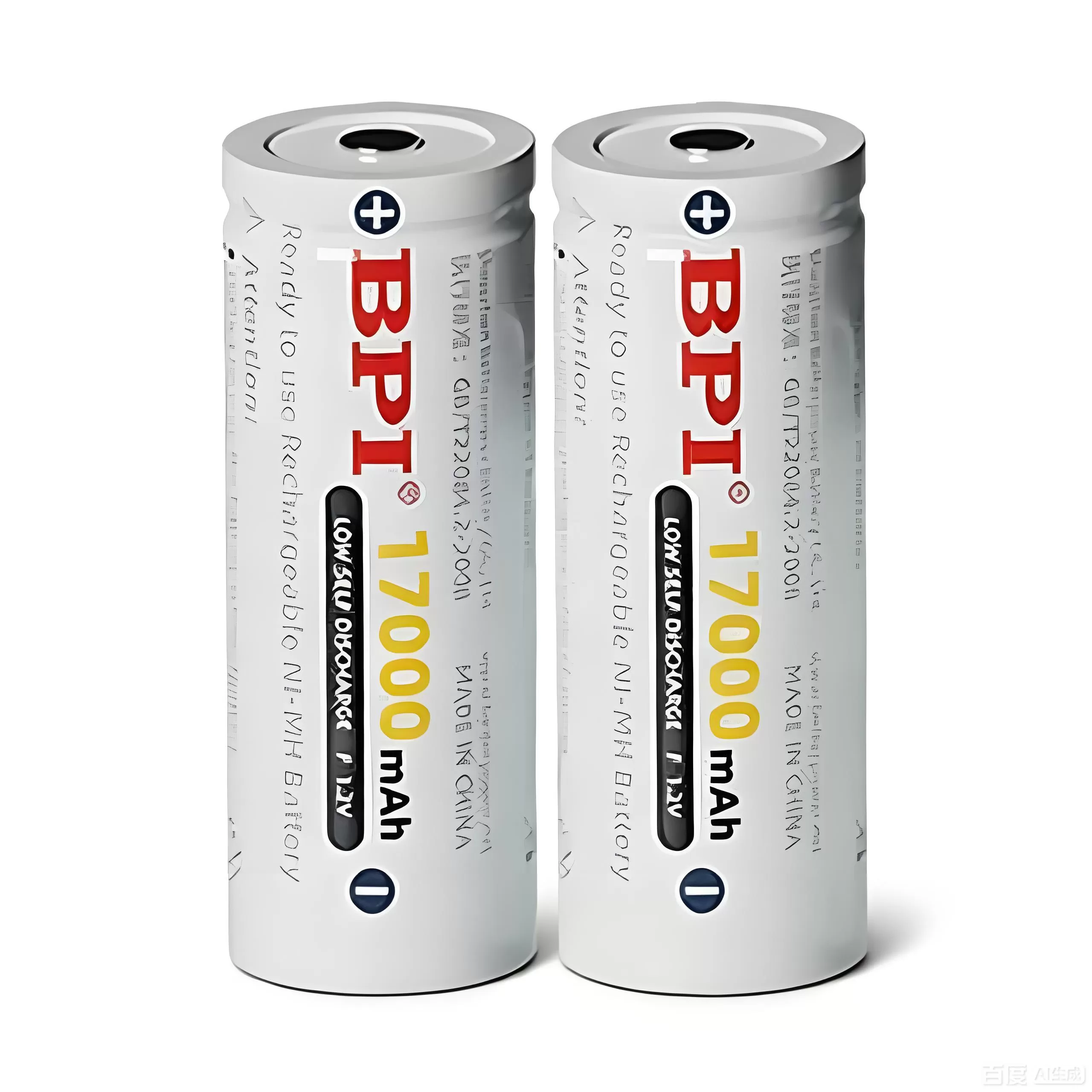
A wheelchair battery replacement is a matched battery pack or battery set used to restore safe, reliable power for electric wheelchairs, power chairs and mobility devices. Choosing the right replacement is not only about buying the same size battery. Buyers must confirm voltage, amp-hour capacity, chemistry, charger compatibility, connector type, discharge current, safety protection and long-term cost.
BPI Battery develops rechargeable battery solutions for electric wheelchairs, including battery packs for folding electric wheelchairs, standard power chairs and heavy-duty mobility equipment. With battery manufacturing experience since 2002, BPI supports OEM/ODM battery pack development for mobility, healthcare and industrial applications.
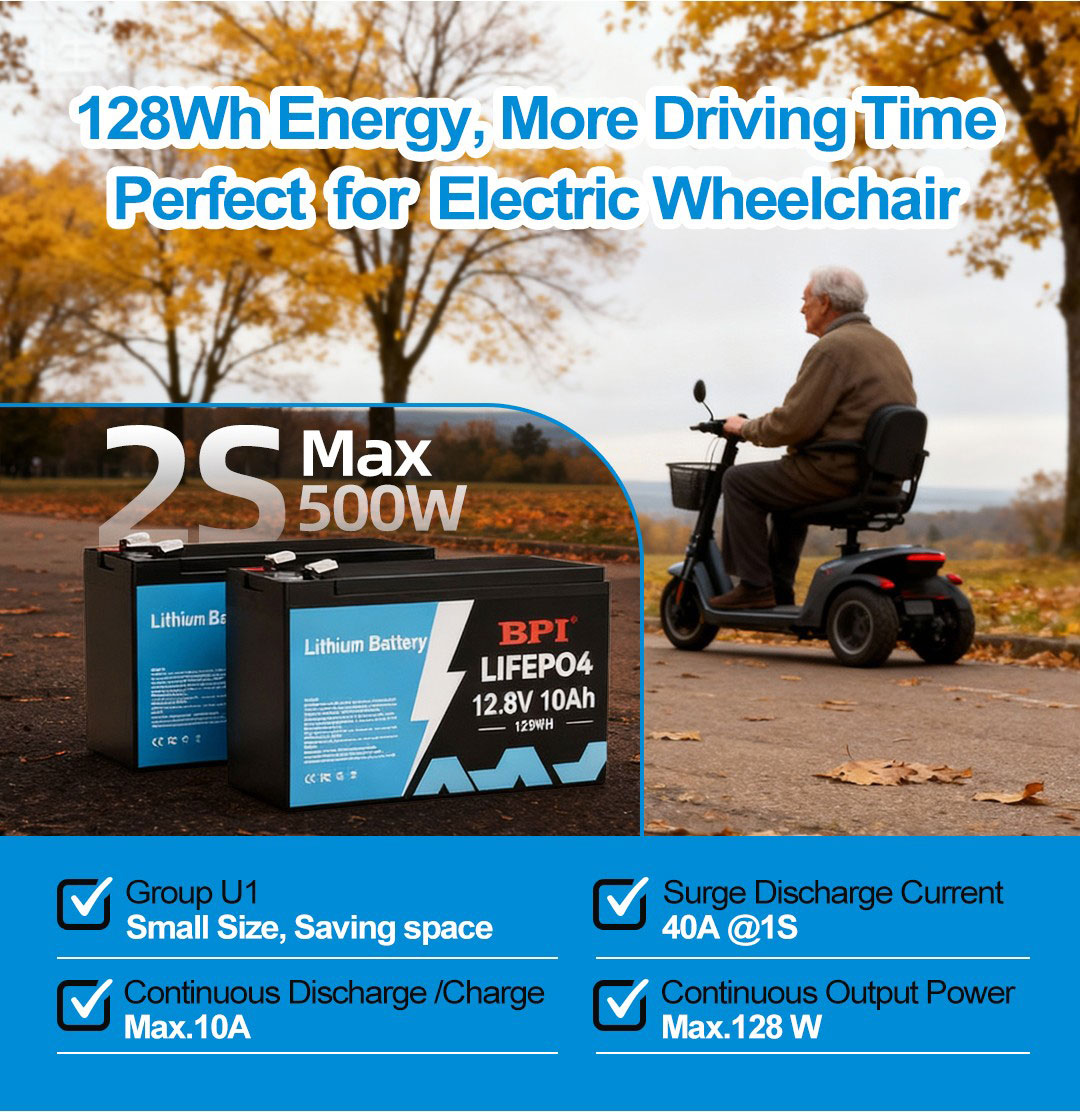
Battery voltage is the electrical platform that the wheelchair controller, motor and charger are designed to use. Many electric wheelchairs use 24V systems, often built from two 12V batteries connected in series, while some compact or customized models may use lithium battery packs with different internal configurations.
Before replacing a wheelchair battery, check the original battery label, user manual and charger output. A wrong voltage can cause controller faults, weak motor output, charging failure or safety risks. For example, if the wheelchair is designed for a 24V battery system, installing a mismatched battery pack may damage the electronics or fail to deliver enough current under load.
BPI’s electric wheelchair battery solutions include common pack examples such as 24V 20Ah and 48V 52Ah, and the company supports customized voltage, capacity, discharge current, BMS functions, enclosure dimensions and connectors for new equipment or replacement projects. You can learn more from BPI batteries for electric wheelchairs.
Battery capacity is the amount of stored energy available to power the wheelchair before recharging. In wheelchair batteries, capacity is often shown in amp-hours, such as 20Ah, 35Ah or 52Ah, and a higher Ah rating usually means longer runtime if voltage and operating conditions are similar.
Runtime is affected by user weight, driving speed, terrain, tire condition, temperature, battery age and how often the wheelchair climbs ramps or starts and stops. A larger battery may provide longer travel distance, but it can also increase weight, size and cost. For replacement projects, the safest approach is to match the original approved capacity range unless the wheelchair manufacturer or battery engineer confirms that an upgrade is suitable.
For OEMs and maintenance buyers, the key question is not only “How far can it go?” but “Can the battery deliver stable current without voltage sag?” Wheelchair motors may require higher current during acceleration, turning and slope climbing. This is why cell quality, pack structure and BMS design are important in addition to capacity.
Battery chemistry is the cell technology used inside the wheelchair battery, and it determines weight, safety, cycle life, charging behavior and replacement cost. Common wheelchair battery types include sealed lead-acid, Ni-MH, lithium-ion and LiFePO4, depending on the wheelchair design.
| Battery Type | Main Advantage | Limitation | Suitable Replacement Scenario |
|---|---|---|---|
| Sealed lead-acid | Low initial cost, widely used | Heavy, lower energy density | Older power chairs designed for SLA batteries |
| Ni-MH | Stable discharge, good safety, no lithium transport restrictions in many cases | Lower energy density than lithium | Safety-focused healthcare and mobility packs |
| Lithium-ion | Lightweight, high energy density | Requires correct BMS and charger | Compact wheelchairs with lithium-ready design |
| LiFePO4 | Long cycle life, strong thermal stability | Higher upfront cost | Long-life replacement packs and lead-to-lithium upgrade projects |
It is important not to change battery chemistry casually. Permobil’s wheelchair battery guidance notes that power chairs are designed for specific battery types, and switching from SLA to lithium is often not recommended unless the chair is designed for it. Pride Mobility also emphasizes using wheelchair batteries of the same type, chemistry and amp-hour capacity.
BPI offers multiple battery pack options, including cylindrical battery packs, Li-Po packs, aluminum shell packs, LiFePO4 packs and Ni-MH packs. BPI battery packs support voltage systems from 12.8V to 72V and can use 18650, 21700 and prismatic cell formats depending on application needs. For more product options, visit BPI battery packs and cylindrical battery packs.
Replacement cost is the total cost of the battery, charger compatibility, installation, service life, safety protection and future replacement frequency. A low-cost battery can become expensive if it has poor cycle life, unstable output, weak protection or incompatible charging behavior.
The charger must match the battery chemistry and voltage. Lead-acid, lithium-ion, LiFePO4 and Ni-MH batteries have different charging profiles. Using the wrong charger may reduce battery life or create safety risks. For lithium-based wheelchair batteries, the pack should include BMS protection for overcharge, over-discharge, overcurrent, short circuit and temperature control.
Safety also matters during storage and transport. The FAA guidance for wheelchairs and mobility devices states that batteries should be securely attached, protected from damage, and protected against terminal short circuit during air transport. For B2B replacement programs, this means battery pack structure, connector protection, labeling and documentation should be considered from the beginning.
BPI’s Ni-MH battery packs offer wide-temperature adaptability from -40℃ to 105℃ and 750+ cycles, while BPI LiFePO4 packs are promoted for 2000+ cycles, lower weight and lead-acid replacement applications. These numbers show why buyers should compare lifecycle cost instead of only unit price.
A safe wheelchair battery replacement starts with the original specification: voltage, capacity, chemistry, dimensions, connector and charger. For individual users, replacing batteries with the manufacturer-approved type is usually the safest choice. For wheelchair OEMs, distributors and service companies, a customized battery pack can improve runtime, weight, safety protection and long-term reliability.
BPI Battery provides rechargeable battery solutions for electric wheelchairs, medical devices and custom battery pack applications. If your project requires a replacement pack or OEM wheelchair battery solution, prepare the original battery label, wheelchair model, voltage, capacity, connector photo, charger output and expected runtime before requesting a quote.
Check the original battery label, wheelchair manual and charger output. The replacement should match voltage, chemistry, capacity range, connector type, size and charging requirements.
Only if the wheelchair, charger and controller are designed or approved for lithium batteries. Many power chairs are designed for a specific chemistry, so chemistry changes should be confirmed by the manufacturer or battery engineer.
Many power wheelchairs use 24V systems, often made from two 12V batteries in series. Some lithium-based systems may use customized pack voltages depending on the wheelchair design.
A higher Ah rating can increase runtime if the battery fits the wheelchair and charger, but runtime also depends on terrain, user weight, motor load, temperature, tire condition and battery age.
In two-battery systems, both batteries should normally be the same type, chemistry, capacity and age. Mixing old and new batteries can cause imbalance, reduced runtime and charging problems.
BPI Battery supports rechargeable battery pack manufacturers, custom battery packs, Ni-MH packs, LiFePO4 packs and lithium battery solutions for electric wheelchairs and healthcare devices, helping OEMs and buyers match voltage, capacity, runtime, safety and connector requirements.