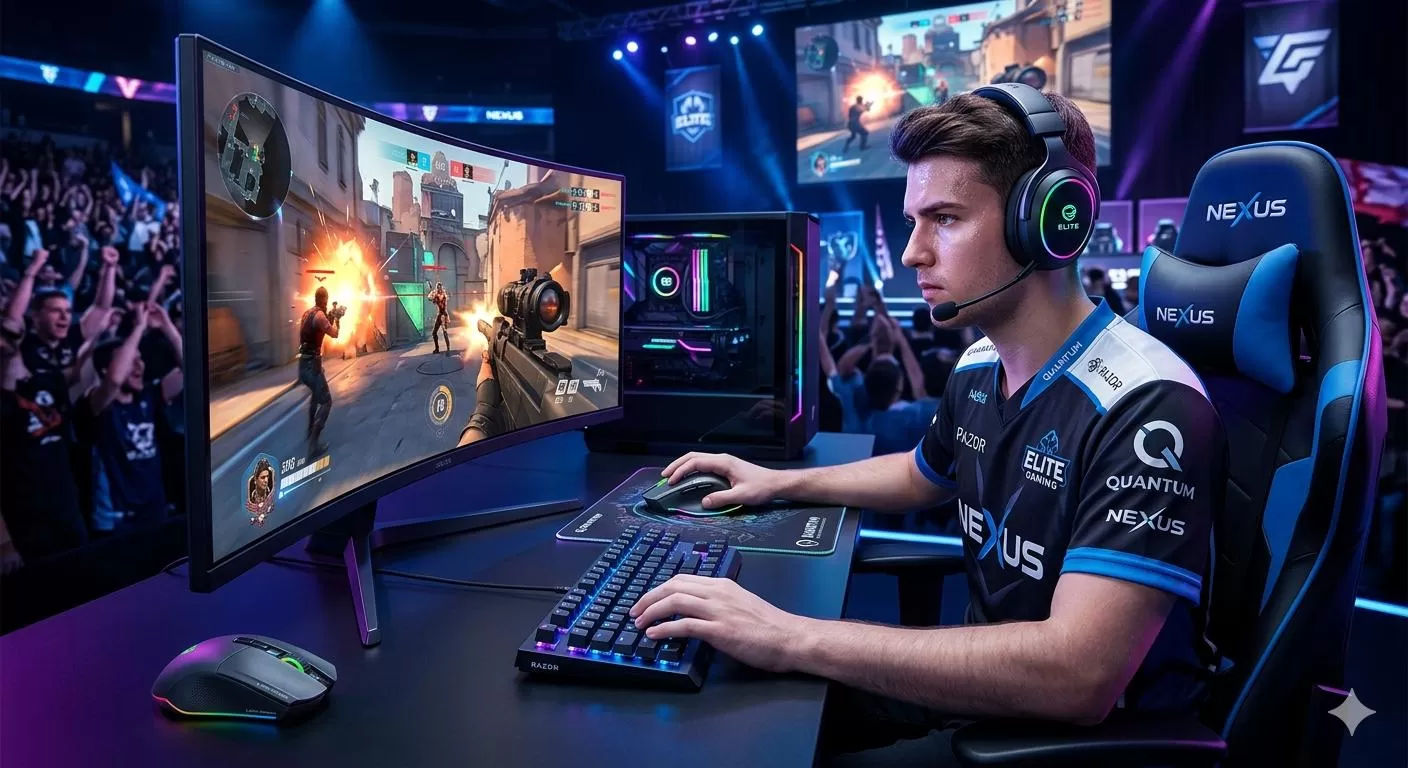
Esports peripherals are competitive equipment that integrates ultimate response speed and ergonomic design. Simply put, they are the "sensory extension" of esports athletes on the digital battlefield. In professional esports, high-end gaming, and premium office scenarios, wireless peripherals free players from cable constraints and deliver "unrestricted operation". Equipped with high-refresh-rate sensors, low-latency wireless technology, and precise key feedback, they capture player intent and execute commands in real time, making millisecond‑level sniping more accurate and long tournaments of up to ten hours more comfortable.
Whether an esports peripheral is "fast", "stable", and "long‑lasting" depends entirely on the critical lithium battery hidden inside the chassis, which powers the entire high‑speed signal system.
In recent years, driven by breakthroughs in wireless transmission technology and the booming global esports industry, high-performance peripherals have shifted from "wired dominance" to full wireless and lightweight application. On professional stages, wireless mice have become standard for reducing drag and improving precision; in the high-end custom market, wireless mechanical keyboards deliver clean, highly responsive desktop setups. Esports peripherals are no longer just input tools but core gear that determines victory and elevates competitive experience.
Against this background, the power system is not only an energy supplier but also the core of product reliability and stability. The industry focuses on three key questions: Can the battery supply power steadily without signal interference during high-frequency, large‑amplitude recoil control? Can the capacity support full high‑intensity tournament consumption? Can the battery remain absolutely safe when protection space is reduced for ultimate lightweight design?
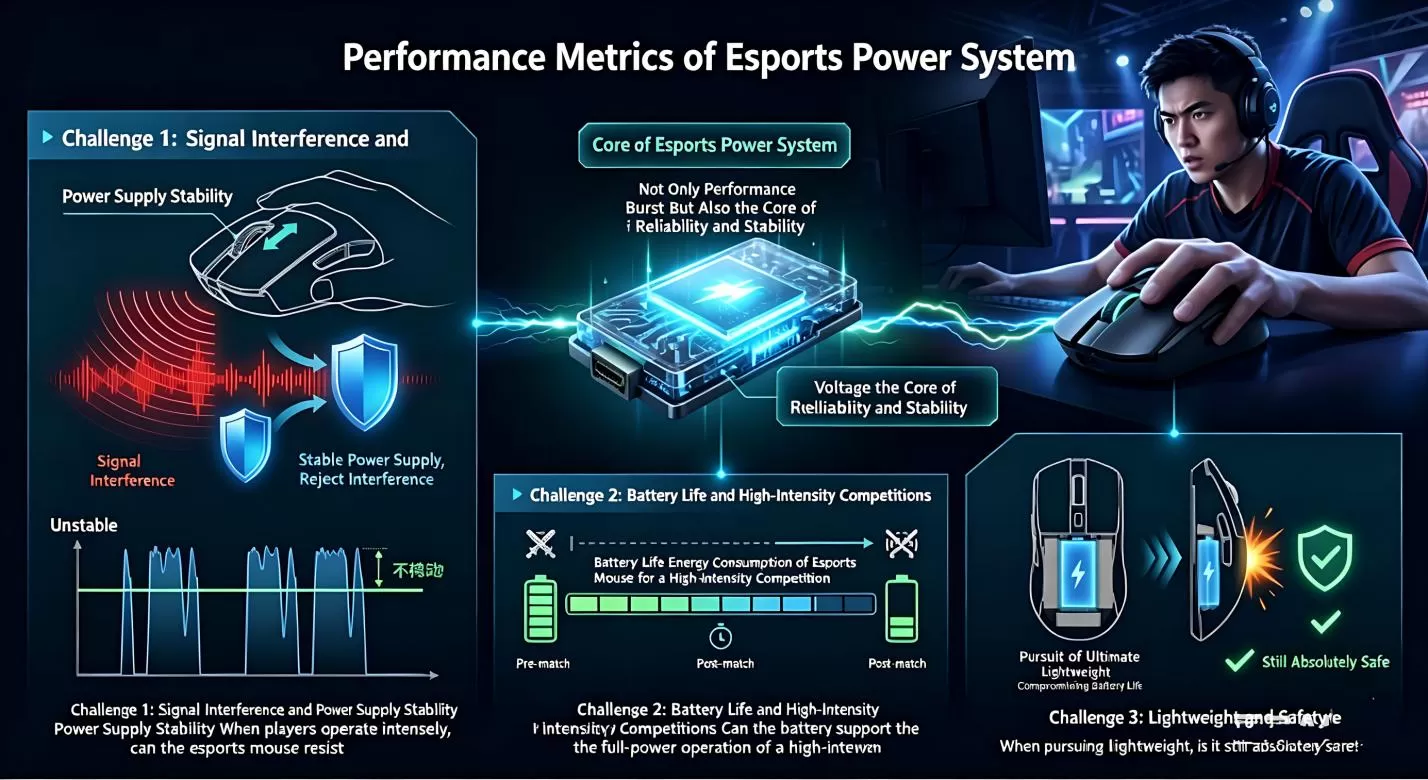
This trend has driven the evolution of lithium batteries for esports peripherals from "general‑purpose cells" to solutions featuring high energy density, high instantaneous discharge, and intrinsic safety. The stability of the battery and smoothness of discharge voltage have become the cornerstone of winning over core players.
Extremely high consistency: Professional players are highly sensitive to weight. Weight variation between batches must be minimized to maintain consistent mouse center of gravity over time.
High-frequency pulse response: To support 1000Hz or even 8000Hz high return rates, the battery must withstand frequent instantaneous current surges without significant voltage drop.
Ultimate lightweight challenge: Lightweight design is a major trend in esports mice, requiring cells to minimize volume and weight while maintaining capacity.
Harsh anti‑vibration environment: Amid frequent clicks, rapid swipes, lifts, and drops, the battery must maintain stable internal structure under continuous physical shock.
Among various technical routes, high-performance lithium-ion batteries have become the mainstream solution for esports peripherals thanks to high energy density and mature protection mechanisms.
| Core Demand | Solution Provided by Lithium Batteries |
|---|---|
| Long‑lasting gaming | High energy density material system supports dozens of hours of continuous gaming even in limited space. |
| Stable voltage | Provides a smooth discharge platform, ensuring no frame drops caused by voltage fluctuations even at low power. |
| Fast recharging | Supports fast‑charging protocols to meet emergency quick recharging needs. |
| Intelligent management | Works with a sophisticated BMS for real‑time battery status monitoring, preventing overcharge and over‑discharge to extend lifespan. |
For safe body‑close use, BPI adopts cells certified to UN38.3, IEC62133 and integrates patented electrolyte technology to achieve intrinsic safety.
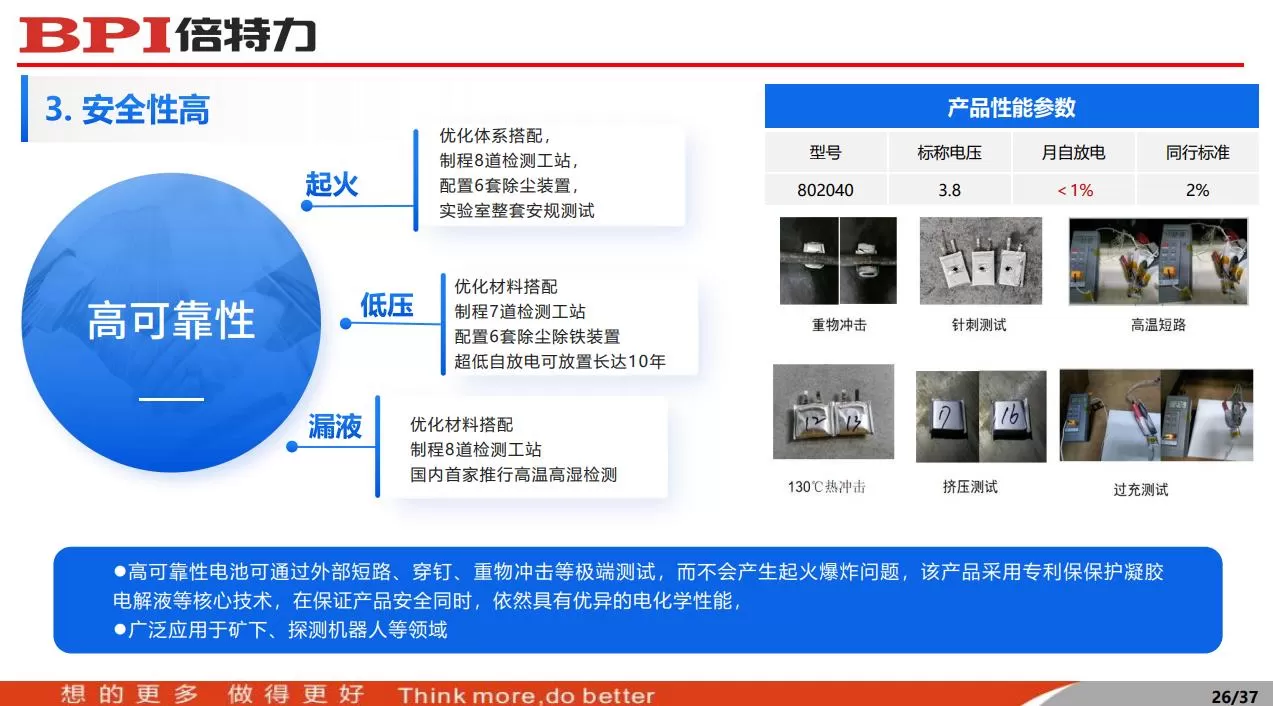
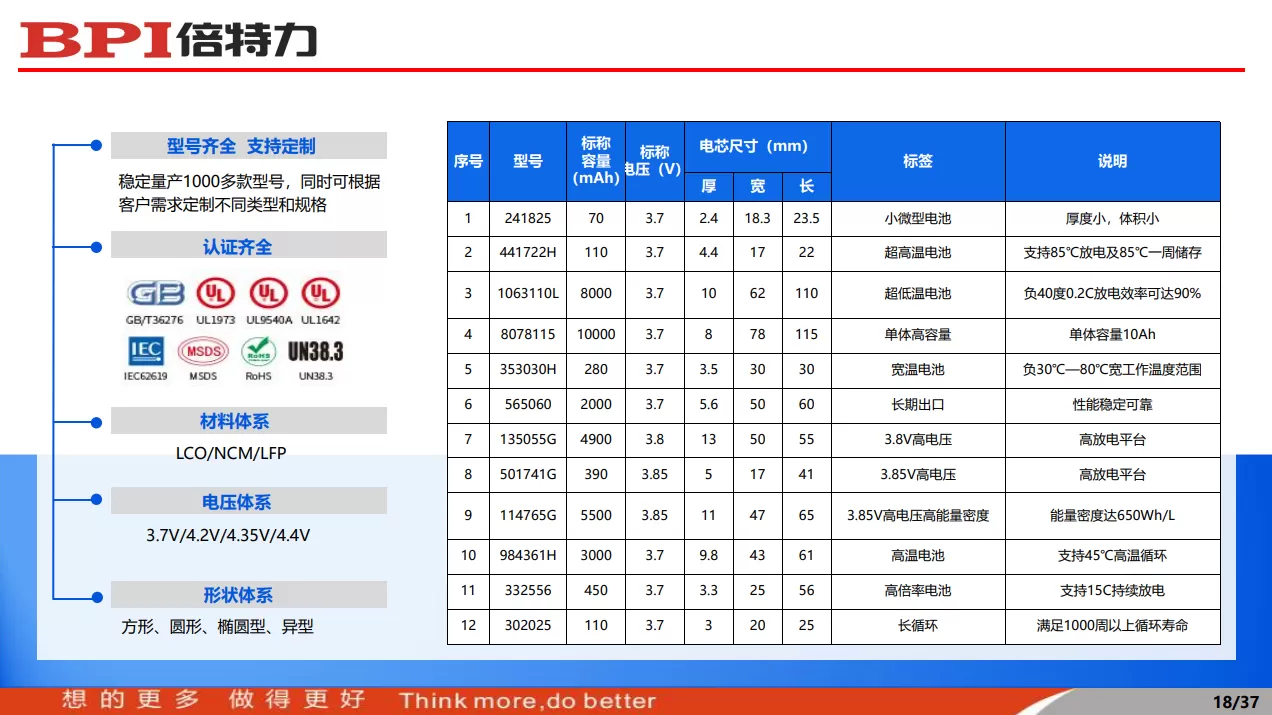
With years of deep expertise in lithium batteries, BPI has accumulated rich experience in ultra‑miniaturization, lightweight design, and high‑rate performance. The company offers solutions covering high‑voltage LCO (lithium cobalt oxide) systems and high‑safety NCM systems, customizable for different peripheral scenarios:
BPI emphasizes cell consistency control and multi‑level safety redundancy from the design stage, ensuring no swelling, leakage, or sudden performance degradation during long‑term high‑intensity competitive use.
1. Misuse of ordinary consumer‑grade pouch cells: Ordinary batteries are not screened for high‑frequency charge–discharge consistency, easily leading to center‑of‑gravity shift or false rated capacity after long‑term use, impairing professional players' performance.
2. Over‑reliance on rated capacity while ignoring voltage consistency: Many low‑cost cells suffer severe voltage drop below 30% capacity, reducing sensor accuracy and causing competitive errors.
In advanced wireless esports peripherals, the most critical components are often hidden. BPI lithium batteries provide solid support in these "invisible yet victory‑critical" positions with stable, reliable, and predictable performance.
We strictly follow the ISO 9001 quality management system and IATF 16949 automotive‑grade control principles to ensure every cell performs at its ultimate potential on the competitive stage.
For esports peripheral batteries, choose excellence, choose reliability, choose BPI!
Q: Do your products meet certification requirements for global markets?
A: Yes. All BPI products comply with major international safety certifications including UN38.3, UL, CE, and PSE, supporting Chinese brands in global expansion.Q: Is the capacity honestly rated? What quality control guarantees are provided?
A: We adhere to strict actual capacity rating. Each batch undergoes full inspection of internal resistance, voltage, and capacity, with factory test reports provided.