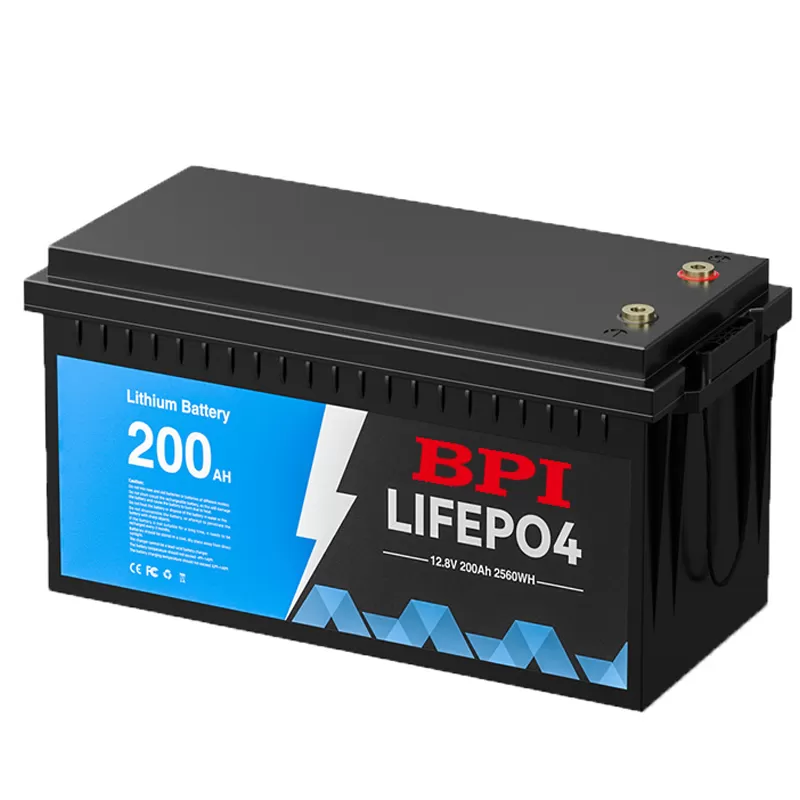
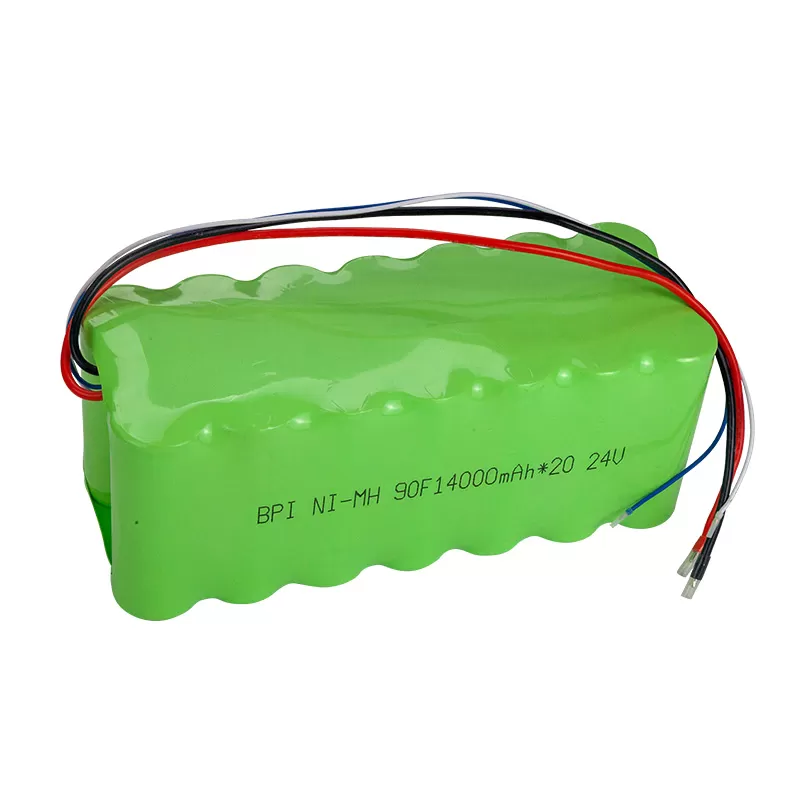
In emergency lighting systems, lithium batteries are far more than simple backup power; they are critical components guaranteeing stable power supply during blackouts, fire outbreaks and fire evacuation. Many purchasers find a prominent problem: certain batteries operate reliably for 5 to 8 years, whereas others suffer capacity decline, insufficient lighting duration, charging failure, swelling or protection board breakdown within only 1–2 years. According to BPI, such lifespan gaps stem from the combined effects of cell quality, BMS configuration, structural design, charging regulation, manufacturing craftsmanship and service environment.
First of all, cell quality lays the foundation for battery service life. Among lithium batteries, Grade-A cells with superior consistency maintain steady capacity, internal resistance, voltage platform and low self-discharge, delivering mild performance degradation during long-term float charging or periodic discharging. In contrast, low-cost options often adopt inadequately sorted, inconsistent, overstocked or unqualified cells. Though functional initially, their capacity degrades rapidly after prolonged standby, charge-discharge cycles and high-temperature exposure. During production of emergency light batteries, BPI implements strict cell consistency screening, capacity testing, internal resistance inspection and aging verification to secure stable long-term output.
Secondly, emergency light batteries feature distinctive operating conditions. Unlike power cells for power tools or e-vehicles that undergo daily high-current discharge, these batteries stay in standby or float-charged status most of the time and only discharge upon power failure. Seemingly mild, this mode imposes stringent requirements on long-term stability. Excessively high charging voltage accelerates cell aging, while insufficient cut-off voltage results in inadequate emergency lighting runtime. To achieve a 5–8 year service life, BPI tailors charging voltage, cut-off threshold, protection parameters and capacity margin according to practical application instead of copying generic lithium battery designs.
BMS protection boards constitute another decisive factor for durability. Most premature battery failures originate from faulty protection circuits rather than damaged cells. Inaccurate overcharge protection, abnormal over-discharge recovery, excessive static power draw and insufficient heat-resistant electronic components all trigger malfunctions after long-term operation. Installed in shopping malls, factories, warehouses, stairwells and underground parking lots, emergency lights endure variable temperature, humidity, dust and unstable grid power that impair PCM durability. BPI customizes matched BMS solutions based on equipment working current, charging mode, standby period and installation surroundings to cut standby failure risks.
Temperature is an easily overlooked factor accelerating lithium battery aging. Batteries confined inside sealed lamp housings, close to heat sources or in poorly ventilated spaces undergo rapid capacity loss, swelling, leakage and PCM damage. Reasonable structural layout, reserved internal cooling space, heat-isolated installation plus high-temperature-resistant cells and materials effectively extend service life. During pre-project evaluation, BPI thoroughly reviews lamp inner layout, mounting position, operating temperature and heat dissipation to guarantee multi-year stable operation.
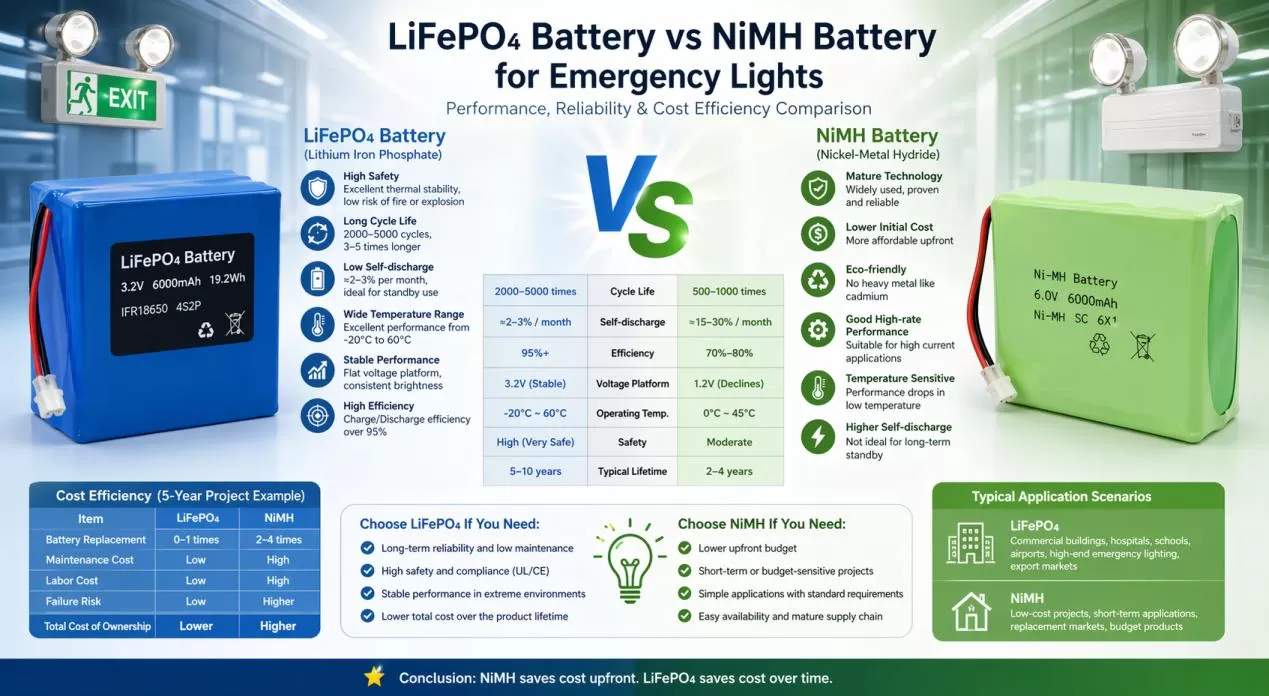
Capacity margin design also affects real-world durability. Some manufacturers minimize cell capacity to slash costs; newly-produced units satisfy 90/120/180-minute emergency runtime, yet fail compliance after gradual capacity decay. Reliable solutions reserve appropriate surplus capacity to sustain standard lighting hours even after years of usage. When customizing batteries, BPI calculates rational capacity configuration referencing lamp power, required emergency duration, operating current, certification rules and target service life to avoid post-sale complaints from insufficient reserved capacity.
Manufacturing craftsmanship directly impacts long-term stability. Despite compact capacity, emergency light batteries demand rigorous standards for spot welding, insulation, short-circuit prevention, wire fixation, housing encapsulation and outgoing inspection. Loose spot welds, improper nickel strip design, damaged wiring and inadequate insulation appear fault-free initially but cause cold joints, rising internal resistance and abnormal overheating over years. BPI carries out full-process checks including cell sorting, weld inspection, BMS functional testing, charge-discharge cycling and aging screening to reduce aftersales defects induced by production flaws.
Certifications and standard tests reflect product reliability. Emergency lighting batteries need compliance with UN38.3, MSDS, CE, RoHS, IEC and other global regulations covering safety and transportation. While certifications cannot fully guarantee a 5–8 year lifespan, comprehensive testing eliminates design defects, material flaws and potential safety hazards. For European and American export-oriented orders, BPI prioritizes certification compliance and verified test performance instead of merely focusing on unit price and rated capacity.
Incomplete application data from clients is another major cause of short-lived batteries. Missing parameters such as lamp power, charging voltage, maximum discharge current, installation dimension, ambient temperature, required runtime, wire terminals and certification standards force factories to adopt generic non-optimized designs prone to mismatching faults. Prior to project kickoff, BPI confirms full application details to recommend optimized cell model, capacity, BMS layout, wiring and structural scheme, eliminating lifespan shortages at source.
In conclusion, the 5–8 year service cycle of emergency light lithium batteries is jointly determined by seven elements: cell grade, BMS protection, charging regulation, thermal control, reserved capacity margin, production quality and application matching. Low-priced batteries cut upfront expenditure but lead to higher comprehensive costs from bulk capacity failure, inadequate lighting time and frequent after-sales replacement later. BPI holds that premium emergency lighting batteries are not only functional to light up lamps but capable of steady performance during long standby and sudden blackouts under complex working conditions.