An elevator battery backup is an emergency power system designed to support elevator control, braking, lighting, communication or rescue operation during a power outage. For property owners, elevator manufacturers, maintenance companies and system integrators, the right battery backup is not only about capacity. It must match the elevator’s voltage platform, required runtime, discharge current, safety design and local code requirements.
BPI Battery provides rechargeable battery solutions for emergency elevator backup systems, including Ni-MH battery packs and customized battery pack designs for reliable standby power. As a rechargeable battery manufacturer founded in 2002, BPI supports OEM/ODM battery development for applications where safety, stable output and long service life are important.
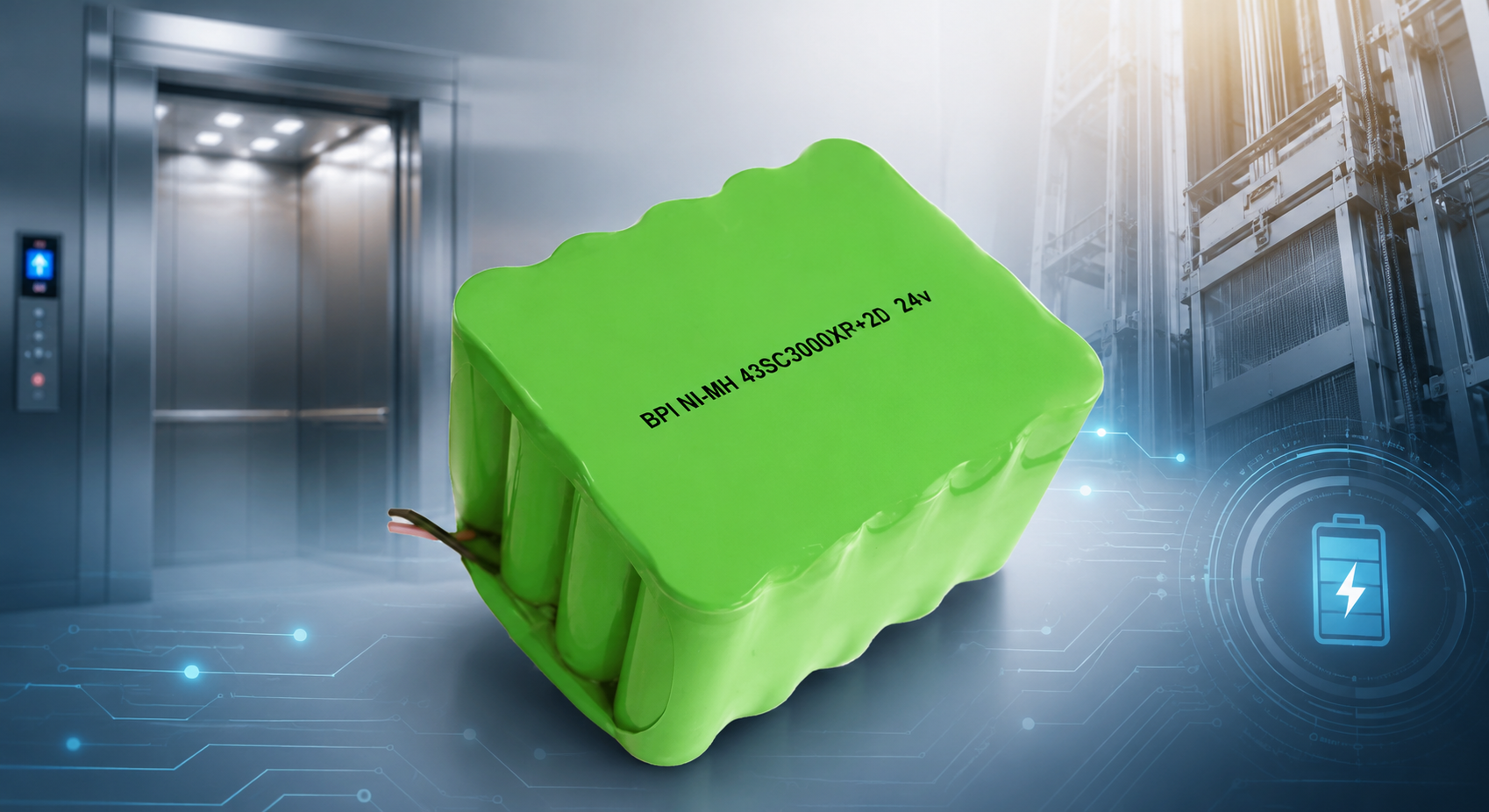
Voltage selection means choosing a battery pack voltage that matches the elevator backup circuit, controller, inverter, brake release unit or emergency rescue device. Common elevator backup systems may use low-voltage DC platforms such as 12V, 24V, 36V or 48V, while larger systems may require higher-voltage battery packs connected to a dedicated backup power unit.
The first step is to confirm what the battery must power. Some systems only support emergency lighting, alarm and communication. Others support automatic rescue operation, allowing the elevator to move slowly to the nearest floor and open the door. These two use cases have very different power demands.
For basic control and lighting backup, the voltage and current demand may be relatively low. For rescue operation, the battery must support a short period of high discharge current. This is why high-rate battery chemistry, connector design, wire gauge and protection circuit design matter as much as nominal voltage.
Battery capacity is the stored energy available to support elevator backup loads for a required time. A simple sizing method is to multiply backup load power by required runtime, then add a design margin for aging, temperature, conversion loss and safety reserve.
For example, if an emergency rescue device requires 500W for 10 minutes, the basic energy demand is about 83Wh. In practice, engineers often add 20% to 40% margin because batteries lose usable capacity over time and inverter or DC-DC conversion is not 100% efficient. If the battery also powers lights, alarms, ventilation or communication modules, those loads must be included.
For many elevator backup applications, runtime is not the same as “normal elevator operation.” A battery backup may only need to support controlled landing, door opening, communication and emergency lighting. However, codes and project specifications can vary by country, building height, fire safety design and elevator type. The ASME A17.1/CSA B44 elevator safety code is a key reference for North American elevator safety requirements, while emergency lighting requirements are often considered together with fire and life safety rules such as NFPA 101.
Battery chemistry selection means choosing the cell type that best balances discharge current, safety, lifecycle, size, weight and cost. Elevator backup systems commonly use lead-acid, Ni-MH, lithium-ion or LiFePO4 batteries depending on the design target.
| Battery Type | Typical Strength | Limitation | Best-Fit Elevator Backup Use |
|---|---|---|---|
| Lead-acid | Low initial cost, mature technology | Heavy, larger size, shorter cycle life | Basic standby backup where weight is not critical |
| Ni-MH | Good safety, stable discharge, strong high-rate options | Lower energy density than lithium | Emergency rescue devices and high-reliability backup packs |
| Lithium-ion | High energy density, compact size | Requires strong BMS and thermal design | Compact backup units with space limits |
| LiFePO4 | Long cycle life, stable chemistry, good safety profile | Higher upfront cost than basic lead-acid | Long-life backup and energy storage applications |
BPI Battery’s elevator backup solution highlights Ni-MH battery packs for safety, long cycle life and stable performance. For projects that require lithium-based designs, the battery pack should include BMS protection for overcharge, over-discharge, short circuit, overcurrent and temperature control. For stationary battery installations, engineers may also refer to IEC 62485-2 safety requirements during system planning.
Elevator battery backup cost is the total cost of the battery pack, protection system, charger, enclosure, certification support, installation, maintenance and replacement cycle. A cheaper battery may become expensive if it has poor cycle life, weak high-current discharge, unstable quality or limited supplier support.
Key cost factors include pack voltage, capacity, cell chemistry, discharge rate, BMS complexity, flame-retardant housing, connector type, cable length, certification requirements and order quantity. A customized battery pack for an elevator OEM will usually cost more than a standard pack, but it can reduce installation problems and improve long-term reliability.
Buyers should ask suppliers for the following information before quotation: nominal voltage, operating voltage range, rated capacity, peak discharge current, backup runtime target, charging method, working temperature, storage temperature, communication requirement, mechanical size, connector standard and expected service life.
A reliable elevator battery backup supplier is a manufacturer that can match electrical design, safety protection, pack structure and production consistency to the elevator’s emergency operating needs. The supplier should understand both battery performance and the practical installation environment inside elevator systems.
BPI Battery can support OEM/ODM battery pack design, Ni-MH batteries, lithium battery packs, LiFePO4 packs and energy storage solutions. For elevator backup projects, this means buyers can discuss voltage, capacity, discharge current, pack size, connector design and batch production requirements with one battery manufacturer instead of relying only on generic battery products.
For B2B buyers, supplier evaluation should focus on manufacturing capability, quality control, cell consistency, pack testing, engineering support and export experience. A good battery backup is not just a stored-energy component. It is part of the elevator’s safety and reliability system.
Choosing an elevator battery backup requires a balance of voltage compatibility, capacity sizing, runtime target, battery chemistry, protection design and total cost. For simple standby functions, a smaller backup pack may be enough. For automatic rescue operation or high-current emergency landing, buyers need a more carefully engineered battery pack with stable discharge and strong safety protection.
BPI Battery offers rechargeable battery solutions for elevator emergency backup and can support customized pack design for OEMs, elevator equipment suppliers and maintenance system integrators. If your project requires a reliable backup battery, prepare your voltage, load power, runtime and size requirements before requesting a quote.
An elevator battery backup is a rechargeable power system that supports elevator emergency functions during power loss, such as control circuits, lighting, alarm, communication or automatic rescue operation.
Common backup battery voltages include 12V, 24V, 36V and 48V, but the correct voltage depends on the elevator controller, emergency rescue device, inverter or backup power unit design.
Runtime depends on the required function. Emergency lighting and communication may require longer standby support, while rescue operation may only need enough energy to move the car to the nearest floor and open the door.
Ni-MH is often suitable for high-safety and high-rate backup applications, while lithium-ion and LiFePO4 are useful when higher energy density, compact size or long cycle life is required.
Estimate the total backup load in watts, multiply it by runtime in hours, then add a margin for efficiency loss, aging, temperature and safety reserve.
BPI Battery provides rechargeable battery manufacturing, Ni-MH battery packs, lithium battery packs, LiFePO4 packs and OEM/ODM customization, helping elevator equipment suppliers match battery design to voltage, runtime, size and safety requirements.