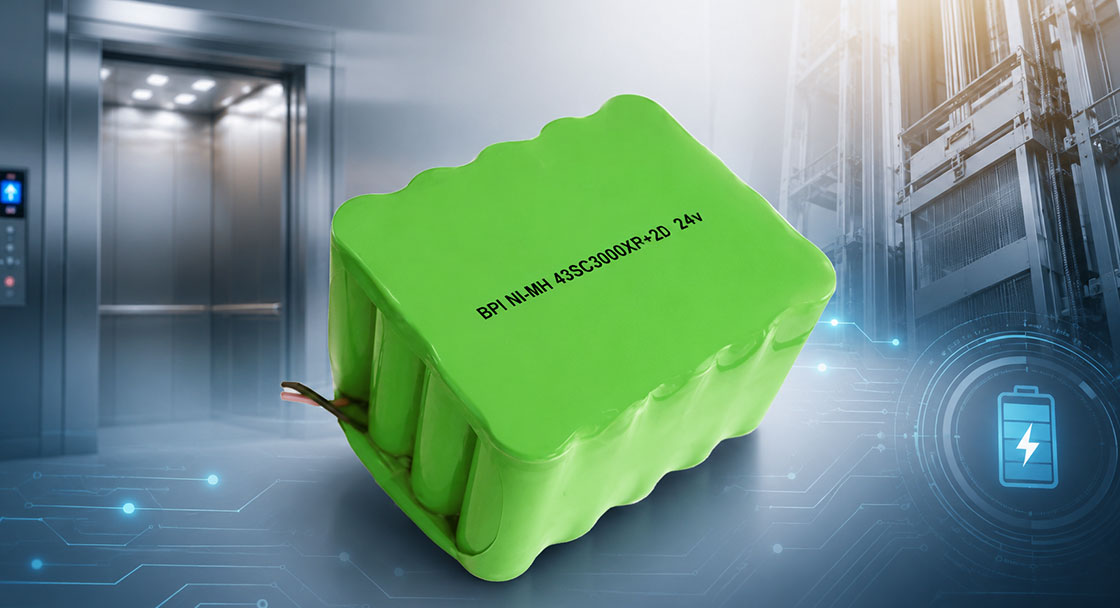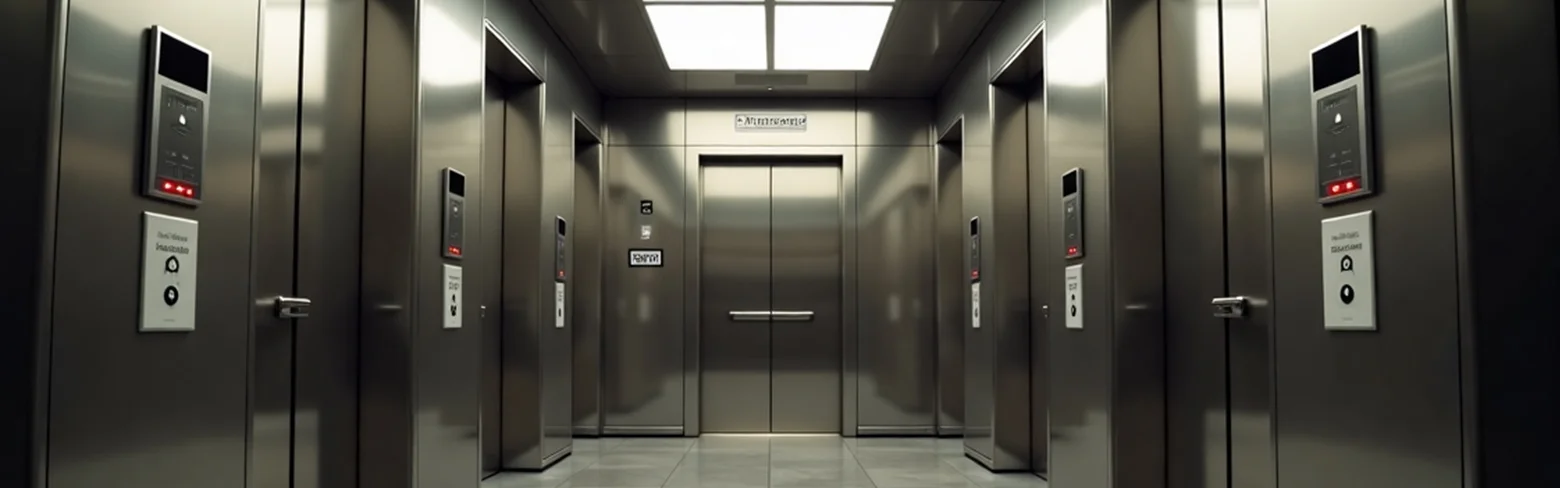
Elevator emergency power supply equipment is the key equipment to ensure the normal operation of elevators in case of sudden power outage or power failure, and it is widely used in residences, office buildings, hospitals, shopping malls and other places. The built-in nickel-metal hydride (Ni-MH) battery pack, with high safety, long cycle life and stable performance, can be quickly activated when the power is interrupted to provide power support for the elevator control system and drive motor. The low self-discharge rate and maintenance-free characteristics of nickel-metal hydride batteries make them perform well in emergency power backup scenarios and provide reliable guarantee for the safe operation of elevators.
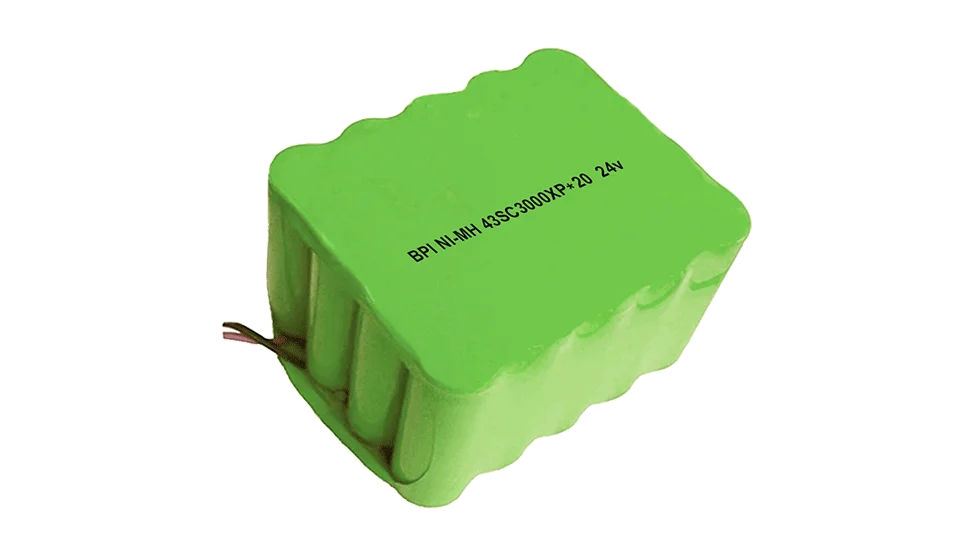
| Battery Type | Model | Size(mm) | Voltage(v) | Capacity(mAh) | IEC Lifespan(cycles) | Initial Internal Resistance (mΩ) | Configuration Method |
| Ni-MH | 43SC3000XP*20+plug | MAX 168*68*58 | 24 | 3000 | 500 | ≤100 | 20S1P |
| Customized on demand | |||||||
NiMH batteries are rechargeable batteries suitable for standby and emergency power applications that require stable output, flexible pack configuration and dependable charging performance. BPI can combine individual NiMH batteries into customized packs according to the electrical and structural requirements of the elevator backup system.
A low self-discharge design helps reduce capacity loss while the battery remains in standby mode for extended periods.
A properly configured battery pack can provide consistent voltage output for the emergency functions specified by the elevator control system.
The battery pack can be designed to support the charging requirements of compatible elevator controllers and rescue power units.
NiMH batteries can be recharged without requiring complete discharge before every charging cycle.
A sealed rechargeable battery pack reduces routine maintenance requirements when installed and used according to the equipment manufacturer's instructions.
Voltage, capacity, dimensions, connector type, wire length and pack arrangement can be customized for different elevator models and installation spaces.
A lift power backup system normally remains in standby mode while the elevator is connected to the main power supply.
When a power failure is detected, the elevator controller or automatic rescue device switches to the standby battery according to the system design. The battery then supplies temporary power to the specified emergency functions.
A typical operating process includes:
Standby charging: The battery remains connected to a compatible charging system during normal operation.
Power failure detection: The controller identifies an interruption in the main electricity supply.
Emergency power output: The battery supplies power to the functions defined by the rescue system.
Controlled operation: The elevator performs its programmed emergency sequence, depending on the equipment design.
Automatic recharging: Once the main power supply returns, the battery enters the specified charging or standby mode.
The battery pack does not independently determine how the elevator responds during a power failure. Emergency functions are controlled by the elevator controller or rescue equipment. Battery voltage, current and communication requirements must therefore be matched to the complete system.
Selecting an elevator battery backup requires more than matching the voltage printed on the original battery label.
The following information helps BPI evaluate the electrical, structural and operating requirements of your project.
| Information Required | Why It Is Important |
| Elevator brand and model | Helps identify the application and system type |
| Controller or rescue unit model | Determines compatibility requirements |
| Nominal battery voltage | Determines the number of cells in series |
| Required battery capacity | Affects available backup energy |
| Required backup time | Helps calculate the appropriate capacity |
| Continuous discharge current | Determines normal output capability |
| Peak discharge current | Determines short-duration power requirements |
| Charging voltage and current | Ensures compatibility with the charger |
| Maximum installation dimensions | Defines the available battery pack space |
| Connector and pin definition | Supports correct electrical connection |
| Wire specifications and length | Supports installation and current requirements |
| Operating temperature | Influences cell and material selection |
| Certification requirements | Determines testing and documentation needs |
| Estimated order quantity | Supports development and production planning |
Elevator battery backup cost depends on the electrical specifications, structural design, testing requirements and order quantity rather than voltage alone.
A standard battery configuration generally requires less development work, while a fully customized battery may require cell evaluation, connector development, structural adjustment, sample production and validation testing.
The main factors affecting the lift battery backup price include:
Nominal voltage and battery capacity
Continuous and peak discharge current
Selected NiMH cell model
Battery pack dimensions and arrangement
Connector, terminals and wire harness
Charging and temperature requirements
Protective components or monitoring functions
Housing, shrink sleeve and fixing structure
Testing and certification requirements
Sample quantity and annual purchase volume
When comparing power backup for lifts, price should always be evaluated together with system compatibility, expected operating conditions and testing requirements. Choosing a battery only because it has a lower initial price may lead to charging incompatibility, insufficient backup time or installation problems.
To receive an accurate quotation, provide the elevator model, rescue unit specifications, voltage, capacity, load current, available dimensions, connector details and estimated quantity.
Custom elevator battery backup development includes cell selection, electrical configuration, structural design, connector integration, sample production and testing.
BPI can support both replacement battery projects and new equipment development.
Through battery cell customization, parameters such as capacity, internal resistance, discharge performance and temperature adaptability can be evaluated according to the project requirements.
Individual NiMH cells can be connected in series or parallel to achieve the required pack voltage, capacity and output performance.
Connector model, terminal definition, wire gauge, wire length and insulation materials can be adjusted to match the elevator controller or emergency rescue unit.
BPI’s battery structure customization services can support pack dimensions, cell arrangement, insulation, fixing method, outer casing and installation requirements.
When monitoring or protection functions are required, BPI can evaluate voltage detection, current detection, temperature monitoring and protection requirements through its BMS customization services. The final electronic design depends on the battery chemistry, charging system and controller architecture. Not every NiMH battery pack requires a conventional lithium battery BMS.
Prototype battery packs can be produced for dimensional inspection, connection verification, charging tests, discharge tests and equipment compatibility evaluation before mass production.
Custom elevator backup batteries may be used in a range of buildings and equipment environments, including:
Residential elevator systems
Office building elevators
Hospital elevator backup systems
Shopping mall elevators
Hotel and apartment elevators
Industrial building lifts
Freight elevators
Elevator automatic rescue devices
Elevator control cabinets
Replacement battery projects
Modernization and maintenance projects
Battery selection should always follow the requirements of the elevator manufacturer, controller supplier, rescue device manufacturer and applicable local regulations.
An elevator battery backup is a rechargeable standby battery pack that supplies temporary power to specified elevator emergency functions when the main electricity supply fails. Its exact function depends on the elevator controller and automatic rescue system.
Backup duration depends on battery capacity, system voltage, load current, battery condition, temperature and the emergency sequence programmed into the elevator system. The required operating time should be provided before the battery pack is designed.
Elevator battery backup cost depends on voltage, capacity, discharge current, dimensions, connector, wiring, structural design, testing requirements and purchase quantity. A technical review is required before an accurate price can be provided.
The power backup for lift cost is mainly determined by the selected battery cells, pack configuration, required output current, installation space, connector design, charging compatibility and order volume.
The lift battery backup price may increase when the project requires a non-standard size, custom connector, special wiring, higher discharge current, additional electronic functions or project-specific testing.
Yes. BPI can evaluate a replacement project based on the original battery label, voltage, capacity, dimensions, connector, wire definition and charging parameters. Customers should provide photos and technical information before ordering.
Yes. Battery arrangement, pack dimensions, connector type, terminal definition and wire length can be customized according to the available installation space and equipment interface.
No. Elevators and automatic rescue devices may use different voltages, loads, charging systems, connectors and emergency operating requirements. Compatibility should be confirmed for each system.


Shenzhen Better Power Battery Co., Ltd. combines advanced manufacturing, cutting-edge R&D, and strict quality control to deliver high-performance battery solutions. With state-of-the-art facilities, international certifications (ISO, UL, CE, RoHS), and a focus on customization, we meet the diverse needs of global industries.

Better Power has four major battery materials research laboratories and collaborates with top universities.

We specialize in providing fully customized battery solutions, from cell design to final integration.

Our state-of-the-art facilities in Shenzhen and Jiangxi ensure consistent quality and large-scale production capabilities.

We use eco-friendly materials and manufacturing processes, adhering to RoHS standards.