An exoskeleton robot is a wearable intelligent power device that works through the coordinated operation of internal high-torque motors, precision reducers, and multi-axis sensors. It perceives human movement intent in real time and provides precise power assistance to support walking and standing, reduce physical burden, and delay muscle degeneration. In simple terms, it can be regarded as a "smart device that helps seniors regain strength in their legs." In home-based elderly care, community activities, rehabilitation nursing, and institutional care scenarios, elderly-assist exoskeleton robots are responsible for helping seniors "regain the freedom to walk." Through advanced bionic algorithms, torque closed-loop control, and high energy density battery systems, they dynamically adjust assistance magnitude in real time following joint angle changes, allowing seniors with leg and foot disabilities to stand up and walk again, enabling seniors with knee joint degeneration to go up and down stairs with ease, allowing physically declining elderly people to go out grocery shopping without difficulty, and giving seniors who fear falling the courage to walk independently once more.

Whether an exoskeleton robot can "walk far," "charge fast," "last long," and "be worn with confidence" often depends on the high energy density power battery hidden within the back or waist compartment—the component that drives the entire mechanical system.
In recent years, as global population aging accelerates, awareness of elderly care nursing universally improves, and high-torque motor and intelligent sensor technologies achieve breakthroughs, exoskeleton robots are transitioning from hospital rehabilitation departments and professional laboratories toward home-based elderly care and community living. In the professional rehabilitation field, they help spinal cord injury and stroke patients relearn walking; in elderly care and assistance scenarios, they allow seniors with leg and foot disabilities to stand up and walk out of their homes again. Exoskeleton robots are no longer merely conceptual equipment from science fiction films but are becoming important elderly care partners that help humanity combat aging and regain the dignity of walking.
Can an exoskeleton robot truly make seniors dare to wear it and love to wear it? The answer often lies not in those dazzling mechanical joints but in the inconspicuous power battery on the back. The industry's central concern is not how large the battery's labeled capacity is, but whether it can withstand the test of actual use—when a senior wears the exoskeleton for a stroll around the neighborhood, can the battery last an entire morning? When the device is depleted, does charging take half a day? After one or two years of use, will the battery obviously degrade, requiring frequent charging every few days? When a senior goes up and down stairs alone, will the battery suddenly power off, causing panic? At the end of the day, a reliable battery is the key to whether an exoskeleton robot can transform from a "rehabilitation device" into a "daily companion."
This has directly driven the evolution of elderly-assist exoskeleton robot power batteries from "ordinary industrial-grade cells" toward "long endurance, fast charging, long cycle life, and absolute safety." Therefore, in exoskeleton robots—a system worn directly on the human body bearing walking safety and daily dependence—the battery's safety, stability, and cycle life have become the key determining whether a product can truly enter millions of households and win the trust of seniors and their children.
Although the overall volume of exoskeleton robots is not particularly large, their working principles and usage logic impose extremely stringent design requirements on batteries—far more complex than ordinary smart wearable devices. Corresponding to these four pain points, batteries must satisfy at least four requirements:
● Continuous and Stable Long-Endurance Discharge: When seniors wear exoskeletons to go grocery shopping, take walks, or visit neighbors, one outing may last half a day. The battery cannot die after one trip, nor can its power drop rapidly during use. The battery must achieve sufficiently high energy density and a sufficiently flat discharge curve, ensuring that a full day of daily activities does not require mid-journey recharging.
● Fast and Efficient Charging Capability: Seniors often have poor memory, frequently forgetting to charge, or they urgently need to go out the next day after having used up the battery the previous day. If charging takes five or six hours per cycle, seniors simply cannot afford to wait. The battery must support fast charging, filling up within one to two hours without delaying next-day use.
● Ultra-Long Cycle Life: An exoskeleton robot will be used for at least three to five years. If the battery obviously degrades after one year, requiring charging every few days, seniors will begin to worry whether the machine is broken or needs replacement. Battery cycle life must be sufficiently long, maintaining over 80% effective capacity after more than 2,000 charge/discharge cycles, ensuring no battery replacement is needed throughout the device's full lifecycle.
● Absolute Safety and Reliability: The exoskeleton is worn directly on the senior's body, with the battery located on the back or waist, closest to the body. Once a battery problem occurs—overheating, smoking, fire, or electrolyte leakage—the senior has no time to react. The battery must possess multi-layer safety protection mechanisms: overcharge protection, over-discharge protection, short-circuit protection, and temperature protection are all indispensable. It must also pass stringent safety tests including nail penetration, crush, and overcharge, truly ensuring that seniors wear it with confidence and children buy it with peace of mind.
Among various battery technology routes, Pack batteries have become the core power solution for elderly-assist exoskeleton robots by virtue of their highly customized system integration advantages. The core reason is that they precisely address the four core pain points of elderly-assist exoskeletons:
| Core Requirement | Lithium Battery Pack Solution |
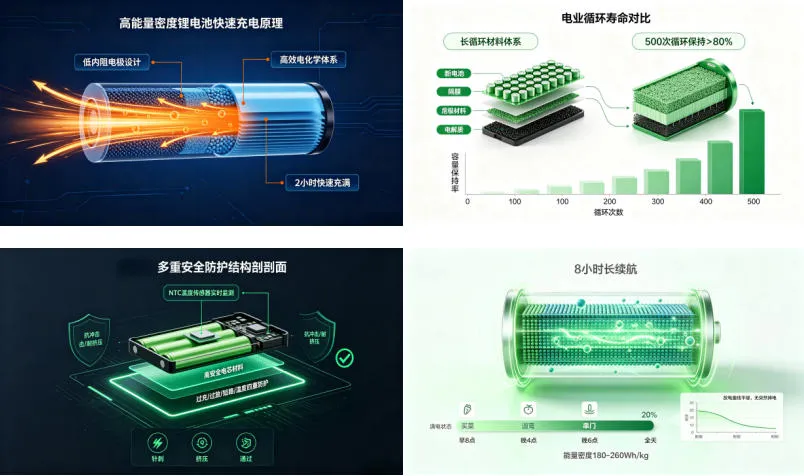
| Long-Lasting Endurance | Utilizes a high energy density material system with energy density reaching 180–260 Wh/kg, providing over 8 hours of continuous walking assistance within a lightweight compartment space, supporting a senior's full day of daily activities. |
| Rapid Recovery | Adopts high-rate power cells, supporting 5C–10C continuous discharge and peak rates above 15C, calmly addressing instantaneous large-current demands during standing up and stair climbing, with smooth startup and no stuttering; supports 2-hour fast charging without delaying next-day use. |
| Long Cycle Life | Quality cells maintain over 80% capacity retention after more than 500 deep charge/discharge cycles, requiring no battery replacement throughout the full lifecycle and reducing later maintenance costs. |
| Intelligent BMS Management | Cooperates with an intelligent Battery Management System (BMS) to achieve real-time precise monitoring of voltage, current, and temperature, providing four-layer protection against overcharge, over-discharge, short-circuit, and temperature, while clearly displaying remaining battery level and estimated available duration, allowing seniors to use it with clarity and peace of mind. |
More importantly, intrinsic safety for close-body wear. Addressing the characteristic that exoskeletons are in direct contact with the human body and repeatedly stressed with every step, quality lithium batteries have passed international safety certifications including UN38.3 and IEC62133. Through built-in temperature sensors (NTC) and hardware-level protection boards, they can instantaneously cut off the circuit when encountering abnormal heating, overcharge/over-discharge, or external short circuit, ensuring senior wear safety.
As a manufacturing enterprise with years of deep expertise in the battery industry, BPI has developed a complete and mature product system in the battery field and accumulated extensive experience in robots, smart wearables, medical rehabilitation equipment, and other fields with extremely high requirements for safety and reliability.
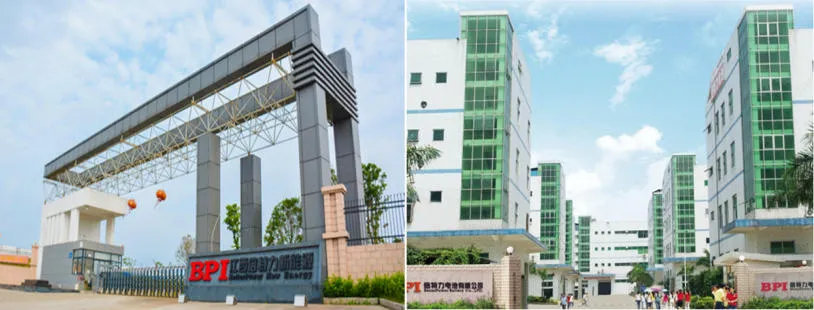
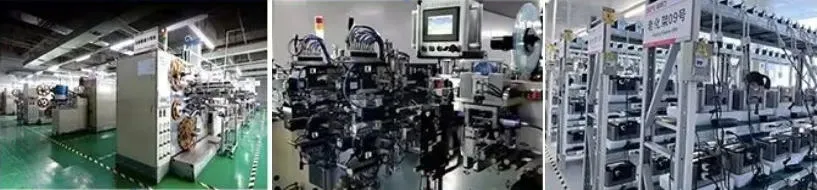
BPI lithium batteries cover both high energy density systems and high-rate power systems, enabling combined and customized development for different application scenarios of elderly-assist exoskeleton robots (such as community walking lightweight design and home rehabilitation all-day endurance requirements). Among these, the high-rate power series and intelligent BMS solutions have been widely applied in smart wearables and medical rehabilitation systems with extremely high requirements for stability, safety, and cycle life. During the product design phase, BPI orients development toward application scenarios. Addressing the two core requirements of exoskeleton robots—"long-lasting endurance" and "fast charging"—BPI has implemented dual optimization in cell material systems and structural design, adopting high energy density cathode materials and low internal resistance electrode processes to significantly improve battery energy density and fast-charge acceptance capability. Simultaneously, through strict cell consistency control and advanced thermal management design, it ensures that battery packs maintain stable performance output and long service life under long-term cyclic charge/discharge and fast-charge operating conditions.
Ordinary digital cells are inherently designed for low-current devices such as mobile phones and power banks. Applied to exoskeleton robots, they are completely different. At the moment a senior stands up, rises, or climbs stairs, the motor requires large-current burst. Low-rate cells simply cannot sustain it, voltage directly sags, and the device either suddenly shuts down or delivers intermittent assistance. More dangerously, after cells are forcibly driven under high load, they heat up sharply, and cycle life cliff-drops, requiring replacement after just a few months.
With every step, turn, and stair climb, the battery is repeatedly stressed and vibrated following the body. If the battery pack has not undergone mechanical shock verification to automotive-grade standards (such as IATF 16949), internal solder joints will gradually detach due to metal fatigue, and protection board connection wires may break without warning. The result is sudden device power-off, leaving the senior stranded halfway, or worse—internal short circuit triggering serious safety accidents such as battery fire or electrolyte leakage.
In advanced intelligent elderly care equipment, the truly critical components are often not the most dazzling. This holds true for exoskeleton robots, and equally so for the power batteries inside them.
It is through stable, reliable, predictable, and intrinsically safe performance that BPI lithium batteries continuously deliver value in these "invisible yet experience- and safety-critical" core positions. They not only provide persistent, stutter-free power output for the motor but also, through stringent quality control, ensure that the device remains rock-solid after years of dynamic load, letting seniors wear it with confidence and walk with peace of mind.
In elderly care robot applications, the battery is never a simple energy storage component but a core element of the entire device's safety and reliability system. BPI consistently adheres to strict standards as the fundamental criterion for product development and manufacturing, with full-process traceability and control. Over the product's multi-year usage cycle, performance changes are predictable, risks are controllable, and quality is assured.
For elderly-assist exoskeleton batteries, choose long endurance, choose high safety, choose BPI!
Q: Does BPI's exoskeleton battery solution support structural customization for back or waist compartments?
A: Yes. We can provide multi-series combinations at different voltage platforms such as 12V/24V and customized battery packs with irregular structures based on the irregular compartment space constraints of the exoskeleton robot's back, waist, or legs, matching the design requirements of different models.
Q: The exoskeleton is worn on the human body. How is battery safety protection ensured?
A: We adopt intelligent multi-dimensional battery protection technology with built-in high-precision AFE (Analog Front End) monitoring chips for real-time monitoring of voltage, current, and temperature, providing hardware-level four-layer protection against overcharge, over-discharge, short-circuit, and temperature, with abnormal response time reaching the millisecond level, ensuring safety across all usage scenarios.
Q: What is the actual usage efficiency of the battery? Will there be energy waste?
A: Through high-efficiency energy conversion technology, we optimize battery internal impedance and discharge platform, reducing energy loss during transmission and improving the conversion rate between actual available capacity and labeled capacity, ensuring the same amount of power takes you farther and reducing unnecessary energy waste.