Today, the student cards and employee badges we use daily are no longer simple “identification markers” — they are smart devices integrating access control, attendance, positioning, and other functions. These ultra-thin, portable cards have no visible charging ports yet operate stably for long periods. Their core power source is the ultra-thin lithium polymer (LiPo) battery designed specifically for wearable smart devices. With its unique structure and performance, this battery has become the “invisible power supply” for smart ID cards. Today, we will explain its core features and how it provides stable power for student cards and employee badges.
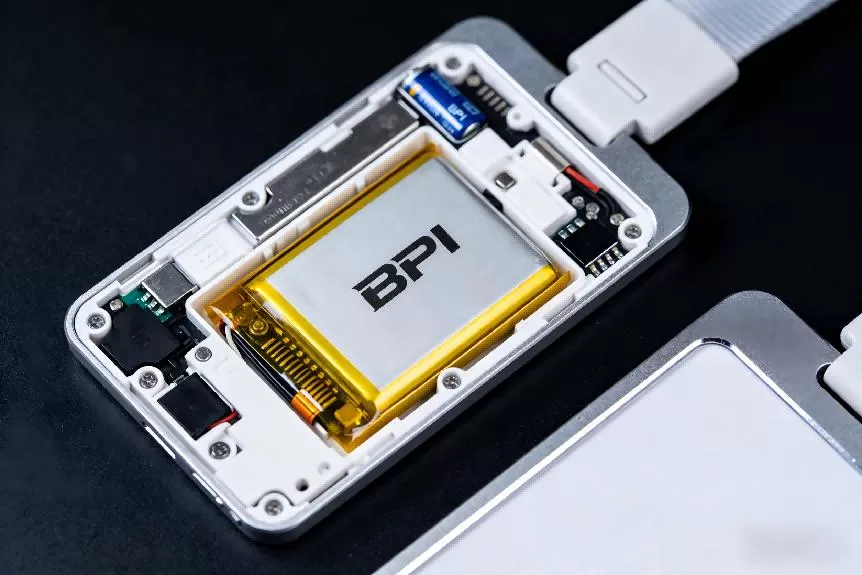
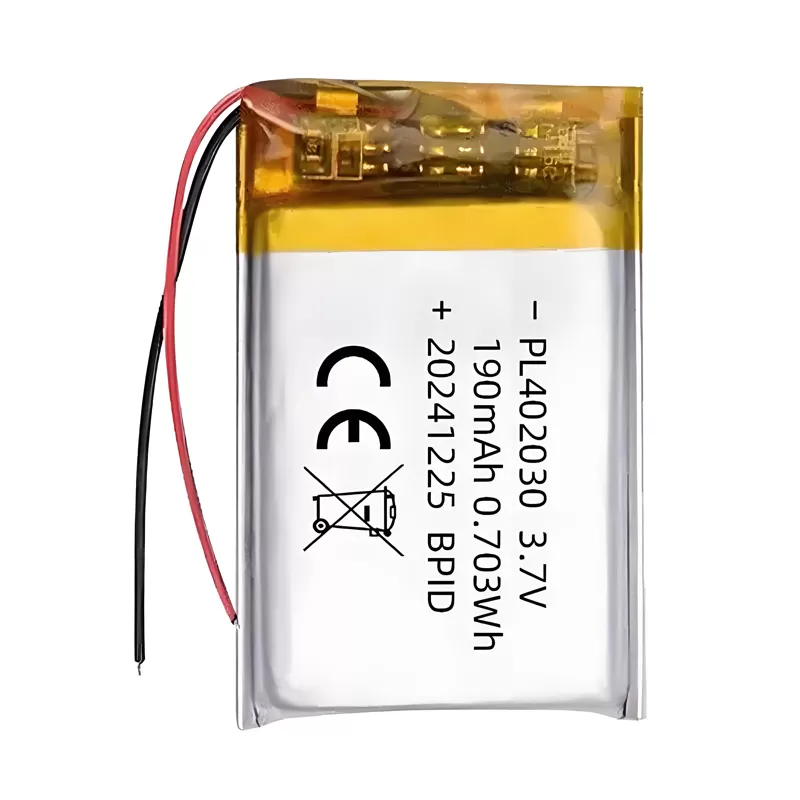
Ultra-thin lithium polymer batteries are a subcategory of lithium polymer batteries, focusing on ultra-thinness, flexibility, long lifespan, and safety. Compared with traditional lithium-ion batteries, they are more suitable for ultra-thin, wearable, and long‑term standby devices — this is the key reason they are the preferred power source for student cards and employee badges. Their core features are mainly four points:
The most prominent advantage of ultra-thin lithium polymer batteries is their thinness. The thickness is usually between 0.5–2.5mm, and even thinner sizes can be customized according to device requirements. The weight is only 3–5g, taking up minimal space. Meanwhile, they adopt a flexible pouch aluminum‑plastic film structure, unlike traditional rigid batteries with fixed shapes, allowing flexible adaptation to devices of different dimensions. They are especially suitable for embedding inside standard 85.5mm×54mm student cards and employee badges without increasing card thickness, ensuring wearing comfort.
Smart student cards and employee badges do not require frequent operation but need long‑term standby, which imposes high requirements on the battery’s self‑discharge rate. The monthly self‑discharge rate of ultra-thin lithium polymer batteries is usually below 1%. Voltage remains at a high level after one month of full‑charge storage. Paired with low‑power chips, a single charge can achieve 3–6 months of stable standby, eliminating frequent battery replacement and greatly reducing usage costs.
As devices for daily carrying, battery safety is critical. Ultra-thin lithium polymer batteries are equipped with an intelligent protection circuit, which effectively prevents abnormalities such as overcharge, over‑discharge, overcurrent, and short circuit, avoiding safety hazards such as overheating and leakage. Meanwhile, qualified ultra-thin lithium polymer batteries pass international certifications including UN38.3 and SDS (formerly MSDS), undergo strict safety tests, and are fully suitable for daily carrying by students and professionals.
Student cards and employee badges must work normally in different environments — whether indoor scenes such as campuses and office buildings, or cold and hot outdoor environments. Ultra-thin lithium polymer batteries perform stably across a wide temperature range of -20℃~60℃, with no obvious capacity attenuation or performance degradation under extreme temperatures. They also have a long cycle life: capacity retention remains above 80% after 500 charge‑discharge cycles, extending the overall service life of the device.
After understanding the core features of ultra-thin lithium polymer batteries, it is clear that this type of battery is the ideal power choice for smart student cards and employee badges. Among many ultra-thin lithium polymer battery brands, BPI customized models, with targeted engineering design, have become the preferred power partner for smart ID badges, student cards, personnel safety beacons, and other devices, perfectly meeting the usage requirements of such equipment.
BPI ultra-thin lithium polymer batteries strictly follow the core technical standards of ultra-thin lithium polymer batteries and are optimized and upgraded according to the application scenarios of student cards and employee badges: thickness as low as 0.8mm, precisely matching standard card dimensions; monthly self‑discharge rate below 1%, achieving 3–6 months of long‑term standby with low‑power chips; equipped with an intelligent BMS protection circuit, passing international certifications such as UN38.3 and SDS for enhanced safety; operating temperature range of -20℃~60℃ and cycle life of more than 500 cycles, fully adapting to campus, enterprise, and other multi‑scenario applications.