In the medical device field, the stability of backup power supply and the endurance of portable diagnostic equipment are directly linked to diagnostic efficiency and patient safety. For a long time, nickel-cadmium (NiCd) batteries, with their basic power supply compatibility, were widely used in various small and medium-sized portable medical devices and emergency backup instruments. However, as the medical industry advances toward standardization, green sustainability, and high-quality performance, the shortcomings of traditional NiCd batteries have become increasingly prominent: severe memory effect leading to inflated endurance ratings; cadmium heavy metal contamination failing to meet medical environmental regulations; short cycle life requiring frequent replacements; and unstable discharge rates affecting precise equipment operation. Numerous medical institutions and device manufacturers have reported that NiCd batteries "don't last long, are unsafe, and are not environmentally friendly," with high replacement costs and cumbersome disposal procedures. They are no longer able to meet the demands of modern medical equipment. The comprehensive replacement and upgrade of NiCd batteries in the medical field has become an inevitable industry trend. The core operating logic of portable medical devices relies on built-in batteries to provide continuous, stable, and low-fluctuation power output, ensuring normal operation during power outages, mobile diagnostics, outdoor screening, and other scenarios.
Unlike ordinary consumer devices, medical equipment has only one core requirement for power supply: absolute stability with zero unexpected failures. The performance deficiencies of traditional NiCd batteries have become the biggest weakness in stable medical device operation, making high-performance nickel-metal hydride (NiMH) batteries the optimal solution for NiCd replacement.
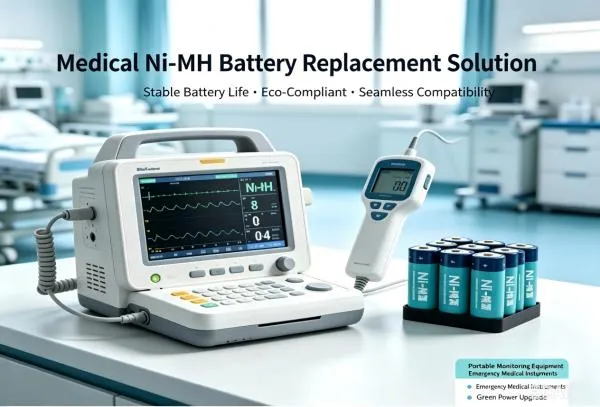
Medical equipment operates in special environments with strict compliance standards, and cannot be powered by ordinary batteries. NiMH replacement batteries must meet specialized requirements far exceeding those of standard consumer batteries, precisely addressing the core pain points of NiCd replacement:
- No Memory Effect, Stable Endurance Without Degradation: Replacement NiMH batteries must completely eliminate the memory effect. Regardless of shallow or deep charge/discharge cycles, they must maintain full power release, ensuring consistent endurance for every device startup, shutdown, and continuous operation. This prevents sudden power drops and equipment shutdowns during diagnosis and treatment.
- Green and Environmentally Friendly, Compliant with Medical Standards: NiMH batteries must adopt a cadmium-free, mercury-free, lead-free environmentally friendly formula, with non-toxic and harmless materials. After disposal, they can be recycled through conventional processes without heavy metal contamination risks, fully satisfying medical institution environmental regulations and medical device access standards, resolving the compliance challenges of NiCd batteries.
- Wide-Temperature Operation Adaptation, Stable Discharge Across Multiple Scenarios: Replacement batteries must exhibit excellent wide-temperature discharge performance, with no significant increase in internal resistance in low-temperature environments and stable discharge rates. They must resist aging and failure in high-temperature sealed equipment compartments, adapting to full-scenario medical operation requirements.
- Long Cycle Life, Reducing Operational and Maintenance Costs: NiMH batteries adapted for medical scenarios must possess ultra-long cycle life, far exceeding traditional NiCd batteries, with slow capacity degradation over long-term use, effectively reducing the frequency of battery replacements and subsequent O&M investment.
- Smooth Discharge, Compatible with Precision Medical Equipment: Portable medical detectors, physiotherapy devices, and data acquisition instruments have extremely high requirements for voltage stability. Voltage fluctuations can cause data deviation and equipment malfunction. NiMH batteries must maintain consistently smooth discharge without voltage spikes or drops, ensuring precise operation of sophisticated medical equipment and preventing diagnostic errors caused by power supply fluctuations.
- High Compatibility, Low-Cost Replacement Adaptation: To reduce retrofitting costs for device manufacturers, NiMH replacement batteries must be fully compatible with the original NiCd battery device interfaces, dimensional specifications, and mounting structures, requiring no modification to device circuitry or enclosures, enabling plug-and-play, lossless replacement, and significantly reducing equipment upgrade costs.
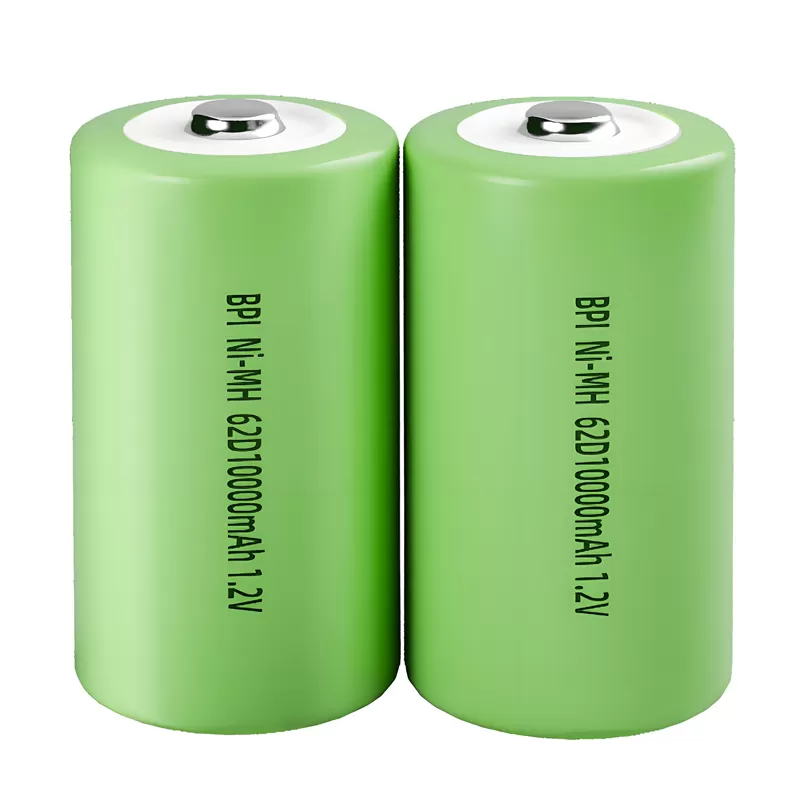
1. Standard Cylindrical NiMH Cells (AA / AAA / 9V)
Suitable for small handheld medical devices: pulse oximeters, medical thermometers, physiotherapy devices, handheld blood samplers, portable data collectors.
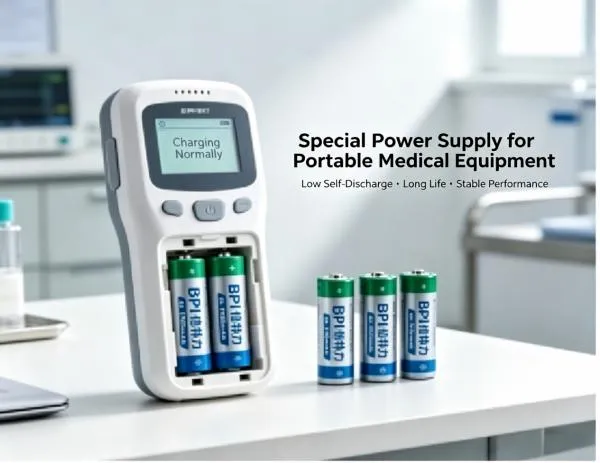
- AA: 2100mAh / 2700mAh low self-discharge models, cycle life ≥1000 times
- AAA: 1100mAh, adapted for small portable medical devices
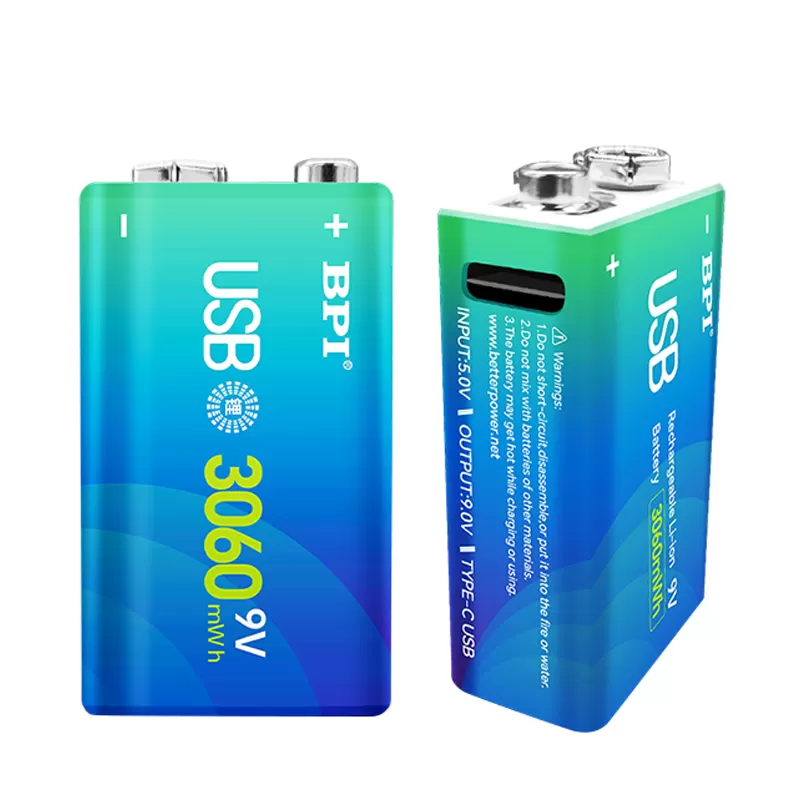
- 9V NiMH Battery: adapted for medical multimeters, smoke alarms, emergency call devices
2. Custom NiMH Battery Packs (Built-in Backup Power for Equipment)
For large medical equipment such as patient monitors, defibrillators, and centralized data collectors, custom series-connected PACKs can be manufactured at voltages of 6V / 9.6V / 14.4V / 24V, complete with wiring harnesses and standard medical connectors, providing 1:1 replacement of original NiCd battery packs without any modification to device circuitry.
- Green and Cadmium-Free, Full Medical Compliance: The entire product line uses a cadmium-free, mercury-free environmentally friendly formula, certified by RoHS and medical device supporting environmental certifications. This resolves the heavy metal pollution and medical solid waste disposal challenges of traditional NiCd batteries, with zero compliance risks for hospital admission.
- No Memory Effect, Stable Endurance: Under the frequent shallow charge/discharge conditions of medical equipment, capacity shows no degradation. The problem of NiCd batteries where "endurance gets shorter with use" does not occur. Voltage output remains stable throughout the diagnosis and treatment process, ensuring precision instrument data accuracy.
- Ultra-Low Self-Discharge, Worry-Free Long-Term Standby: BPI's proprietary low self-discharge technology retains over 75% charge after one year of full-charge storage, adapting to 24-hour standby monitoring devices in wards and emergency backup instruments.
- Wide-Temperature Adaptation, Stable Discharge Across All Scenarios: Stable operation from -20°C to 60°C, delivering normal power output in outdoor emergency rescue, low-temperature emergency rooms, and high-temperature equipment compartments, with no low-temperature power failure incidents.
- Ultra-Long Cycle Life, Reducing O&M Costs: Effective cycle life of 500–1000 times, more than double that of NiCd batteries, significantly reducing the frequency of hospital battery procurement and replacement. Dimensions, interfaces, and voltage are fully aligned with NiCd batteries, enabling direct lossless replacement with zero retrofitting costs.
- High-Safety Medical-Grade Manufacturing: Cells feature explosion-proof sealed structures with low temperature rise during charge/discharge, no leakage or swelling risks, and comply with medical electrical equipment safety standards.
BPI was established in 2002 and is headquartered in Shenzhen, focusing on battery R&D, manufacturing, and sales as a high-tech enterprise. After more than two decades of development, the company has established an industrial layout with coordinated operations between its Shenzhen headquarters and two major production bases: a modern production base in Longhua, Shenzhen, and a large-scale new energy intelligent manufacturing base in Yichun, Jiangxi, with a total area exceeding 200 mu (approx. 133,000 m²) and over 1,500 employees, possessing large-scale, standardized, and automated production capabilities.
In 2023, the Phase III fully automated factory of Jiangxi BPI New Energy was officially put into operation, marking a further enhancement of the company's production capacity and manufacturing capabilities. Among them, lithium battery daily production capacity exceeded 500,000 units, and total daily output of all battery types exceeded 1.5 million units, capable of meeting large-volume delivery demands from domestic and international customers for cylindrical cells, battery packs, and customized power solutions.
With long-term technological accumulation and continuous innovation, the company has been successively recognized as a national high-tech enterprise and a national-level specialized and sophisticated "Little Giant" enterprise. Products have passed multiple international certifications including UN38.3, UL, CE, RoHS, REACH, and KC, exporting to over 80 countries and regions worldwide, with service coverage spanning consumer electronics, medical equipment, security and emergency, energy storage, and power supply applications.
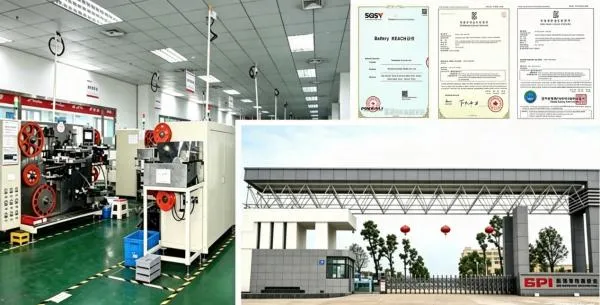
In terms of technology R&D, BPI has accumulated more than 200 national patents, covering core technology fields including high-rate batteries, low-temperature electrolyte formulations, battery pack structural design, low self-discharge NiMH batteries, and intelligent manufacturing processes. With stable product quality, strong R&D capabilities, and a global service network, the company provides customers with reliable battery products and customized power solutions.
Q: Does replacing NiCd batteries with NiMH batteries require modification to medical device circuitry?
A: No. Medical-grade replacement NiMH batteries are fully aligned with traditional NiCd batteries in nominal voltage, dimensional specifications, positive/negative terminal interfaces, and charge/discharge parameters, enabling 1:1 lossless compatibility. No modification to device circuitry, enclosures, or control systems is required. Simply remove and replace for immediate use, with zero retrofitting costs and zero adaptation risks.
Q: Do NiMH batteries' environmental qualifications meet medical scenario admission requirements?
A: Fully compliant. Medical-grade NiMH batteries use cadmium-free, mercury-free, lead-free environmentally friendly cells, certified by RoHS, REACH, and multiple other environmental standards. There is no heavy metal pollution or hazardous substance leaching, meeting medical institution clean environment standards and medical solid waste disposal regulations, capable of passing various compliance inspections smoothly.
Q: Can NiMH batteries solve the most serious memory effect problem of NiCd batteries?
A: Yes, completely. NiMH batteries have no memory effect. Whether the device undergoes shallow charge/discharge, charge-as-needed, or complete discharge before charging, 100% power release can be achieved. There will be no inflated endurance ratings or capacity degradation issues, perfectly adapting to the high-frequency intermittent working conditions of medical equipment.
Q: Can NiMH batteries operate stably in low-temperature diagnostic scenarios?
A: Yes, stable operation is ensured. Medical-grade NiMH batteries have been optimized with wide-temperature formulations, maintaining stable internal resistance and no significant discharge rate degradation in low-temperature environments. They can adapt to outdoor emergency rescue and low-temperature examination room scenarios, preventing device power failure and insufficient endurance in cold conditions, suitable for all-season, all-scenario medical operations.
Q: How much longer is the service life of replacement NiMH batteries compared to NiCd batteries?
A: Significantly improved. Traditional NiCd batteries have an effective cycle life of only 200–250 times, with severe endurance degradation appearing after approximately half a year. Medical-grade NiMH batteries have an effective cycle life exceeding 500 times, with capacity retention rates far surpassing NiCd batteries. Under normal use, stable operation for 2–3 years is achievable, substantially reducing O&M costs.