Every tap of a reading pen opens a new world of discovery for children. Yet countless parents have encountered this frustrating scenario: their kid picks up the pen, eager to explore a favorite picture book, only for a low-battery beep to sound after a couple of pages, followed by an automatic shutdown — leaving the child in tears and parents scrambling for charging cables. Complaints such as "3 hours of charging only gives half an hour of use" rank among the most frequent gripes from caregivers across social media platforms.

Reading pens are intelligent learning devices engineered exclusively for children’s early education. Their operating mechanism combines optical image recognition and digital audio technology: an optical sensor or high-pixel camera built into the nib captures visual data upon contact with coded areas on books or flashcards, converts the signals into electrical impulses, and processes them via an intelligent chip to output voice narration or connect to Bluetooth audio devices instantly. Integral with reading, translation, audio repetition and educational game functions, reading pens have become essential tools for preschool language development and reading cultivation.

Whether this "pocket tutor" performs reliably when children are fully absorbed hinges entirely on the built-in power battery hidden inside the pen barrel. Parents frequently forget to charge the device amid busy schedules, so the battery must retain ample power through long standby periods. When kids drop or shake the pen accidentally, the internal cell structure must withstand impact without loose electrical connections.
In recent years, rising parental focus on early childhood education, paired with continuous advances in intelligent voice and optical recognition technology, has transformed reading pens from novelty toys into indispensable teaching aids. At home, they help parents overcome limited language proficiency and insufficient quality time with kids. In kindergartens and early learning centers, they serve as reliable auxiliary teaching equipment. Reading pens are no longer merely sound-producing toys, but core tools fostering children’s independent reading and language skills.
Within this industry landscape, batteries are far more than simple energy carriers — they define the quality of learning experiences and educational efficiency. Manufacturers and buyers care less about how many books the device can store, and more about consistent power supply during children’s focused reading sessions. Comparative testing of 30 commercial reading pens reveals huge disparities in runtime, ranging from just 1.6 hours up to 7.53 hours. Worse still, five of the tested units delivered far shorter actual usage time than their labeled capacity: one model advertised 45 hours of runtime yet only lasted 2.3 hours in real-world testing. User reviews repeatedly cite issues such as immediate low-battery alerts right after charging, and complete charging failure after only four uses.
This widespread performance gap has driven the evolution of reading pen batteries away from generic consumer cells toward high-energy-density, low-self-discharge, long-cycle, intrinsically safe lithium polymer solutions. For educational electronics used directly by young children, battery runtime, self-discharge rate, cycle durability and multi-layer safety protection are decisive factors in earning parental trust and securing competitive market positioning.
Though compact in size, reading pens impose far stricter engineering standards on batteries than ordinary digital products due to their unique operation modes and user scenarios:
Intermittent high-frequency usage pattern: Children pick up reading pens multiple times daily for sessions ranging from a few minutes to half an hour. Cells must feature ultra-low self-discharge to preserve ample power after days of standby.
High energy density within minimal confined space: Reading pens are lightweight for small children’s hands, leaving extremely limited room inside the barrel. Cells must deliver a stable 300mAh capacity within a tiny 6mm × 20mm × 30mm footprint without adding excess weight that strains kids’ wrists.
Long cycle life for daily frequent charging: Daily charge-discharge cycles are standard during language learning phases. Generic cells lose massive capacity after only 200–300 cycles, with many users reporting drastically shortened runtime after four years of ownership. Reading pen batteries require a minimum of 800 full charge-discharge cycles to maintain consistent long-term performance.
Intrinsic safety for children and preschool users: Safety is non-negotiable for child-facing equipment. Batteries must integrate full safeguards against overcharging, overdischarging, overheating and short circuits, with zero risk of leakage, fire or thermal runaway under abnormal conditions.
Drop and vibration resistance for handheld mobile use: Children frequently drop, jostle and shake reading pens. Battery packs must feature robust internal structures and reinforced solder joints to eliminate disconnection or internal short circuits upon impact.
| Core Requirement | Lithium Polymer Battery Solution |
| Long Continuous Runtime | Cobalt oxide high-energy-density material delivers a stable 300mAh capacity within the ultra-slim 6×20×30mm 602030 form factor, fully supporting complete reading sessions on a single charge |
| Ultra-Low Self-Discharge | Minimal power loss during standby; pens remain ready for use after days of being set aside |
| Extended Cycle Lifespan | Premium cells retain over 80% rated capacity after 800 IEC standard deep cycles, vastly outperforming generic cells limited to 300 cycles |
| Intrinsic Safety | Pouch casing only bulges (no explosion) under abnormal internal pressure; built-in protection board provides four hardware safeguards: overcharge, overdischarge, overcurrent and short-circuit prevention |
| Lightweight Ergonomic Design | Stacked electrode layout achieves over 95% space utilization, keeping the pen lightweight for comfortable children’s grip |
Most critically, these cells deliver uncompromised safety for child education equipment. BPI’s 602030 lithium polymer batteries pass international certifications including UN38.3, CE, RoHS and KC. Equipped with built-in NTC thermistors and hardware protection circuits, they instantly cut power in cases of overheating, external short-circuit or overcharging, eliminating hidden hazards and letting parents feel fully at ease letting children use the pens unsupervised.
Founded in 2002, BPI is a veteran battery manufacturer with over 20 years of industry expertise, boasting a complete, mature lithium battery product portfolio and extensive track record in high-reliability sectors including maternal and infant wellness devices.
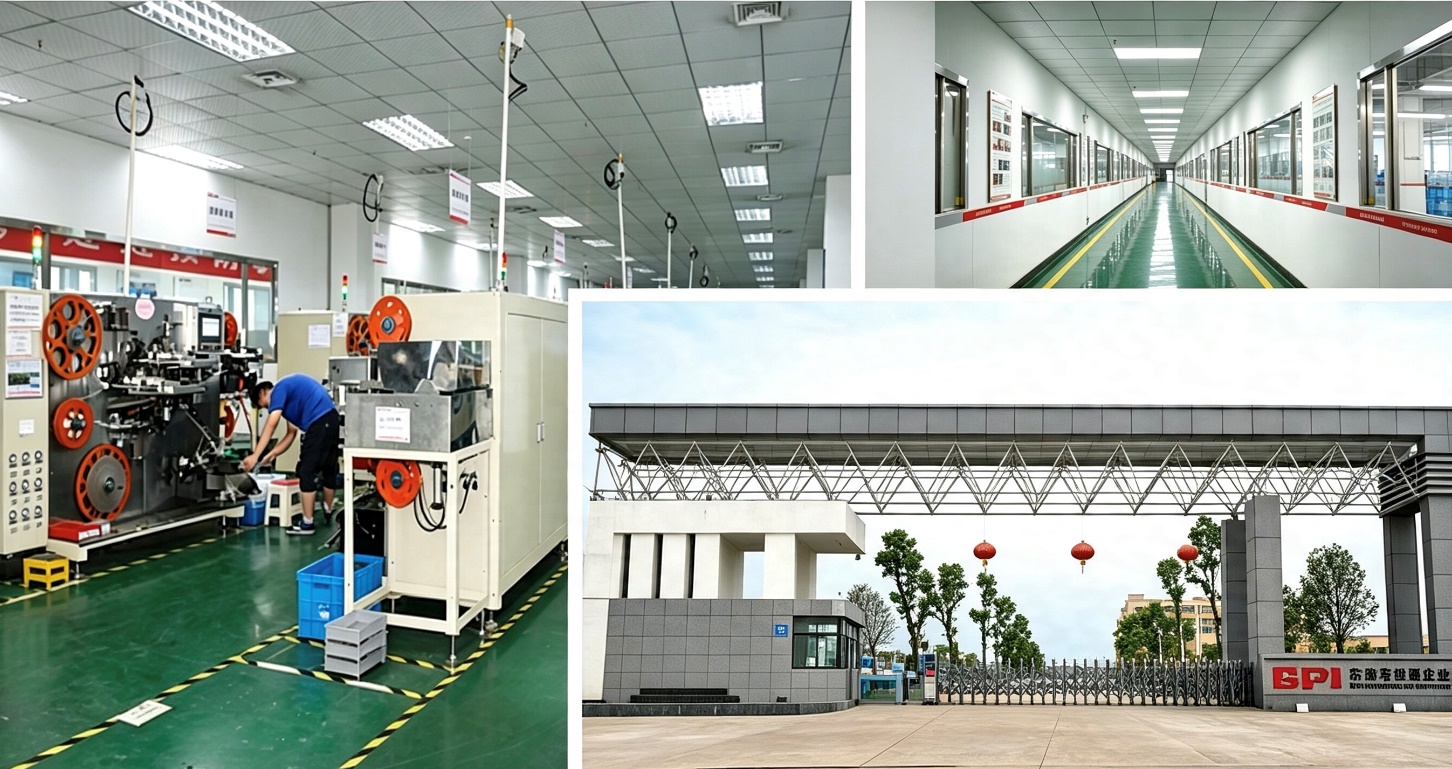
The company operates two major production bases in Longhua (Shenzhen) and Yichun (Jiangxi), spanning a combined land area of over 200 mu with a workforce of more than 1,500 employees. Its fully automated Phase III production facility in Jiangxi launched commercial operation in 2023, with a daily lithium cell output exceeding 500,000 units and total daily production capacity surpassing 1.5 million batteries.
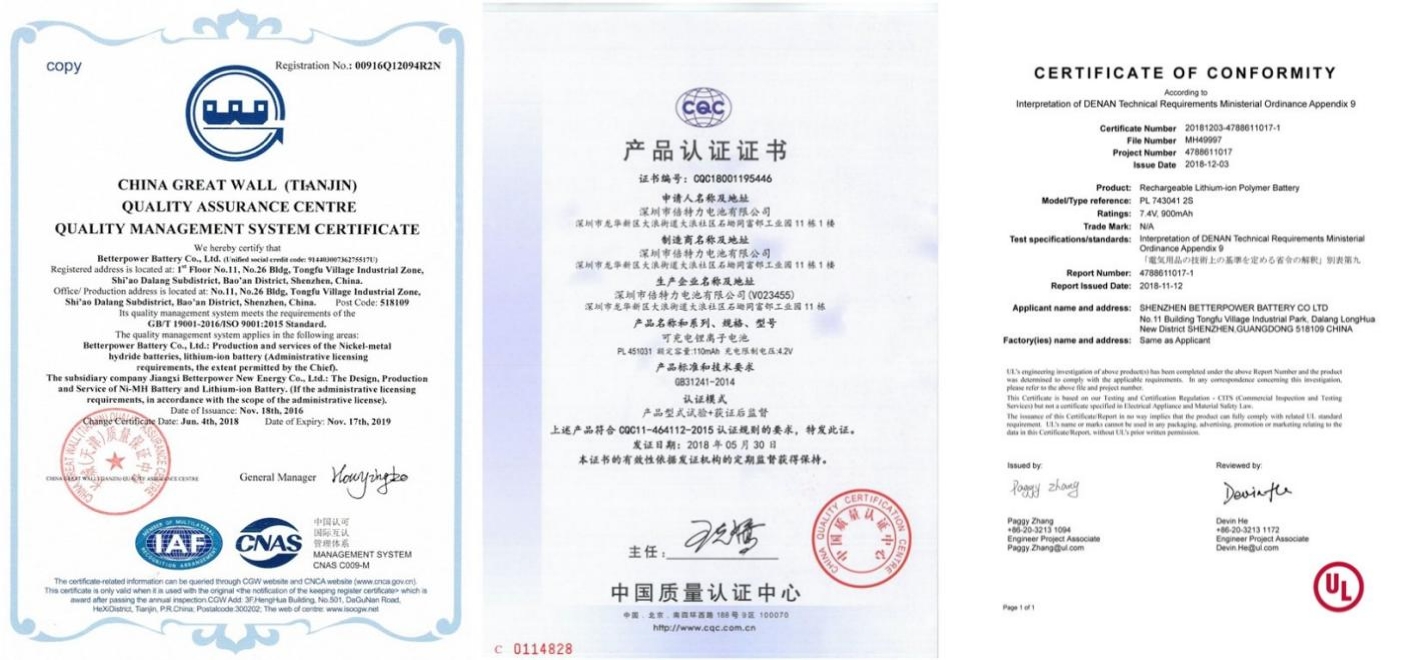
BPI holds official accreditations as a National High-Tech Enterprise and National Specialized, Refined, Unique & Little Giant Enterprise. Its products carry global safety certifications including UN38.3, UL, CE, RoHS, REACH and KC, exported to more than 80 countries worldwide. The firm owns over 200 national patents covering high-rate cells, low-temperature electrolyte formulas and custom battery pack structural designs.
Targeting three core pain points of portable milk warmers — high power draw during heating, vibration resistance during travel and long-term cycle durability — BPI offers custom 2S 21700 (7.4V 4500mAh) battery packs assembled from two premium 21700 cells in series. The compact configuration delivers large energy storage for reliable portable heating power. All product development at BPI is scenario-oriented:
1. For the frequent charge-discharge cycles of milk warmers, we select Grade-A cells with ultra-low internal resistance and tight batch consistency, guaranteeing over 80% capacity retention after 500 charge-discharge cycles.
2. To withstand jolts and vibrations during travel, reinforced support brackets and professional spot welding processes are adopted, greatly boosting the pack’s shock and vibration resistance.
3. For comprehensive safety, a precision built-in protection board provides four layers of hardware safeguards against overcharging, overdischarging, overcurrent and short circuits.
BPI’s 21700 packs combine high capacity, long cycle life, shock resistance and intrinsic safety to deliver dependable power for portable milk warmer equipment.
Misconception: Adopt oversized generic digital cells to chase higher labeled capacity
Many manufacturers force large-format cells into pen barrels to inflate capacity figures, ignoring ergonomic constraints. Bulky, heavy pens strain young children’s hands and reduce willingness to use the device. BPI’s 602030 cell strikes the perfect balance, packing 300mAh capacity into a miniature 6×20×30mm footprint without sacrificing comfort or runtime.
Misconception: Underestimate self-discharge and standby power consumption
Reading pens see intermittent short-duration use rather than continuous operation. Cells with high self-discharge drain completely after a few days of storage, leaving pens dead when children want to read. Premium lithium polymer cells must feature ultra-low self-discharge to guarantee instant usability at any time.
Misconception: Neglect long-term cycle performance
Reading pens undergo daily charge-discharge cycles throughout language learning phases. Unverified low-grade cells suffer severe capacity loss after only one year, leading to complaints of insufficient runtime after lengthy charging. BPI’s 602030 cells complete 800 IEC-standard cycles, supporting over two years of regular daily use to cover the full early education timeline, with capacity retention far above commodity cell benchmarks.
Misconception: Inadequate structural reinforcement against drops and knocks
Children regularly drop and bump reading pens. Batteries lacking targeted structural reinforcement develop cracked tabs or loose solder joints after repeated impact, causing intermittent power cuts at minimum, and dangerous internal short circuits at worst.
Reading pens and their internal batteries are inseparable: abundant educational content cannot deliver value without stable power supply, cutting short children’s learning enthusiasm mid-session.
BPI refuses to compromise on quality at any production stage. Every 602030 lithium polymer battery undergoes rigorous standards from cell selection and pouch encapsulation to protection board integration and finished goods inspection. Its 6mm ultra-thin profile fits seamlessly inside reading pen barrels, 300mAh capacity sustains full-length reading sessions, and an 800-cycle service life accompanies children through their entire language learning journey. Internal resistance is capped at ≤100mΩ for efficient energy output.
More valuable than printed technical specifications is BPI’s consistent 20-year commitment to quality, supported by full production traceability and batch-by-batch performance verification.
BPI 602030 Custom Batteries for Reading Pens – Small Size, Big Energy, Complete Peace of Mind.
Q: Does BPI offer customized lithium polymer batteries tailored to unique reading pen barrel internal dimensions?
A: Yes. BPI’s stacked pouch lithium polymer cells support custom sizing and capacity variants on the 3.7V voltage platform to match all pen housing cavity constraints. Clients only need to provide internal space dimensions to receive optimized cell recommendations.
Q: What real-world service lifespan does an 800-cycle rating translate to?
A: Based on one full charge-discharge cycle per day, 800 cycles equal over two years of regular use — precisely covering the primary stage of children’s reading education from initial pen use to independent reading. BPI adheres strictly to IEC testing standards, with cells retaining ≥80% capacity after 800 cycles, vastly outperforming capacity decay seen in generic market cells.
Q: Will the battery drain completely after weeks of non-use?
A: BPI 602030 lithium polymer cells feature optimized low-self-discharge chemistry, with minimal power loss during standby. Devices remain fully functional after weeks of storage, enabled by high-quality separator materials and precision sealing processes that effectively suppress natural capacity depletion.