Electric wheelchairs rely on motors to drive wheel sets to complete actions such as flat-ground slow travel, slope climbing, and obstacle crossing. They are mobile rehabilitation and travel aids adapted for elderly people and individuals with mobility impairments. Widely used in home indoor daily mobility, hospital rehabilitation transfer, nursing home long-term care, outdoor short-distance travel, and other scenarios, they help people with limited mobility break free from spatial constraints and reduce family caregiving pressure. They rely on precision drive motors with passenger load-adjusted output power to ensure smooth and stable movement throughout the user's journey.
Whether a lightweight wheelchair offers "sufficient climbing power," "stable driving," and "safe daily use" depends on the core power PACK integrated battery hidden within the body compartment that drives the motor.
As population aging intensifies and rehabilitation care demands increase, lightweight electric wheelchairs have become essential tools for daily travel among people with mobility impairments. In medical institutions, healthcare staff rely on them to complete post-operative rehabilitation transfers and high-frequency mobility between wards and examination rooms. In home-based elderly care scenarios, seniors use wheelchairs to independently complete indoor activities and short neighborhood walks, reducing the pressure of 24-hour family caregiving. Electric wheelchairs are no longer simple mobility devices but multifunctional mobile medical aids that balance home care, in-hospital rehabilitation, and outdoor short-distance travel—enhancing the quality of autonomous life for disabled and elderly populations.
Against this backdrop, the PACK integrated battery is not only the device's power source but also the core of wheelchair reliability and safe travel. Industry selection focus is no longer limited to battery capacity alone but centers on comprehensive stability in real-world usage scenarios—when the wheelchair carries a passenger up a slope, over a speed bump, or across a threshold, can the PACK deliver sufficient power? When nursing homes and hospitals conduct multi-shift continuous patient transfers, can the entire battery system sustain high-frequency use?
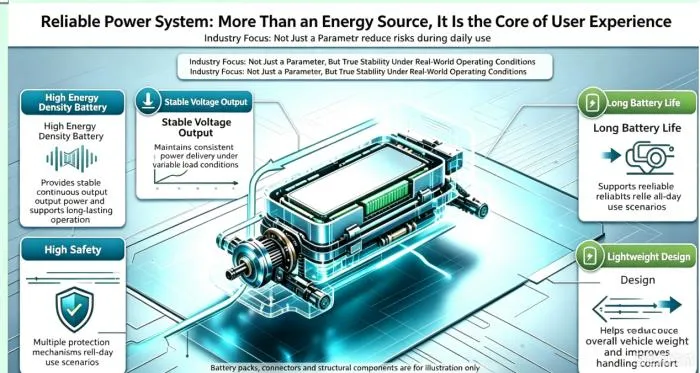
This has directly driven the evolution of electric wheelchair power batteries toward "high capacity, high safety, and lightweight design." Therefore, in electric wheelchairs—a mobility assistive device related to personal safety and travel freedom—the battery's endurance, stability, and safety have become the foundation determining whether a product can truly meet user needs and move toward premium positioning.
The working environment and usage logic of electric wheelchairs are extremely unique—they carry human body weight, cope with multiple terrains, and concern personal safety. This imposes requirements on batteries far more stringent than ordinary portable electronic products:
● Instantaneous Output Under High Load: Electric wheelchairs need to carry human body weight. During climbing, curb crossing, and obstacle surmounting, motor instantaneous torque demand surges, requiring the battery to release large currents instantly. The battery must possess excellent discharge characteristics, maintaining voltage without sagging and power without degradation under high-load conditions.
● Long-Lasting Endurance and Stable Platform Voltage: A single user trip may last several hours or even the entire day, requiring the battery to support long-distance travel on a single charge. Simultaneously, as power is consumed, the battery voltage must maintain stable output to avoid sudden speed drops or power deficiency caused by voltage sag.
● Lightweight Design: Electric wheelchairs must balance portability and ease of user operation. The battery must achieve high energy density within limited space while minimizing weight to reduce the overall device burden.
● Adaptation to Complex Environments and Absolute Safety: Electric wheelchairs may be used outdoors, in humid conditions, or on bumpy roads. The battery must possess good environmental adaptability while ensuring all-scenario usage safety through multi-layer protection including overcharge, over-discharge, overcurrent, short-circuit, and high-temperature protection.
Among various battery technology routes, high-performance PACK batteries have become the mainstream power solution for electric wheelchairs by virtue of their systematic integration advantages and customization capabilities. A PACK battery is not a simple cell combination but a complete power system integrating cells with structural protection. It perfectly aligns with the core requirements of electric wheelchairs:
| Core Requirement | PACK Battery Solution |
| Stable Platform Voltage | Cell grading, sorting, and full-group balancing processes ensure minimal voltage fluctuation, smooth output during load changes, stutter-free motor operation, and uniform travel speed without sudden acceleration or deceleration. |
| Long-Lasting Endurance | Paired with low self-discharge assembly processes, idle loss is minimal. A single charge supports all-day travel, reducing frequent charging needs. |
| Lightweight Design | Lightweight casing reduces overall PACK self-weight at equivalent capacity, adapting to the weight reduction needs of folding wheelchair bodies and facilitating caregiver handling and vehicle storage. |
| High Safety | Real-time monitoring of voltage, current, and temperature provides multi-layer protection against overcharge, over-discharge, overcurrent, short-circuit, and high temperature. |
| Low Self-Discharge | Extremely low self-discharge rate in idle state, ready for use at any time. |
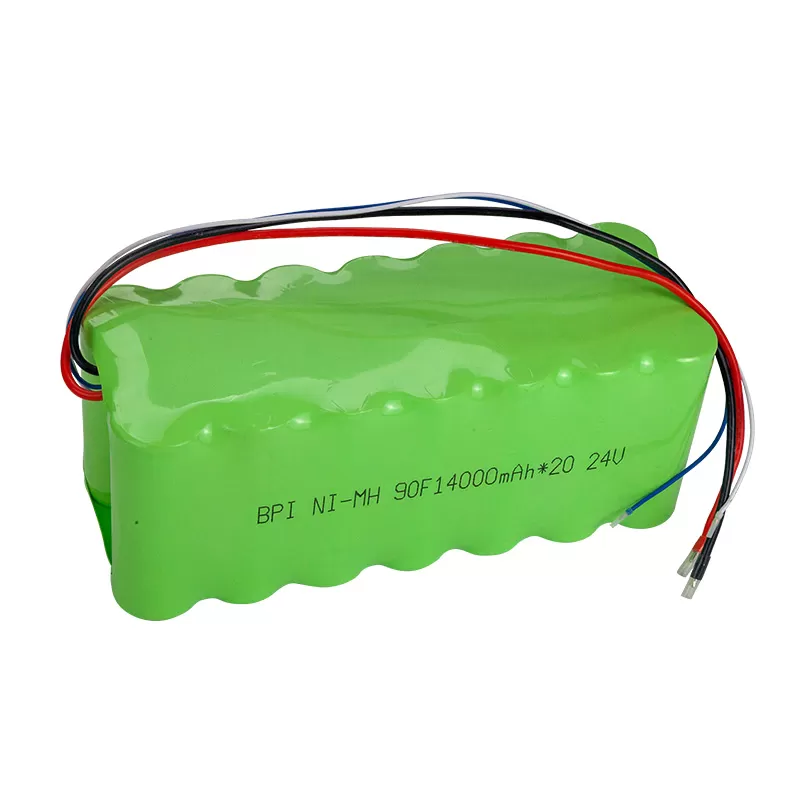
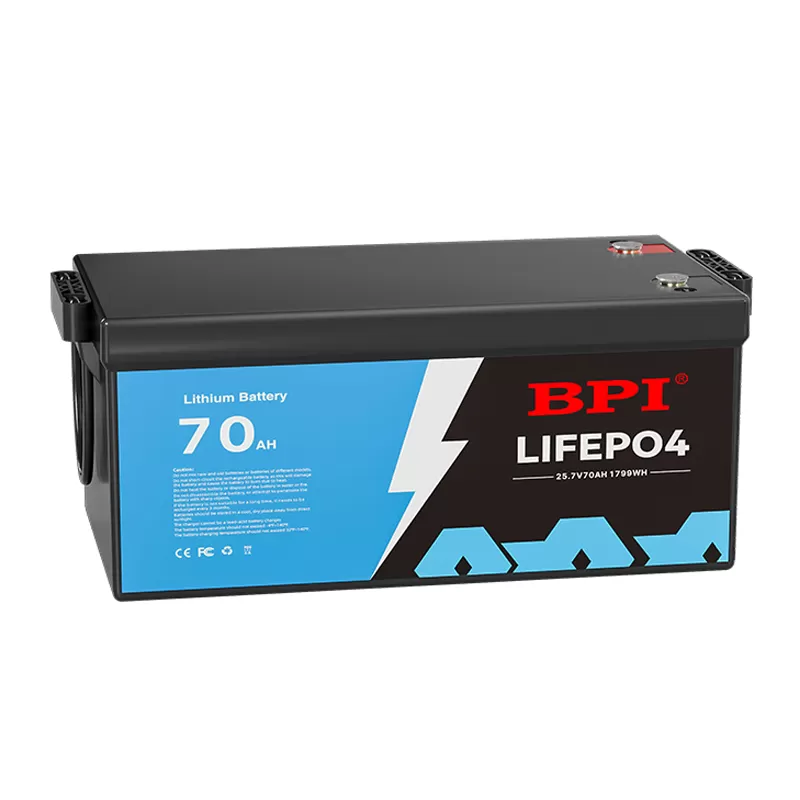
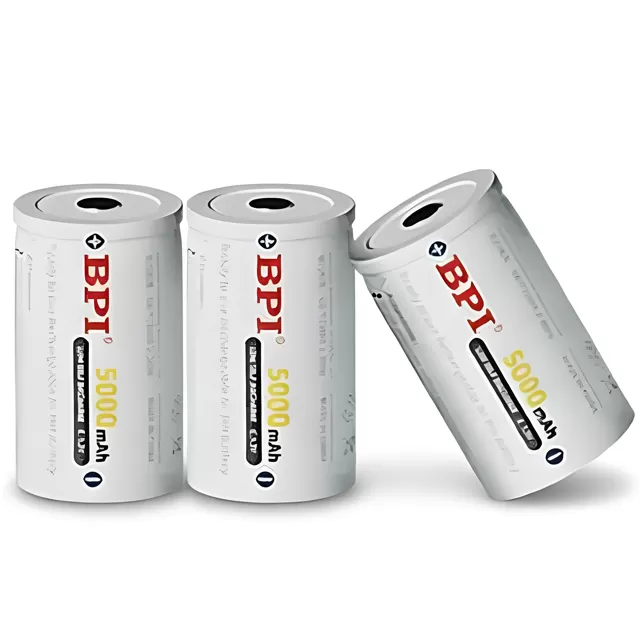
As a manufacturing enterprise with years of deep expertise in the battery industry, BPI has built a complete and mature product system in the PACK integrated battery field and accumulated extensive experience in rehabilitation care and home medical aids. BPI can customize multi-category cell PACK integrated solutions on demand, covering two technical routes: high-rate stable voltage output and lightweight long endurance. It can flexibly match different cell types for lightweight electric wheelchair segmented usage scenarios, completing integrated combination and customized development of cell groups and PACK housing modules. PACK solutions have been widely applied in medical rehabilitation intelligent aids with requirements for load stability, shock resistance, durability, and safety protection standards.
During the product design phase, BPI optimizes solutions around real-world wheelchair travel. Addressing the three core pain points of lightweight wheelchairs—instantaneous slope-climbing large-current discharge, continuous road bump vibration, and frequent start-stop load fluctuations—BPI implements reinforced upgrades to the internal connection structure and packaging process of PACK modules. Simultaneously, it executes stringent cell grading and full-group balancing control, ensuring that the PACK battery will not experience voltage cliff-drops, power weakness, or rapid endurance degradation due to individual cell variation in long-term bumpy, intermittent overload usage environments.
The PACK battery integrates overcharge, over-discharge, overcurrent, short-circuit, and reverse-connection protection mechanisms. When circuit or temperature abnormalities occur, power supply is instantly cut off, comprehensively safeguarding user personal safety. Simultaneously, aligned with the lightweight positioning of lightweight wheelchairs and balancing rehabilitation wearable power supply needs, the module's self-weight is controlled while ensuring discharge performance and endurance capacity, reducing the overall wheelchair weight for more effortless folding and handling. The entire PACK features low self-discharge characteristics, with extremely low power loss during long-term wheelchair idle storage. For intermittent home use or medical institution backup storage, frequent replenishment and maintenance are unnecessary.


1. Misconception One: Failing to differentiate device working conditions. Ordinary PACKs are only adapted to smooth, low-current output scenarios such as uninterruptible power supplies. When applied to electric wheelchairs, during climbing and obstacle crossing requiring instantaneous large-current output, platform voltage sag and weak power output are highly likely, leaving the wheelchair unable to climb. Frequent start-stop current shocks also accelerate cell aging, shortening the entire PACK's service life.
2. Misconception Two: Pursuing capacity parameters alone while neglecting PACK shock-resistant packaging and graded safety protection. Daily wheelchair travel involves continuous bumping and vibration, easily causing internal line loosening and poor contact in the module. Without instantaneous power-cut mechanisms for high temperature and short circuit, overload and abnormal heating scenarios present safety hazards that fail to meet safe travel regulatory standards.
3. Misconception Three: Neglecting the two core usage needs of lightweight design and low self-discharge. Selecting traditional heavy PACK modules increases overall device weight, causing the wheelchair to lose its folding and portable attributes and making handling and vehicle boarding more difficult for caregivers. Ordinary generic PACKs have relatively high self-discharge rates, causing severe power deficiency after just a few days of idle storage. When urgent travel is needed, the device cannot start, substantially degrading the caregiving and usage experience.
In advanced mobility assistive devices, the truly critical components are often not the most dazzling. This holds true for electric wheelchairs, and equally so for the power batteries inside them.
It is through stable, reliable, long-life, and high-safety performance that BPI PACK batteries continuously deliver value in these "invisible yet freedom-critical" core positions. They not only provide abundant, stable energy output for electric wheelchairs but also, through stringent quality control and a fully traceable production system, ensure that device performance remains predictable, risks controllable, and quality assured throughout the entire product lifecycle.
For electric wheelchair batteries, choose safety, choose reliability, choose BPI!
Q: Does BPI's electric wheelchair battery solution support customized development for device structures?
A: Yes. BPI PACK batteries can provide customized battery packs with different voltage platforms, capacities, and dimensions according to different installation spaces such as beneath the wheelchair seat or behind the backrest.
Q: How does BPI's battery address the high-torque demands of electric wheelchair climbing?
A: BPI PACK batteries adopt low internal resistance power cells and optimized electrode formulations, supporting high-rate continuous discharge and instantaneous large-current output. They can maintain stable voltage under high-load conditions such as climbing and curb crossing, ensuring sufficient motor torque and undiminished power.
Q: Do the products comply with certification requirements for entering global markets?
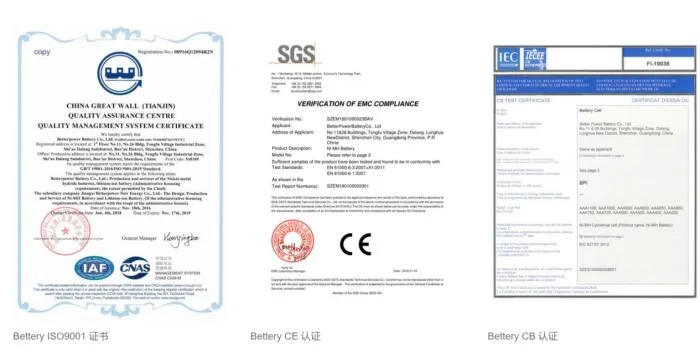
A: Yes. BPI products have passed globally mainstream safety certifications including UN38.3, UL, CE, and RoHS, and strictly adhere to ISO 9001 and ISO 14000 environmental quality management systems. The company has also passed ISO 13485 medical device quality management system certification, helping client products sell successfully at home and abroad.