Maternal and infant smart hardware—from baby monitors and electric breast pumps to intelligent thermostatic bottle warmers and children's early-learning devices—is entering millions of households at an unprecedented pace. These devices accompany babies around the clock, and whether the lithium battery running day and night inside them is safe and non-toxic has become the "invisible concern" that matters most to new-generation parents when making a purchase.
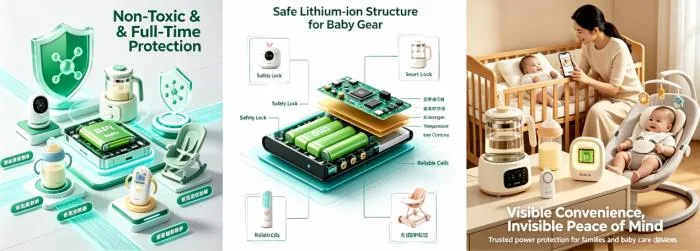
In recent years, as the concept of "scientific parenting" has taken root, safety standards for maternal and infant smart hardware have undergone a leap from "basic functional satisfaction" to "material-level safety." Parents no longer focus solely on whether a device "works well"; they are more concerned with whether it is "safe" and "non-toxic."
In baby-monitor scenarios, batteries run 24 hours a day while plugged in, and parents worry about risks of overcharge heating, swelling, or even fire. In electric breast-pump scenarios, batteries undergo high-frequency charge/discharge cycles, and mothers worry whether aging batteries will release harmful substances. In children's early-learning machines and story-teller devices, babies may hold, play with, or even chew on the device, raising concerns about whether electrolyte will leak or whether lead, mercury, and other heavy metals are present if the battery casing is damaged. These anxieties are not unfounded but represent genuine demands for "safety and non-toxicity."
This has directly driven the evolution of maternal and infant device batteries from "ordinary consumer-grade cells" toward "non-toxic and environmentally friendly, multi-layer safety, and full-lifecycle traceability." In the maternal and infant field—a domain tightly linked to baby health—the material safety, chemical stability, and structural safety of batteries have become the core elements determining whether a product can truly win consumer trust.
This imposes technical requirements on batteries far more stringent than ordinary consumer electronics, mainly manifested in the following four aspects:
Material Non-Toxicity and Environmental Friendliness: Batteries must not contain harmful heavy metals such as mercury, chromium, or lead. Electrolyte must adopt non-toxic or low-toxicity formulations, ensuring that even in accidental damage situations, no substances harmful to infants or young children are released. Batteries must pass RoHS and other environmental certifications, eliminating chemical hazards from the material source.
Structural Safety and Reliability: Maternal and infant devices may be touched, dropped, or even chewed on by babies. Batteries must adopt pouch polymer cells with aluminum-laminate film packaging—even in extreme cases of swelling, they will only vent pressure without rigid explosion. Built-in intelligent protection boards must possess hardware-level overcharge, over-discharge, and short-circuit protection, cutting off the circuit at the millisecond level when abnormalities occur.
Thermal Stability and Flame Retardancy: Maternal and infant devices often remain in long-term charging or high-power operation states. Batteries must pass stringent tests under international safety standards such as UL 1642 and IEC 62133, including overcharge, short-circuit, drop, and thermal shock tests. Casing materials must meet UL 94 V-0 flame-retardant standards, ensuring they will not fuel combustion during abnormal temperature rise.
Predictable Lifecycle: Within the 2–3 year product usage cycle, the performance degradation curve must be predictable and risks controllable. Cycle life must support ≥ 500 deep charge/discharge cycles (80% capacity retention), avoiding safety hazards such as swelling or sudden capacity drops after six months of use.
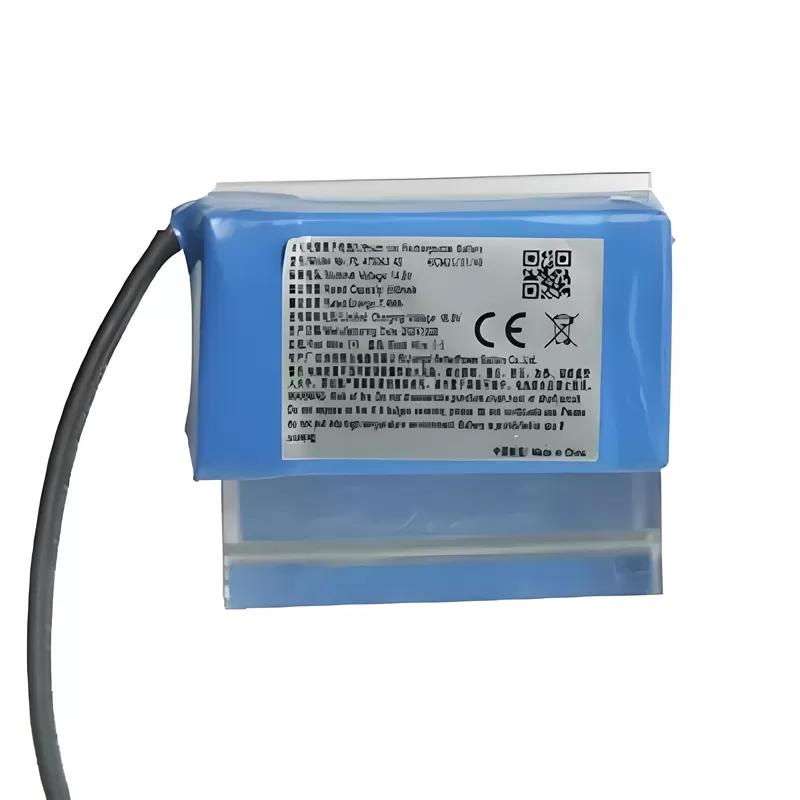
Among various battery technology routes, polymer pouch lithium batteries have become the mainstream power solution for maternal and infant devices by virtue of their "inherently safe" structural advantages and material environmental characteristics. The reason is that they perfectly align with the "safe and non-toxic" core demands of maternal and infant devices:
| Core Requirement | Polymer Pouch Lithium Battery Solution |
| Non-Toxic and Environmentally Friendly | Adopts polymer pouch lithium battery solutions, free of harmful heavy metals such as mercury, chromium, and lead; passes environmental certifications including RoHS and REACH, ensuring non-toxic and harmless properties for infants and young children from the material source. |
| No Explosion, No Leakage | Soft-pack aluminum-laminate film packaging, distinct from traditional steel-case batteries—even when internal pressure is abnormal, it only swells to vent pressure without rigid explosion; gel-state electrolyte fundamentally reduces leakage risk. |
| Multi-Layer Safety Protection | Built-in intelligent protection board cuts off the circuit at the millisecond level when overcharge, over-discharge, short-circuit, and other abnormalities occur; cooperates with NTC thermistors for real-time temperature monitoring, eliminating overheating hazards. |
| Slim and Lightweight Adaptation | Thickness, width, and length can be flexibly customized according to internal device space, perfectly embedding into compact bodies of baby monitors, breast pumps, and early-learning machines. |
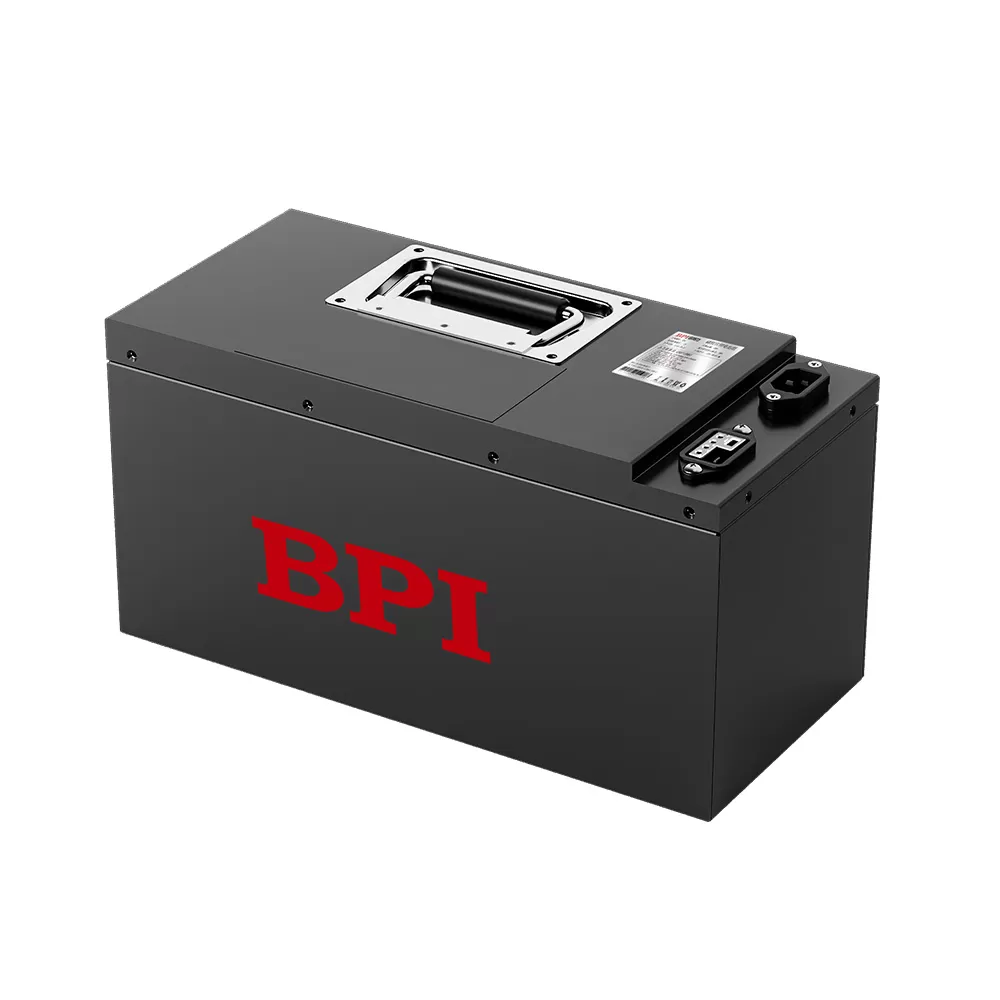
Established in 2002, BPI operates a headquarters in Shenzhen and a 200-mu wholly-owned intelligent manufacturing base in Yichun, Jiangxi. It is a national high-tech enterprise integrating lithium battery, nickel-metal hydride battery, PACK, and energy storage product R&D, production, and sales, with annual revenue exceeding RMB 500 million. Daily production capacity reaches 800,000 units for nickel-metal hydride and lithium batteries, with products sold to over 80 countries worldwide. The company holds more than 130 core battery patents, with multiple technologies including high-temperature explosion prevention and long-lasting low self-discharge leading the industry.
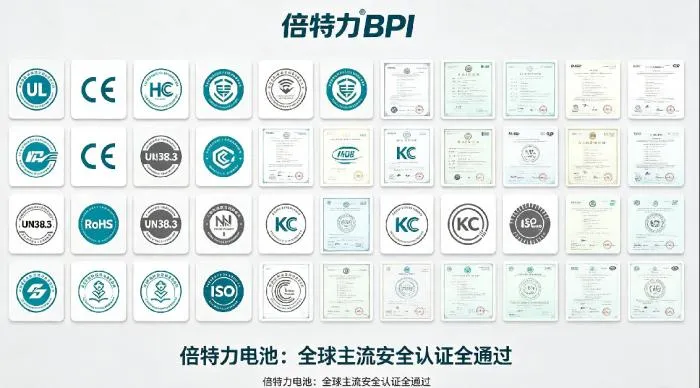
Material-Level Safety: Eliminating harmful substances from the source.BPI polymer lithium batteries adopt high-purity environmentally friendly materials, free of harmful heavy metals such as mercury, chromium, and lead. The full product series has passed RoHS and REACH environmental certifications. Electrolyte adopts a low-toxicity formulation, ensuring that even in accidental damage situations, no chemicals harmful to infants or young children are released. Products have passed globally mainstream safety certifications including UL, CE, RoHS, UN38.3, and KC, strictly benchmarking against UL 1642 lithium battery safety standards and IEC 62133 portable battery safety standards.
Structural-Level Safety: Pouch packaging does not explode.Utilizing pouch polymer cells with aluminum-laminate film packaging technology, distinct from traditional steel-case or aluminum-case batteries—when internal pressure is abnormal, it only swells to vent pressure without rigid explosion. Gel-state polymer electrolyte fundamentally reduces leakage risk, ensuring complete peace of mind for devices used in close proximity to infants and young children.
Circuit-Level Safety: Millisecond-level multi-layer protection.The built-in intelligent protection board works in coordination with NTC thermistors, cutting off the circuit at the millisecond level when overcharge, over-discharge, short-circuit, or overheating occurs. Products have passed stringent test items under UL 1642 standards including overcharge tests, short-circuit tests, and drop tests, ensuring safety and controllability even under abnormal operating conditions.
System-Level Safety: Full-process traceability.BPI has officially passed ISO 13485 medical device quality management system certification, signifying that the company's R&D, production, and quality management in the medical device battery field fully comply with international standards. From raw materials, production processes to final inspection, every battery is built upon a strict quality control system, with full-process traceability and control.
Ordinary digital batteries have relatively low control standards for heavy metal content and harmful substance leaching. When applied to maternal and infant devices—where babies may touch, chew on, or even break the device—electrolyte leakage after battery casing damage, if containing harmful substances such as lead, mercury, or chromium, will directly threaten infant and young child health. Brand owners lack hard requirements for environmental certifications such as RoHS and REACH, and have not established full-component battery material testing mechanisms.
Many brands' battery testing is limited to "whether capacity is sufficient" and "whether endurance is long," while safety testing only covers the most basic charge/discharge protection. However, maternal and infant scenarios are far more complex: whether the battery's internal structure is damaged after the device is dropped by a baby, whether the battery will undergo thermal runaway under high-temperature sun exposure, and whether long-term plugged-in overcharging will cause swelling—these issues tend to concentrate and become exposed only after product launch. Brand owners lack comprehensive benchmarking tests against safety standards such as UL 1642 and IEC 62133, and fail to verify battery safety under extreme operating conditions.
In maternal and infant smart devices, the truly critical components are often not the most dazzling. Whether the lithium battery hidden inside the device is non-toxic, safe, and reliable is the foundation that determines whether parents can truly feel at ease.
It is through the four-layer safety system of "non-toxic materials, non-exploding structure, multi-layer circuit protection, and full-process system traceability" that BPI polymer lithium batteries continuously deliver value in these "invisible yet baby-health-critical" core positions. They not only provide persistent power for devices but also, through stringent environmental and safety standards—RoHS non-toxic certification, UL 1642 safety certification, and ISO 13485 medical-grade quality system—ensure that every battery, from material to finished product and from factory delivery to end-of-life, remains safe and controllable, non-toxic and harmless throughout its full lifecycle.
In maternal and infant device applications, the battery is never merely an energy storage component but a core element of the entire device's safety and user experience. BPI consistently takes "safe and non-toxic" as its highest criterion, making every interaction between parents and babies more reassuring and every night's sleep more sound.
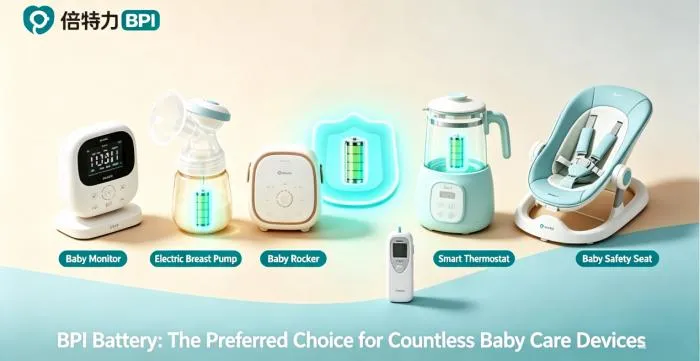
For maternal and infant device batteries, choose non-toxic, choose safe, choose BPI!
Q: Are BPI batteries truly "non-toxic"? If a baby chews on the device casing, will they be exposed to harmful substances?
A: Truly non-toxic. The full BPI polymer lithium battery series has passed RoHS environmental certification, free of harmful heavy metals such as mercury, chromium, and lead. Electrolyte adopts a low-toxicity formulation, and soft-pack aluminum-laminate film packaging will not rigidly explode even if damaged. Simultaneously, BPI has passed ISO 13485 medical device quality management system certification, with quality management standards benchmarking medical-grade requirements—from materials to finished products, the full process ensures non-toxic and harmless properties for infants and young children.
Q: Will the battery overheat, swell, or even catch fire during long-term plugged-in use?
A: No. BPI batteries have passed UL 1642 safety certification, having rigorously completed safety tests including overcharge, short-circuit, drop, and thermal shock. The built-in intelligent protection board and NTC thermistor cut off the circuit at the millisecond level during overcharge, over-discharge, short-circuit, or overheating. Soft-pack aluminum-laminate film packaging only swells to vent pressure without rigid explosion. Triple-layer protection ensures complete peace of mind for long-term plugged-in use.
Q: Will the battery release toxic gases or substances after prolonged use?
A: No. BPI polymer lithium batteries adopt solid/gel polymer electrolyte, fundamentally different from traditional liquid lithium batteries, reducing leakage and volatilization risks from the source. The full series of materials has passed RoHS environmental certification, free of harmful substances such as lead, mercury, and chromium. During the normal usage cycle (over 500 cycles with capacity retention ≥ 80%), battery materials maintain chemical stability and will not release harmful gases or substances.