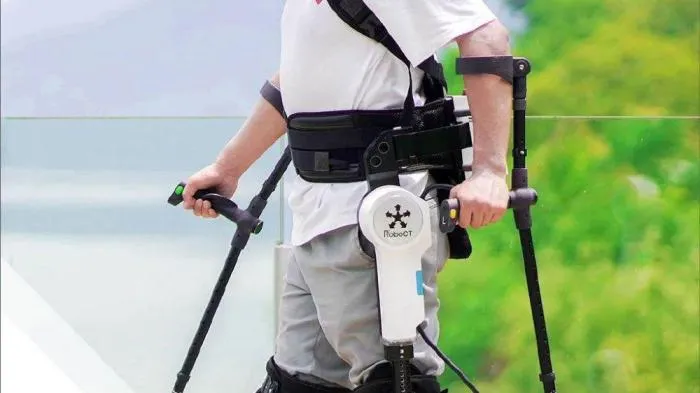
In logistics handling, factory assembly, and medical rehabilitation scenarios, exoskeleton robots are rapidly gaining traction. By leveraging mechanical joints to share human load and reduce lumbar muscle strain, they significantly lower occupational injuries caused by repetitive physical labor.
While most manufacturers' marketing focuses on mechanical structures, servo motors, and AI algorithm control systems, few mention the core component that determines the device's ceiling—the built-in power battery.
Many frontline users have encountered various pain points: cliff-like power drops during high-intensity handling, insufficient endurance for all-day operations requiring frequent charging, battery contact failure after prolonged vibration, significant performance degradation in outdoor high- and low-temperature environments, and risks of overheating and swelling during close-body wear.
As close-proximity wearable devices, exoskeletons' stability, safety, and lightweight design directly determine whether the product can achieve large-scale commercial deployment. A dedicated lithium battery adapted to actual working conditions is the true foundation of an exoskeleton robot.
High-Power Continuous Discharge, No Power Loss Under Heavy Load: When bending to lift or walking back and forth, motor instantaneous current fluctuates significantly. Ordinary digital cells experience rapid voltage sag under high-load conditions, resulting in weak joint assistance and sluggish response. High-quality batteries must maintain a stable discharge platform with consistent torque output throughout.
Close-Body Wear, Maximum Safety Rating: Batteries mounted on the lower back, waist, or outer legs remain in prolonged contact with the human body. Overcharge, short circuit, high temperature, and electrolyte leakage are zero-tolerance risks, necessitating comprehensive hardware protection mechanisms.
Lightweight Design Without Adding Burden: The original purpose of exoskeletons is to reduce load. If the battery is bulky and heavy, it instead increases wearing fatigue. Pouch lithium batteries can compress volume, reduce self-weight, and optimize overall weight distribution.
Long Cycle Life to Reduce Industrial O&M Costs: Factory and logistics scenarios involve high-frequency daily use. Rapid cell degradation cutting endurance in half within six months, combined with mass battery replacement across large device fleets, drives up operating costs. A stable cycle life exceeding 500 cycles is the fundamental threshold.
Full-Scenario Wide-Temperature Adaptation: Cold storage warehouses, summer outdoor construction sites, and northern low-temperature workshops present extreme temperature differentials. Batteries must retain rated capacity across high- and low-temperature environments to prevent endurance from being directly halved in winter.
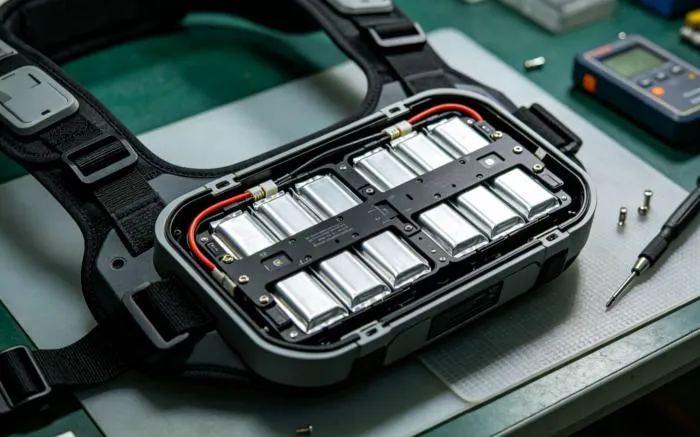
Cylindrical cells and prismatic steel-cased lithium batteries struggle to fit the irregular, narrow back and waist battery compartments of exoskeletons. Polymer lithium batteries possess inherent adaptation advantages:
Flexible Form-Factor Customization: Can be non-standard cut to match battery compartment length, width, and thickness, perfectly conforming to internal chassis structures with higher space utilization;
Enhanced Safety Attributes: Aluminum-laminate pouch packaging only exhibits mild swelling during abnormal failures, eliminating steel-case rupture or violent fire venting;
High Discharge Consistency: Low internal resistance design minimizes voltage fluctuation under high-current pulse conditions, delivering more linear assistance output;
Lightweight Integration: Lower weight at equivalent capacity reduces wearing burden.
With 24 years of deep expertise in the lithium battery industry, BPI has developed complete customized polymer battery power solutions targeting both industrial load-bearing exoskeletons and rehabilitation medical exoskeletons. From cell material selection, BMS protection boards, shock-resistant packaging, to aging testing, every step is specifically optimized to address industry-wide pain points.
| Core Requirement | Polymer Lithium Battery Advantage |
| Flexible Multi-Voltage Platform Customization | Supports mainstream exoskeleton voltage specifications of 12V/24V, with configurable 3S1P, 4S1P series-parallel PACK combinations. Brand partners need only provide battery compartment dimensions, motor power, and target endurance to receive a complete matched solution. |
| Stable Heavy-Load Discharge Without Degradation | Utilizes high-rate power-grade A-quality cells with stable pulse discharge platforms. No torque degradation occurs during prolonged load-bearing operations, meeting 8-hour long-shift operation requirements. |
| Multi-Layer Shock-Resistant Reinforcement Process | Designed for walking, jolting, and vibration scenarios with thickened tab welding + internal cushioning foam packaging. No solder joint detachment or circuit breakage occurs during long-term wearing. |
| Five-Level Intelligent Safety Protection | Each battery pack features a standard independent BMS mainboard + NTC temperature probe, achieving overcharge, over-discharge, overcurrent, short-circuit, and high-temperature power-cut protection, meeting wearable device access standards. |
| Wide-Temperature-Range All-Season Adaptation | Proprietary low-temperature electrolyte formulation with operating range covering -40°C to 85°C, enabling stable output in cold storage, summer outdoor, and southern rainy season environments. |
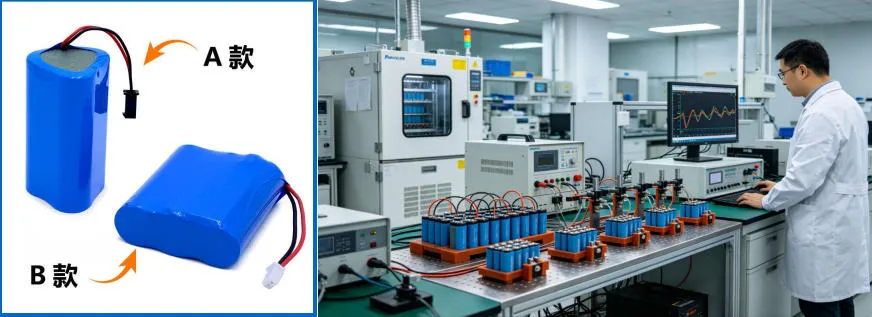
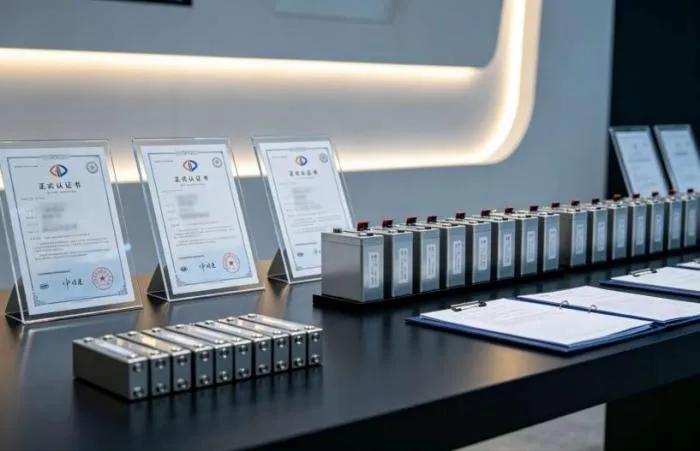
BPI operates two automated intelligent manufacturing bases in Shenzhen and Yichun, Jiangxi, holding over 200 lithium battery invention patents covering power electrolytes, high-safety packaging, and PACK shock-resistant structures.
Full-Chain Independent Production: Slurry mixing → electrode coating → rolling and winding → encapsulation and electrolyte filling → formation and aging → PACK integration. Every batch of batteries is traceable and controllable;
Rejecting simple assembly of generic cells, all batteries undergo accelerated simulation testing based on real exoskeleton working conditions: 8-hour continuous discharge, reciprocating vibration testing, and high-low temperature cycle aging, proactively eliminating after-sales risks post-mass production.
Simultaneously supporting small-batch prototyping + large-batch delivery to shorten new product R&D cycles, adapting to different cooperation models for startup brands and large equipment enterprises.
While public attention focuses on the dazzling mechanical joints and intelligent control systems of exoskeletons, what ultimately determines whether a device can serve stably and deploy safely is always the power battery hidden inside the chassis.
No anxiety about mid-operation power loss, no concerns about high-temperature safety, no frequent battery replacements driving up costs—BPI leverages years of power lithium battery R&D and manufacturing expertise to embed stable, lightweight, and high-safety power solutions into every exoskeleton device.
Let technology share the burden of labor, and let reliable batteries silently safeguard the entire journey—this is the long-term value the power industry bestows upon intelligent wearable equipment.
Q: Can BPI customize according to different exoskeleton robot battery compartment structures?
A: Full customization is supported. BPI polymer batteries adopt flexible pouch structures capable of adapting to various irregular, narrow compartments including integrated back-waist designs, split waist designs, and leg module designs. Multiple voltage platforms of 12V/24V are available with multi-series multi-parallel PACK combinations. Manufacturers need only provide battery compartment length, width, and height dimensions, rated power, and target endurance duration to receive matched dedicated cell specifications and complete PACK solutions.
Q: How long can a fully charged BPI battery pack for industrial exoskeletons sustain operation?
A: Light-duty assistive exoskeletons with standard 2Ah capacity can operate continuously for 6–8 hours under standard conditions; industrial models with 3.5Ah capacity can sustain high-intensity operations for 4–6 hours. Power cells maintain stable discharge voltage platforms with no noticeable weakening of assistance force in the latter half of operation, meeting all-day shift scheduling requirements.
Q: What are the practical benefits of selecting a high-stability voltage platform for exoskeletons?
A: At equivalent output power, high-voltage solutions operate with lower working current, reducing line heating and electrical energy loss. During heavy-lift high-current pulse output, voltage does not cliff-drop, ensuring stable motor torque throughout. During close-body wear, device heating is lower, making prolonged wearing more comfortable and safe, with smaller endurance fluctuations across seasonal environments.
Q: What does the rated 500-cycle charge/discharge lifespan correspond to in actual years of exoskeleton use?
A: In factory settings with one charge/discharge cycle per workday, 500 cycles provide stable use for 1.5–2 years; in alternate-day or day-shift-only scenarios, service life can reach 2–3 years. Products are strictly tested per IEC national standards for deep charge/discharge. After 500 cycles, capacity retention remains ≥80%, with no significant endurance shrinkage in later usage stages, eliminating the need for frequent bulk battery replacement.
Q: Will battery performance degrade significantly in winter cold storage or summer high-temperature workshops?
A: No. BPI exoskeleton-dedicated power batteries employ customized low-temperature electrolyte with an operating range covering -40°C to 85°C. Winter sub-zero cold storage environments will not cause capacity halving or power deficiency; summer enclosed high-temperature workshops will not accelerate cell aging, swelling, or overheating. Normal adaptation is achieved across multi-regional scenarios nationwide.
Q: With continuous vibration during exoskeleton walking, will batteries experience poor contact or safety hazards?
A: No. Batteries utilize thickened and widened tab ultrasonic welding with internal flexible cushioning shock-resistant packaging processes. Long-term walking jolts and joint vibration will not cause solder joint loosening or internal circuit breakage. Each battery pack carries an independent BMS protection board + real-time temperature measurement probe, featuring multi-layer power-cut protection against overcharge, over-discharge, overcurrent, short-circuit, and overheating, eliminating wearable risks from the source.