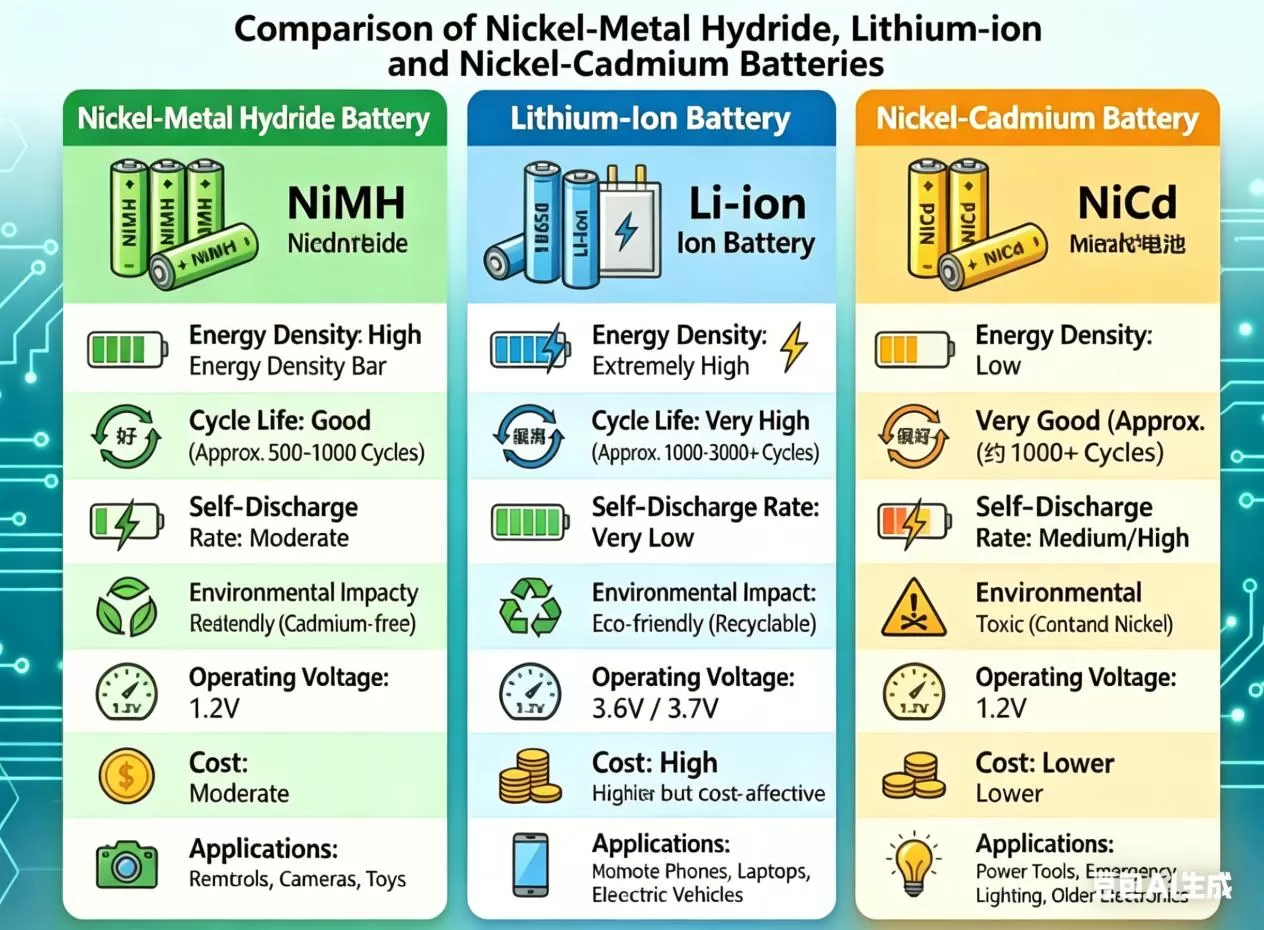
In the power supply solutions for concentrators (power concentrators, water/gas meter concentrators), the stability of the battery directly determines whether the equipment can operate uninterruptedly 7×24 hours. Especially in extreme environments such as outdoors and corridor shafts, choosing the right battery is more important than anything else.
Today, we will conduct an in-depth analysis: among industrial Ni-MH battery packs, lithium-ion batteries and Ni-Cd batteries, which one is the best choice for concentrators?
1. Wide temperature range: Outdoor exposure in summer can reach up to 105℃+, and low temperatures in northern winter can reach -40℃ or even lower. Ordinary batteries lose power in winter and swell in summer.
2. Long-term maintenance-free: Concentrators are large in quantity and wide in distribution, resulting in extremely high labor costs for battery replacement. The battery is expected to last for 3-5 years or even longer.
3. High reliability: As the core of data collection, no unexpected power failure or crash is allowed.
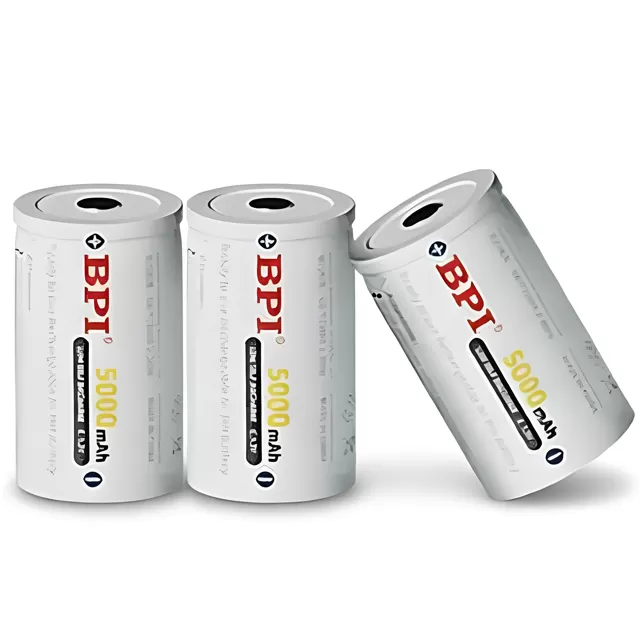
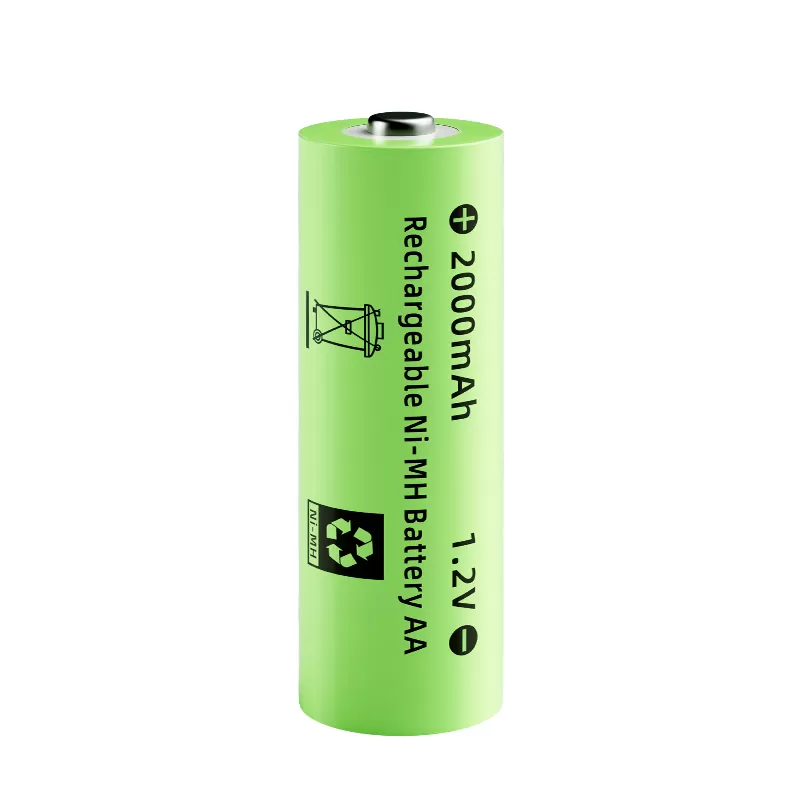
Temperature performance (⭐⭐⭐⭐⭐): This is its killer feature. Professional wide-temperature industrial Ni-MH battery packs can operate stably in a wide temperature range of -40℃ ~ +85℃. They maintain high capacity retention at low temperatures without "freezing"; they perform stably at high temperatures without swelling or leakage, perfectly adapting to the installation environment of concentrators. BPI wide-temperature series Ni-MH batteries are specially designed for such extreme environments. Its unique chemical system ensures stable performance in a wide temperature range, ensuring that concentrators still operate stably in severe cold and heat.
Safety (⭐⭐⭐⭐⭐): Free of heavy metal cadmium (compared with Ni-Cd), and not flammable and explosive like lithium batteries. The voltage platform is stable during overcharge and over-discharge, with extremely high safety, making it the first choice for industrial-grade applications.
Service life and maintenance (⭐⭐⭐⭐): Take BPI low self-discharge batteries as an example. With advanced low self-discharge technology, they can maintain more than 80% remaining capacity after being stored at room temperature for 1 year. The cycle life is usually more than 1000 times. Even if placed outdoors without charging for a long time, they can maintain an excellent standby state, truly realizing 5-8 years of maintenance-free operation.
Cost (⭐⭐⭐⭐): Although the unit price is slightly higher than that of Ni-Cd, considering the total life cycle cost (TCO) of 5-8 years, it is cheaper than lithium batteries and more environmentally friendly and durable than Ni-Cd.
Temperature performance (⭐⭐): Although there are low-temperature lithium batteries now, the capacity attenuation of lithium batteries is still obvious at -20℃ extreme environment, and there is a risk of "lithium precipitation".
Safety (⭐⭐): This is the biggest hidden danger. Lithium batteries have the risk of fire and explosion when exposed to high temperatures or physical damage. Most concentrators are used in dense environments, and the consequences of thermal runaway are serious.
Applicable scenarios: Only recommended for short-cycle projects with extreme requirements for volume and weight and relatively constant ambient temperature.
Temperature performance (⭐⭐⭐): Although it can also achieve wide temperature, it has a serious memory effect in use and is relatively troublesome to maintain.
Environmental protection and cost (⭐): Contains highly toxic heavy metal cadmium, which cannot pass environmental protection testing. Its comprehensive characteristics are inferior to Ni-MH, and it has been gradually replaced by Ni-MH in mainstream concentrator projects.
If your project is outdoors, in severe cold northern areas or high-temperature workshops: choose industrial Ni-MH battery packs first. It combines wide-temperature adaptability, safety and stability, and long-term cost performance, making it the optimal solution for concentrator power supply.
If pursuing extreme volume and constant ambient temperature: special lithium-ion batteries can be considered.
If only focusing on low price: Ni-Cd is only suitable for replacement of specific old equipment.
1. Look for wide-temperature type: Do not buy ordinary consumer-grade Ni-MH batteries. You must confirm with the supplier whether they support -20℃ discharge. BPI industrial Ni-MH battery packs have real wide-temperature performance and remain stable in extreme environments.
2. Check low self-discharge performance: The key to long-term maintenance-free is low self-discharge. BPI low self-discharge batteries have a capacity retention rate of more than 80% after 1 year of storage, ensuring that the equipment does not lose power during long-term standby.
3. Check the protection board (BMS): Industrial-grade battery packs must be equipped with complete overcharge, over-discharge and overcurrent protection.
4. Pay attention to internal resistance: Low internal resistance can ensure no heat generation during high-current discharge and prolong equipment service life. BPI adopts the industry-leading electrode sheet process design scheme, with lower internal resistance, longer and more stable discharge platform.
5. Complete certifications: Confirm that relevant safety certifications such as UN38.3, CE, UL2054, IEC62133 are available to ensure export or project acceptance. BPI products have passed many authoritative certifications at home and abroad, with guaranteed quality.
6. Match voltage and capacity: Accurately calculate the capacity demand according to the power consumption and backup duration of the concentrator, and do not blindly pile up capacity.