In modern urban life, window cleaning robots are transitioning from "novel technology" into millions of households. Yet countless users have experienced this: the machine has just adhered to the glass and cleaned only a few strokes when the red light starts flashing an alarm; despite being charged all night, it runs out of power on the second use; during high-altitude operation, it suddenly loses power and detaches, sending chills down the spine. On social media, complaints such as "the battery doesn't last," "won't charge after a few uses," and "after-sales battery replacement costs hundreds" are everywhere.
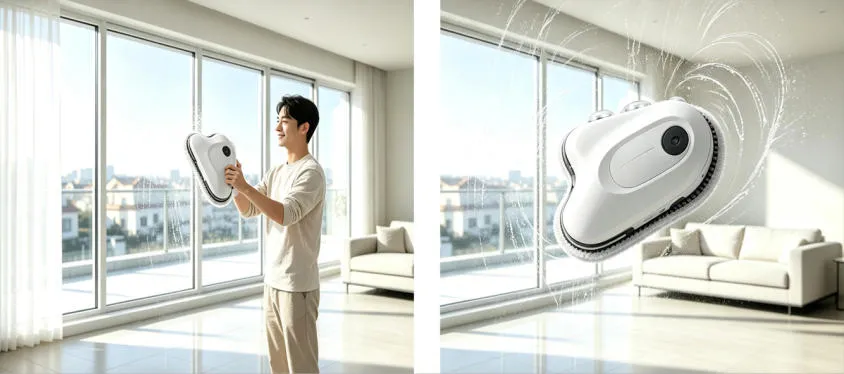
A window cleaning robot is an intelligent cleaning device specifically designed for glass cleaning on high-rise buildings. Its working principle is straightforward: through a built-in vacuum adsorption system, the body is tightly attached to the glass surface, moving on the glass via tracks or rollers while using cleaning cloths or squeegees to wipe the glass. The core control system monitors air pressure and position in real time, ensuring the machine walks stably on vertical glass surfaces without falling. Whether for home windows, floor-to-ceiling glass curtain walls, or shopping mall display windows, window cleaning robots can efficiently complete cleaning tasks. However, whether this "high-altitude cleaner" can avoid failing at critical moments—when the machine operates on glass dozens of meters high, can the battery stably output sufficient suction power without suddenly cutting out? When continuously cleaning large-area curtain walls, can the battery support the complete operation without stopping midway?—often depends on that power battery concealed within the chassis.
In recent years, with the continuous growth of urban high-rise buildings, upgrades in home living environments, and breakthroughs in lithium battery technology and intelligent control systems, wireless window cleaning robots are transitioning from "nice-to-have" to "essential tools." In home scenarios, they allow high-rise residents to bid farewell to the danger of leaning out windows to clean glass. In commercial scenarios, they enable property cleaning staff to significantly improve cleaning efficiency. In hotels, office buildings, and other large-area glass curtain wall scenarios, they are indispensable cleaning tools. Window cleaning robots are no longer merely supplements to home appliances but are becoming essential cleaning equipment that safeguards building aesthetics and residential safety.
In this context, the battery is not only a source of energy but also the core of device safety and cleaning efficiency. The industry's key concern is not how powerful the robot's suction is, but whether it can work stably and reliably at critical moments. When the machine operates on glass surfaces dozens of meters high, can the battery continuously output sufficient power to maintain adsorption force without suddenly cutting out and detaching? When property cleaning staff need to continuously clean an entire building, can the battery support the complete operation across multiple glass panels without stopping midway? When the window cleaning robot is bumped or moved during use, can the battery's internal structure withstand impact without contact failure?
In real user feedback, complaints such as "battery runtime drops significantly after half a year," "fully charged but runs out after cleaning only a few glass panels," and "battery swelling causing machine casing deformation" are common. This has directly driven window cleaning robot batteries to continuously evolve from "ordinary consumer-grade cells" toward "high-rate discharge, high safety and reliability, long cycle life, and wide temperature range operation." Therefore, in window cleaning robots—a device directly related to high-altitude work safety—the battery's discharge performance, safety protection, cycle life, and environmental adaptability have become the core factors determining whether a product can truly win user trust and stand out in the fiercely competitive cleaning equipment market.
Although window cleaning robots are not large in size, their working logic and usage scenarios impose far more complex and stringent design requirements on batteries than ordinary portable electronic products:
● High-power drive continuous discharge requirement: Window cleaning robots need to simultaneously drive the vacuum adsorption system and the movement system. The vacuum pump must continuously generate sufficient negative pressure to resist gravity, ensuring the machine firmly adheres to vertical glass surfaces. If the battery cannot stably output sufficient power, decreased suction force will create a risk of the machine detaching. The battery must possess voltage stability under continuous high-current discharge, eliminating safety hazards caused by excessive voltage drop leading to insufficient adsorption force.
● Dual challenge of lightweight design and high energy density: Window cleaning robots are handheld or portable devices; body weight directly affects user operating experience and adsorption reliability. The battery must achieve 650mAh capacity and a 14.8V high-voltage platform within a compact size of 44mm×30mm×48mm, ensuring sufficient runtime without making the entire machine too heavy and affecting adsorption performance.
● Long cycle life for high-frequency use: Window cleaning robots are high-frequency use devices in both home and commercial scenarios, possibly used several times per week. Ordinary cells experience significant capacity degradation after 200–300 cycles, with users noticing obvious runtime shrinkage within less than a year. The battery must possess excellent cycle life to ensure the long-term user experience remains uncompromised.
● Adaptability to high and low temperature environments: Window cleaning robots are often placed by windows in direct summer sunlight (above 50°C) or used in cold winter environments. Ordinary batteries experience increased internal resistance and decreased discharge capability at low temperatures, while high temperatures accelerate aging and may even trigger safety hazards. The battery must support stable operation across a wide temperature range.
● Anti-vibration and safety in mobile scenarios: Window cleaning robots continuously generate vibration while moving on glass surfaces, and bumps are inevitable during transport. The battery pack's internal structure must be robust with secure welds, eliminating contact failure or open circuits caused by vibration. Moreover, for devices directly related to high-altitude safety, overcharge, over-discharge, overcurrent, short-circuit, and overheat protections are all indispensable.
Among various battery technology routes, high-performance polymer lithium-ion batteries, with their comprehensive performance advantages, have become the mainstream power solution for window cleaning robots. Compared with traditional cylindrical steel-shell batteries, polymer lithium batteries adopt aluminum-laminated film soft packaging and stacked internal structures, inherently possessing unique advantages of flexible form factors, light weight, and high safety coefficients.
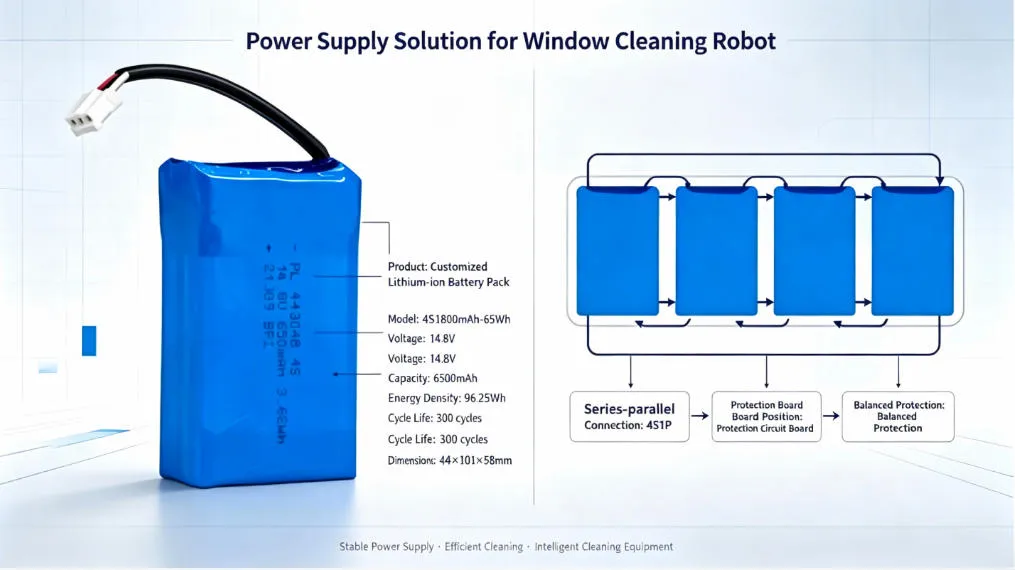
Taking the BPI 443048×4S polymer battery pack (14.8V/650mAh, 4S1P) as an example—it uses four 443048 polymer cells connected in series, achieving a 14.8V high-voltage platform and 650mAh reliable capacity within a compact volume, perfectly matching the dual requirements of window cleaning robots for high-voltage drive and high-current discharge:
| Core Requirement | Polymer Lithium Battery Solution |
| High-Power Drive | 14.8V high-voltage platform; four cells in series output abundant power, easily handling the simultaneous operation of vacuum pump and drive motor, ensuring stable adsorption force. |
| Long-Lasting Endurance | High energy density system; a single 443048 cell achieves optimized capacity within a 44×30×48mm space, and the 4S1P configuration meets the demand for continuous cleaning of multiple glass panels. |
| Long Cycle Life | Premium polymer cells maintain over 80% capacity retention after 500 deep charge and discharge cycles, far exceeding the lifespan standards of ordinary cells. |
| Intrinsic Safety | Aluminum-laminated film soft-pack structure swells rather than explodes under abnormal internal pressure; the four-series protection board provides multiple protections against overcharge, over-discharge, overcurrent, short circuit, and temperature. |
| Lightweight Design | Stacked structure achieves over 95% space utilization, with light weight that does not affect the machine's adsorption performance or handheld operating experience. |
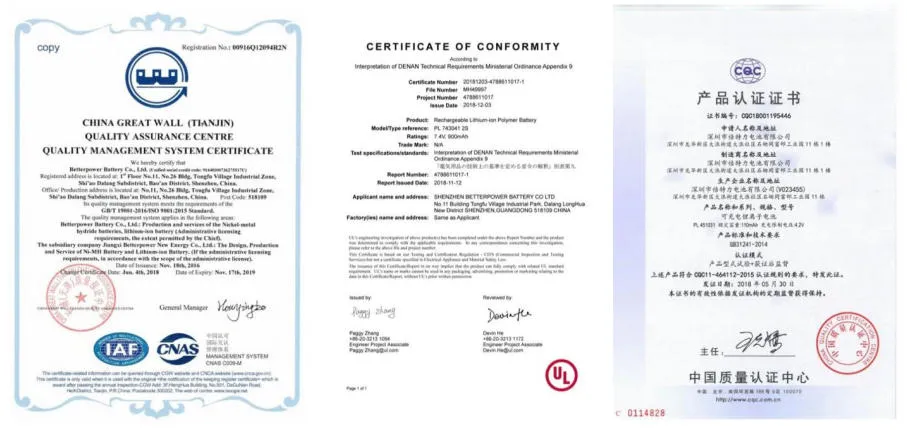
More importantly, it directly serves the intrinsic safety of high-altitude operations. Addressing the characteristics of window cleaning robots working in high-altitude environments, premium polymer lithium batteries have passed international safety certifications including UL, CE, and RoHS. Through built-in NTC thermistors and hardware-level protection boards, they can instantaneously cut off the circuit when encountering abnormal heating, external short circuits, or overcharge/over-discharge, eliminating safety hazards at the source and ensuring every high-altitude cleaning operation is worry-free.
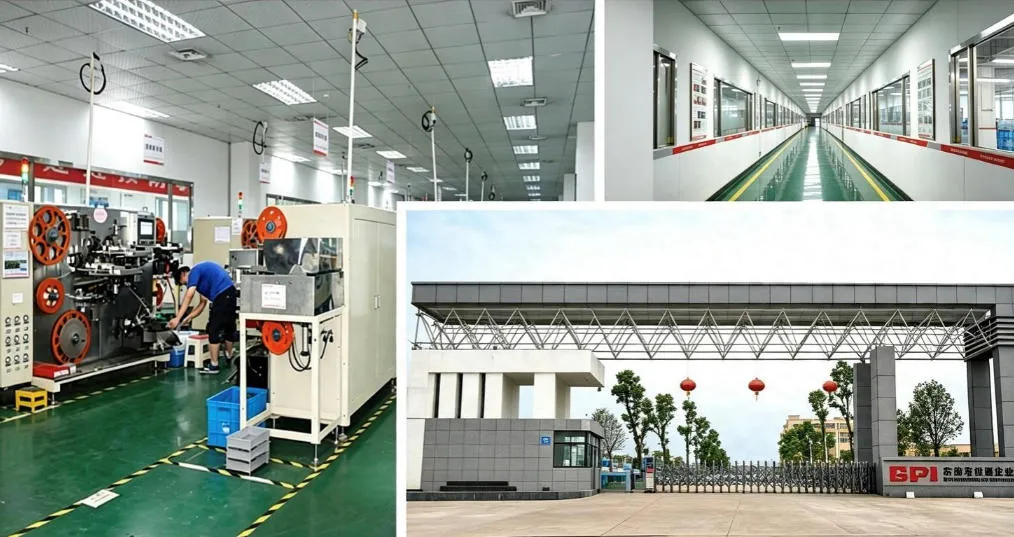
As a manufacturing enterprise with over 20 years of deep engagement in the battery industry, BPI (Better Power) has developed a complete and mature product system in the lithium battery field, accumulating extensive experience in personal care, maternal and infant health, and other fields with extremely high reliability requirements. Founded in 2002 and headquartered in Shenzhen, the company operates two major production bases in Longhua, Shenzhen and Yichun, Jiangxi, covering a total area of over 200 acres with more than 1,500 employees. In 2023, the Phase III fully automated factory of Jiangxi BPI New Energy commenced production, with daily lithium battery capacity exceeding 500,000 units and total daily output of various batteries surpassing 1.5 million units. The company has successively been recognized as a National High-Tech Enterprise and a National Specialized and Innovative "Little Giant" Enterprise. Its products have passed international certifications including UN38.3, UL, CE, RoHS, REACH, and KC, exporting to over 80 countries and regions worldwide. The company holds more than 200 national patents, covering core areas such as high-rate batteries, low-temperature electrolyte formulations, and battery pack structural design.
Addressing the three core requirements of window cleaning robots—"high-power drive demand," "intrinsic safety for high-altitude operations," and "long-term use cycle life"—BPI has launched the 443048×4S polymer battery pack (14.8V/650mAh, 4S1P). It uses four high-quality 443048 polymer cells connected in series, achieving a 14.8V high-voltage platform and 650mAh reliable capacity within a compact volume, providing abundant power for window cleaning robots.
At the product design stage, BPI is already application-scenario-oriented: addressing the high-frequency charge and discharge characteristics of window cleaning robots, it selects low-internal-resistance, high-consistency Grade A cells to ensure over 80% capacity retention after 500 cycles; addressing the safety requirements of high-altitude operations, it incorporates a high-precision four-series protection board providing multiple hardware-level protections against overcharge (16.8V±0.05V), over-discharge, overcurrent, short circuit, and temperature; addressing the bumping scenarios of mobile use, it adopts enhanced tab processing and flexible packaging technology, significantly improving the battery pack's anti-vibration and anti-impact performance. The BPI 443048×4S battery pack, with its outstanding performance of high-voltage platform, long cycle life, intrinsic safety, and lightweight design, provides trustworthy power assurance for window cleaning robots.
1. Misconception One: Copying low-rate cell solutions from digital products. Ordinary digital cells are designed for devices such as smartphones and tablets, while window cleaning robots need to simultaneously drive vacuum pumps and drive motors, with instantaneous current demands far exceeding those of digital products. If conventional cells are used, their output voltage drops sharply, leading to insufficient suction force, causing the machine to slip or even detach from the glass—not only affecting cleaning effectiveness but also creating safety risks of high-altitude falls. Ordinary cells operating at high power for extended periods experience significant capacity drops after 200–300 cycles, with users noticing severe runtime shrinkage within half a year.
2. Misconception Two: Neglecting the stringent safety requirements of high-altitude scenarios. Window cleaning robots operate dozens of meters high; once a battery failure causes the machine to detach, the consequences are unimaginable. Battery packs without rigorous safety validation may cause fire or explosion under abnormal conditions such as overcharge, over-discharge, or short circuit. Window cleaning robot batteries must prioritize safety—overcharge, over-discharge, overcurrent, short-circuit, and temperature protections are all indispensable, and the protection board must feature dual redundant design.
3. Misconception Three: Underestimating long-term cycle life and reliability. Window cleaning robots are high-frequency use devices in both home and commercial scenarios. Battery packs without rigorous cycle life validation may see capacity degrade to below 60% of the nominal value after one year of use—a battery that originally could clean an entire curtain wall may only manage a few glass panels before running out, severely compromising the user experience and leading to premature scrapping of the entire machine.
4. Misconception Four: Insufficient structural protection, ignoring vibration and impact in mobile scenarios.** Window cleaning robots continuously generate vibration while moving on glass surfaces, and bumps are inevitable during transport. Battery packs without targeted structural reinforcement are highly prone to internal weld loosening and tab fracture under frequent vibration—at best causing intermittent contact failure and device power cuts, at worst triggering internal short circuits and other safety hazards.
Window cleaning robots and batteries, high-altitude operations and the source of power—both are indispensable. No matter how powerful the adsorption system, if the battery cannot supply stable power, a machine dozens of meters high becomes as unsettling as a sword hanging overhead.
BPI never compromises. From cell selection to battery pack packaging, from protection board solutions to factory inspection, every battery is crafted to stringent standards. The 443048×4S battery pack ensures abundant adsorption force with its 14.8V high-voltage platform, supports complete cleaning operations with 650mAh capacity, accompanies the device through years of calm reliability with 500 long cycles, and eliminates hazards at the source with quadruple safety protection. More precious than parameters is BPI's consistent quality commitment over more than two decades—full-process traceability, every batch verifiable, ensuring every battery pack leaving the factory carries reverence for and guardianship of high-altitude work safety.
We deliver not just batteries, but the certainty felt with every window cleaned.
BPI 443048×4S Window Cleaning Robot Battery Pack—High Voltage, Long Cycle Life, Safer
Q: Does BPI's window cleaning robot battery solution support customization for internal chassis space?
A: Yes. BPI polymer batteries adopt a stacked soft-pack structure and can provide customized battery pack configurations of the 14.8V voltage platform with various series-parallel combinations such as 4S1P and 4S2P, according to different space constraints inside the window cleaning robot chassis. Simply provide the dimensions of the battery compartment (thickness × width × length), and we will match the most suitable battery model.
Q: How long can the 443048×4S-650mAh battery support in actual use?
A: Calculated based on typical usage scenarios (adsorption power approximately 20W–30W, movement power approximately 5W–10W), the battery can sustain continuous operation for 20–30 minutes on a full charge, sufficient to clean 5–8 standard windows (depending on glass size and cleaning mode). BPI uses high-quality polymer cells with a stable discharge platform and high efficiency, ensuring ample cleaning time with every use.
Q: What are the advantages of the 14.8V high-voltage platform?
A: Compared with a 7.4V platform, the 14.8V voltage halves the current at the same power, resulting in lower line losses, reduced heat generation, and higher overall machine efficiency. Meanwhile, the high-voltage platform can more effectively drive the vacuum pump to achieve rated adsorption force, ensuring the machine works stably on vertical glass surfaces without detaching.
Q: What does the 500-cycle lifespan mean in actual use?
A: Calculated at 2–3 uses per week and 1–2 charge-discharge cycles per week, 500 cycles approximately equal a normal usage period of 2–3 years. BPI strictly implements IEC testing standards, maintaining ≥80% capacity retention after 500 cycles. Even after two to three years of use, the battery can still maintain over 80% of its original runtime, far exceeding the degradation level of ordinary cells on the market.
Q: Can the battery operate normally in high summer temperatures and low winter temperatures?
A: Yes. The BPI 443048×4S battery supports a wide operating temperature range of -40°C to 85°C. Whether by a high-temperature window in direct summer sunlight or in cold winter environments, it can output stably. The product design fully considers the usage requirements of window cleaning robots under different seasons and climate conditions.