Lithium batteries for power tools are rechargeable battery packs designed to deliver high current, stable voltage, and long runtime for cordless drills, saws, grinders, impact drivers, lawn tools, and industrial equipment. As professional users move away from corded tools and older Ni-Cd batteries, lithium-ion battery packs have become the mainstream power source for modern cordless tools.
For OEM brands, distributors, and industrial buyers, choosing the right power tool battery is not only about capacity. The real performance depends on cell type, discharge rate, pack structure, Battery Management System (BMS), thermal design, certifications, charger compatibility, and supplier manufacturing capability.
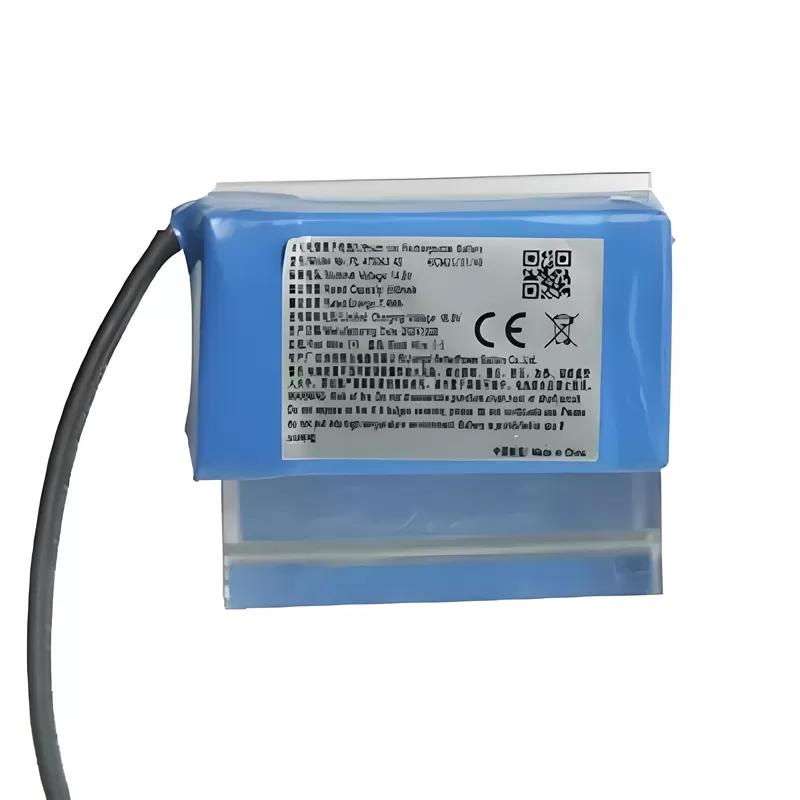
Lithium batteries for power tools are compact rechargeable battery packs that use lithium-based cells to provide portable, high-output energy for cordless electric tools. These packs usually combine cylindrical cells such as 18650 or 21700, a protective casing, nickel tabs, wiring, connectors, temperature sensors, and a BMS or protection circuit.
Compared with older nickel-cadmium batteries, lithium-ion batteries are lighter, charge faster, hold energy better during storage, and provide more usable power under heavy load. This is why they are widely used in cordless drills, impact wrenches, circular saws, angle grinders, electric screwdrivers, garden tools, and construction equipment.
BPI Battery provides dedicated power tool battery solutions for cordless drills, saws, grinders, and industrial tools. According to BPI, quality lithium-ion power tool batteries typically last between 500 and 1,500 charge cycles, depending on usage conditions and charging practices.
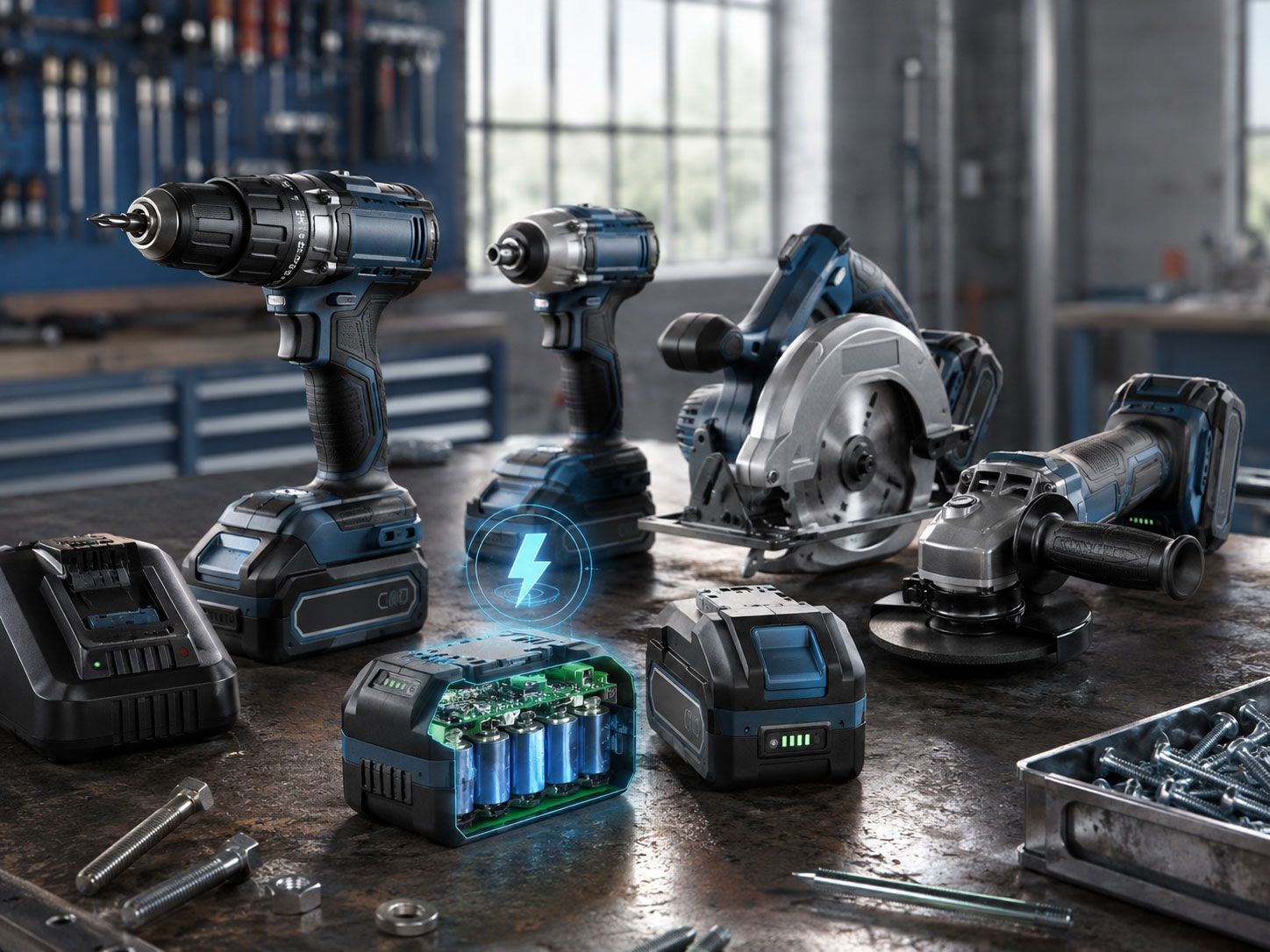
Lithium-ion batteries are better for cordless power tools because they deliver higher energy density, stronger power output, lower self-discharge, and better runtime than many traditional rechargeable battery types. For contractors and tool manufacturers, this means more work per charge, shorter downtime, and lighter product design.
A power tool battery must handle short bursts of high current when the motor starts, cuts, drills, or grinds under load. This makes high-rate discharge capability essential. A weak battery may cause voltage drop, overheating, poor torque, or unexpected shutdown. A well-designed lithium battery pack maintains stable output while protecting the cells from overcharge, over-discharge, short circuit, and overheating.
Safety and compliance are also important. UL’s power tool battery testing and certification services reference standards such as IEC/UL 62841-1, UL 2595, IEC/UL 60335-2-29, and UN38.3 for lithium-ion batteries, battery packs, tools, and chargers. This is especially relevant for OEM buyers selling into global markets.
A power tool battery should be selected by chemistry, voltage, capacity, discharge performance, weight, cycle life, and safety design. The table below compares common battery options used in cordless tools and related equipment.
| Battery Type | Typical Strength | Typical Cycle Life | Weight & Size | Best Use Case |
|---|---|---|---|---|
| Lithium-ion | High power, fast charging, good energy density | 500–1,500 cycles | Lightweight | Drills, saws, grinders, impact tools |
| LiFePO4 | High safety, long life, stable chemistry | 2,000+ cycles in many applications | Larger than Li-ion | Industrial packs, carts, storage-related tool systems |
| NiMH | Mature technology, safer storage, lower cost | 500–1,000 cycles | Heavier than lithium | Replacement packs, medium-power devices |
| Ni-Cd | Strong discharge, older technology | 500–1,000 cycles | Heavy | Legacy cordless tools, older platforms |
For most modern cordless power tools, lithium-ion packs using 18650 or 21700 cells are the most practical choice because they balance energy density, discharge rate, pack size, and cost. BPI’s battery packs support voltage ranges from 12.8V to 72V and can be configured with 18650, 21700, cylindrical, prismatic, and aluminum-cased structures for power tools and energy storage applications.
Choosing a lithium battery pack for power tools means matching voltage, capacity, discharge rate, cell format, BMS protection, housing strength, and certification requirements to the tool’s real working load. A compact screwdriver, a cordless drill, and an angle grinder do not place the same stress on a battery pack.
For high-torque tools, prioritize high-rate cells, low internal resistance, good heat dissipation, and strong structural welding. For portable tools used all day, capacity and weight balance are critical. For industrial and outdoor tools, buyers should also consider vibration resistance, dust protection, operating temperature, charger compatibility, and pack replacement design.
BPI’s cylindrical battery packs offer 2–20 series and parallel customization, real-time BMS protection against overcharging, over-discharging, short circuits, and overheating, and modular structures for maintenance and replacement. For OEM/ODM projects, battery packs can be customized in voltage, capacity, dimensions, discharge rate, connectors, housing, and BMS design.
Buyers should also check safety practices. The U.S. Consumer Product Safety Commission’s battery safety information highlights risks such as overheating, fire, electrical shock from chargers, thermal burns, and battery-related incidents during use, storage, and charging. For international shipment, PHMSA’s lithium battery transportation rules explain that lithium batteries are regulated as hazardous materials and must meet applicable transport requirements.
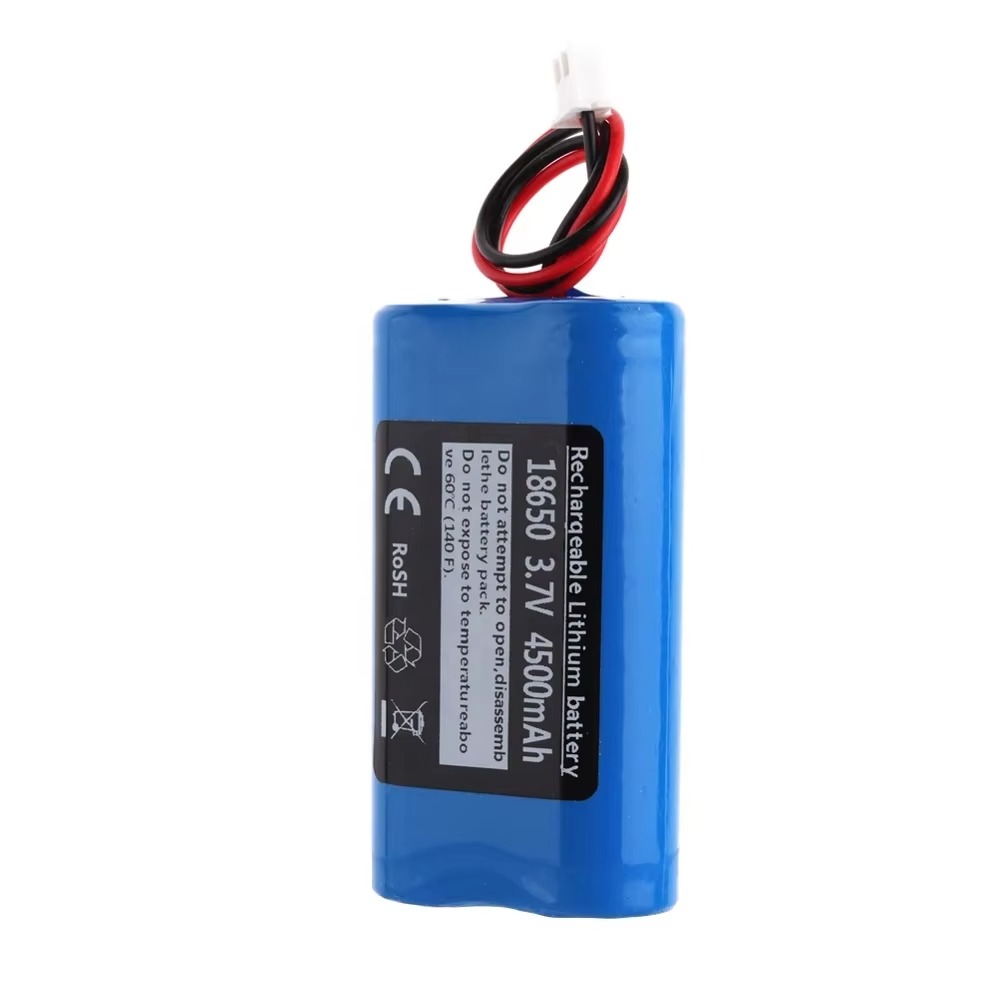
Lithium batteries have become the preferred power source for cordless tools because they combine high output, compact size, faster charging, and longer usable runtime. For professional users, the right battery improves productivity. For tool brands and OEM buyers, the right supplier improves product reliability, safety, and market competitiveness.
BPI Battery, founded in 2002, is a rechargeable battery manufacturer producing lithium batteries, NiMH batteries, NiZn batteries, battery packs, and energy storage systems. With more than 1,400 employees, daily battery production exceeding 1.5 million units, and products sold in more than 80 countries, BPI can support power tool battery customization from cell selection to final pack integration.
Lithium-ion battery packs are usually the best choice for modern cordless power tools because they provide high power output, lightweight design, fast charging, and strong runtime performance.
A quality lithium-ion power tool battery typically lasts about 500 to 1,500 charge cycles, depending on cell quality, discharge load, charging habits, temperature, and BMS protection.
Both can be suitable. 18650 cells are mature and widely used, while 21700 cells can offer higher capacity and stronger discharge performance in some pack designs. The best choice depends on tool size, power demand, and cost target.
Yes. Power tool battery packs can be customized by voltage, capacity, discharge rate, housing structure, connector, communication function, BMS design, and charger compatibility.
Overheating may be caused by high-current discharge, poor heat dissipation, incompatible chargers, cell aging, short circuits, mechanical damage, or low-quality cells. A reliable BMS and strong pack structure help reduce this risk.
BPI Battery offers lithium battery pack customization, cylindrical battery pack design, BMS protection, OEM/ODM support, and manufacturing experience for cordless tools, industrial tools, energy storage, and other rechargeable battery applications.