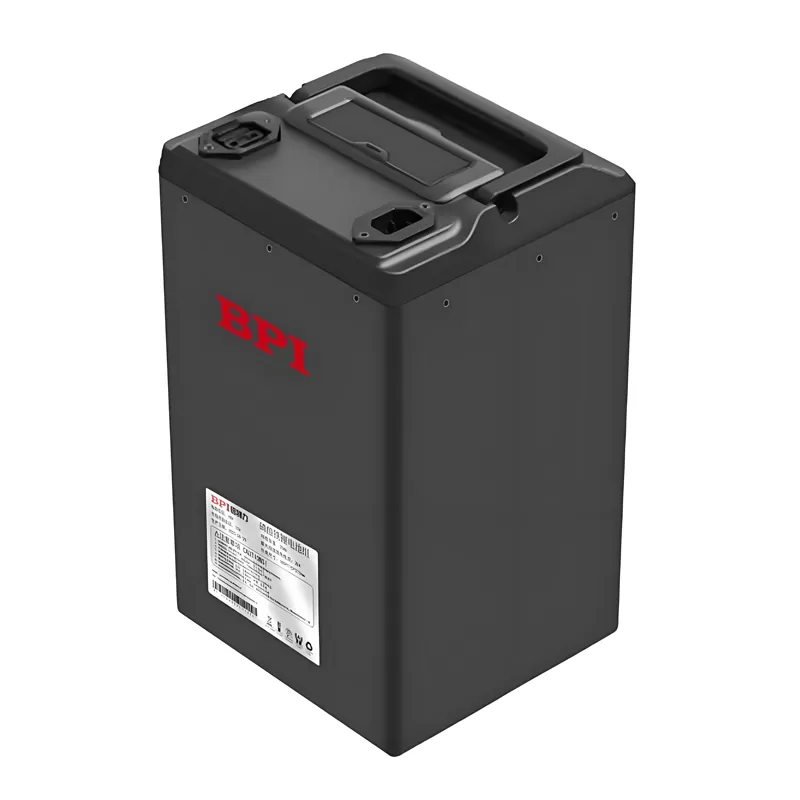
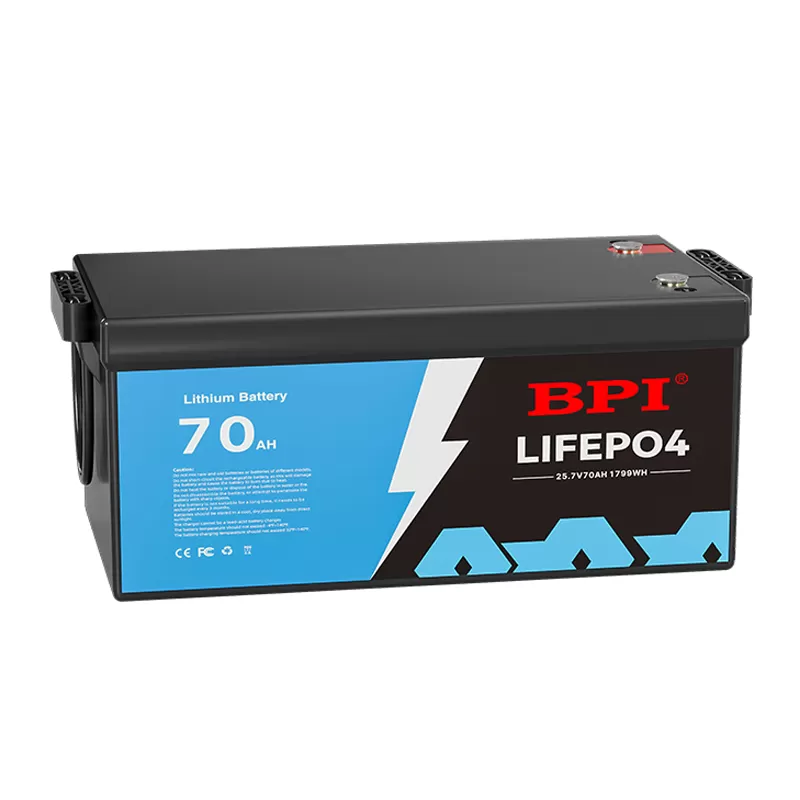
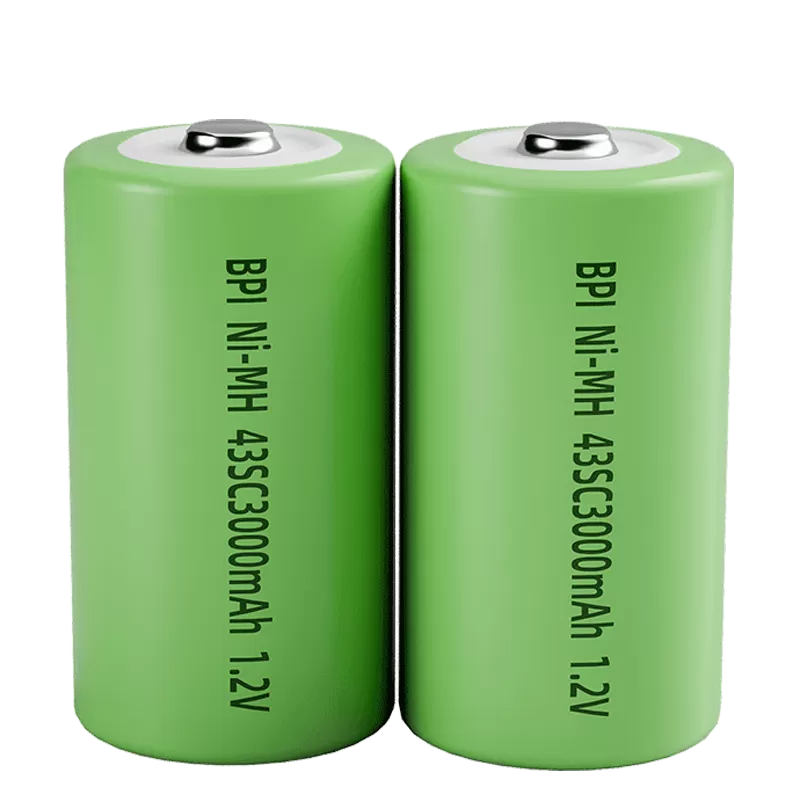
Geological exploration equipment — including seismic nodes, groundwater monitoring terminals, and high-precision surveying instruments — acts as the nerve endings for humans to sense the Earth’s dynamics. Such equipment is often deployed in remote wilderness, deep mines, or frigid glaciers. In these harsh environments, whether equipment can stably collect and transmit data over the long term depends largely on a small but critical battery.
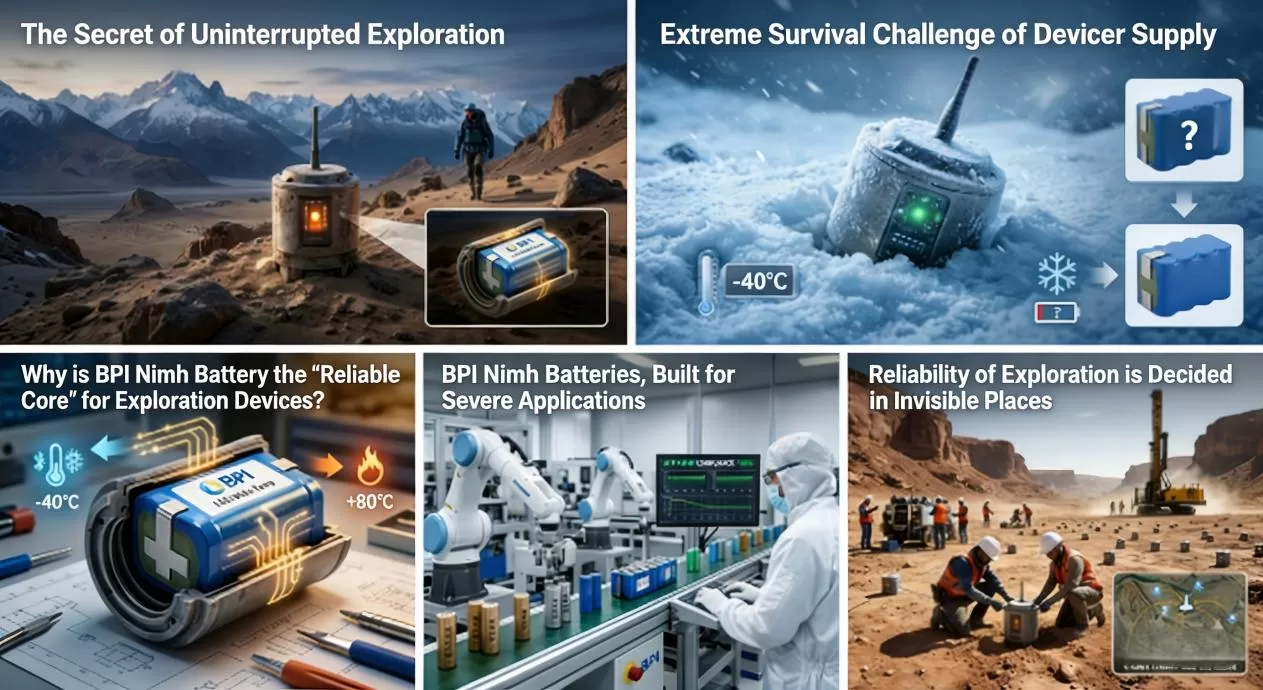
In recent years, as geological exploration has become automated and unmanned, long-term standby and extreme-environment operation have become basic requirements. This has driven the power supply for exploration equipment to evolve from “merely usable” to reliably stable for the long term.
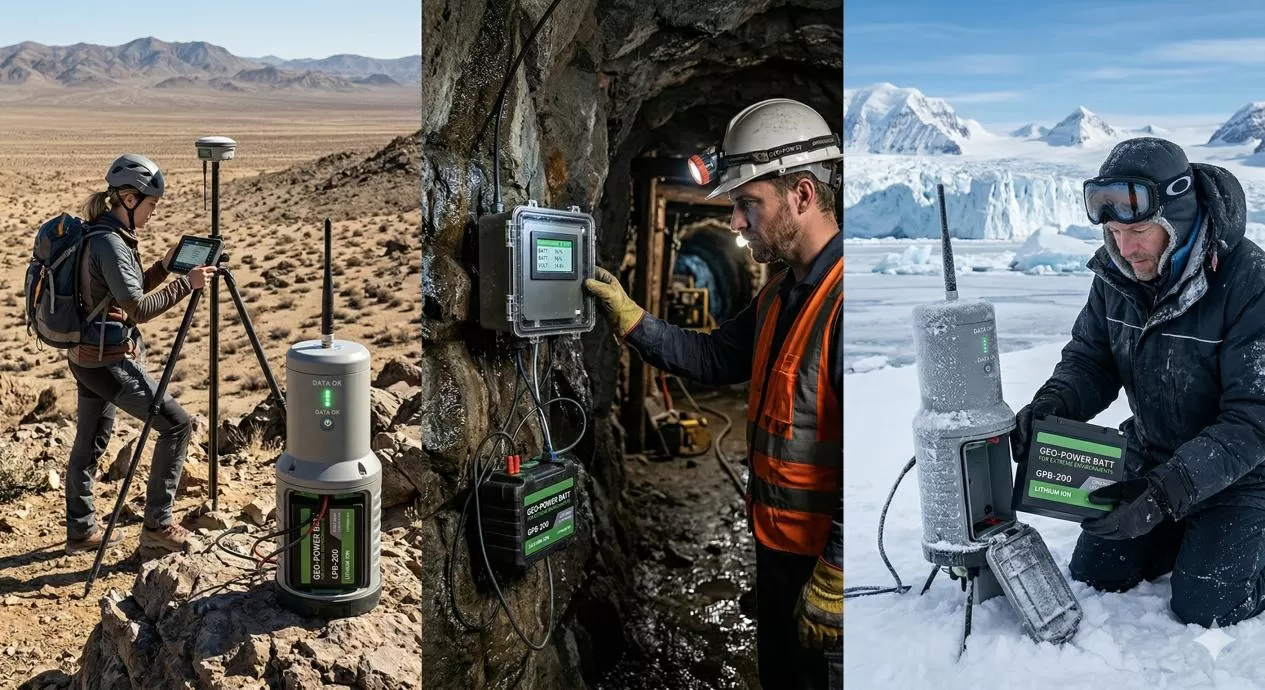
Geological exploration scenarios impose extremely strict design requirements on batteries:
Extreme temperature span: Equipment operates outdoors year-round, facing −40°C in winter and up to 105°C in summer.
Long-term low-power standby: Sensors may stay deployed for months or years; batteries must remain ready to deliver instant power for data recording and communication.
Stringent safety standards: Batteries must provide high safety redundancy in deep wells and complex geological environments.
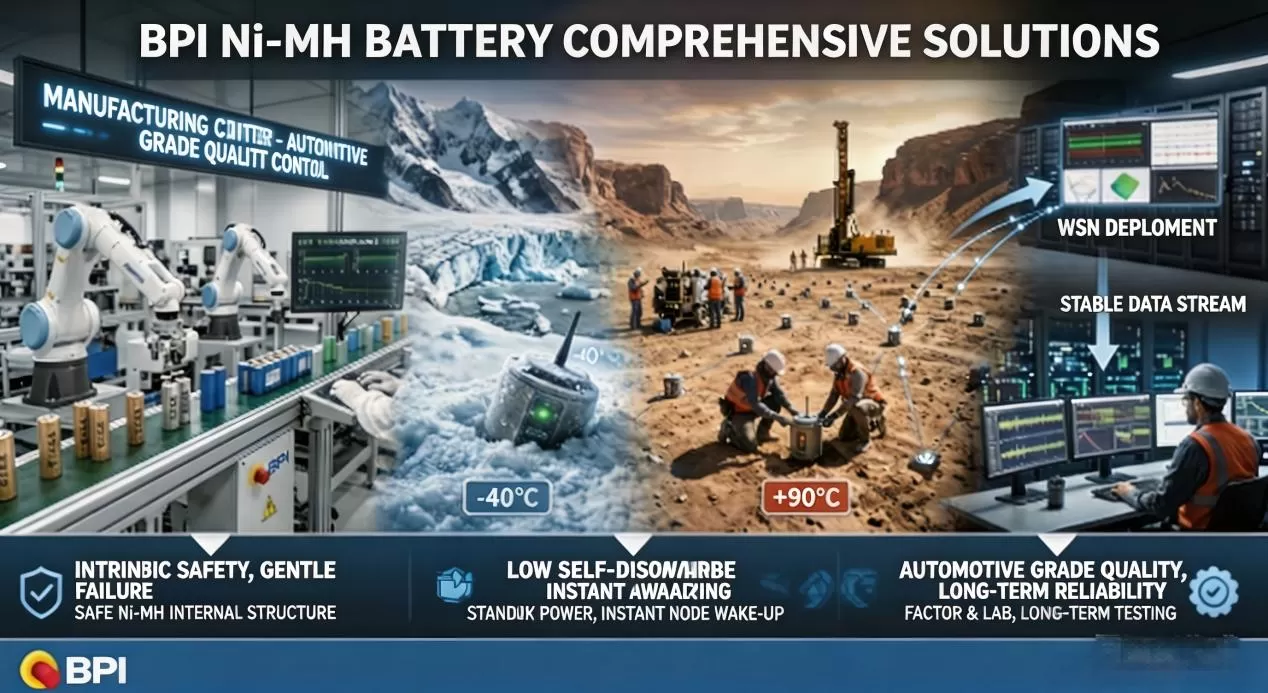
Among all battery technologies, low self-discharge Ni-MH batteries remain a mainstream choice for primary and backup power in geological exploration — not for being “new,” but for superior overall reliability.
Excellent wide-temperature performance: Stable performance across extreme hot and cold, ideal for long-term field use.
Low self-discharge, instant wake-up: Retains ample power after long standby to reliably complete critical exploration tasks.
Intrinsic safety, gentle failure: High thermal stability and mild failure modes under abnormal conditions, essential for field safety redundancy.
With decades of experience in the battery industry, BPI has built a complete and mature Ni-MH product portfolio and rich expertise in extreme-environment applications.
Multi-dimensional technical coverage: High-rate, high-voltage, low self-discharge, wide-temperature, and high-safety versions are available for customized exploration solutions. Low self-discharge and wide-temperature series are widely used in high-stability systems.
Flexible multi-specification adaptation: Offers 43AAA, 49AA, 50AA and other formats with capacities from 500 mAh to 25,000 mAh, supporting various voltage, capacity, and structural needs.
Automotive-grade quality control: Focused on consistency, long-term reliability, and safety redundancy rather than extreme specs. Full production traceability and control under the IATF 16949 quality management system.
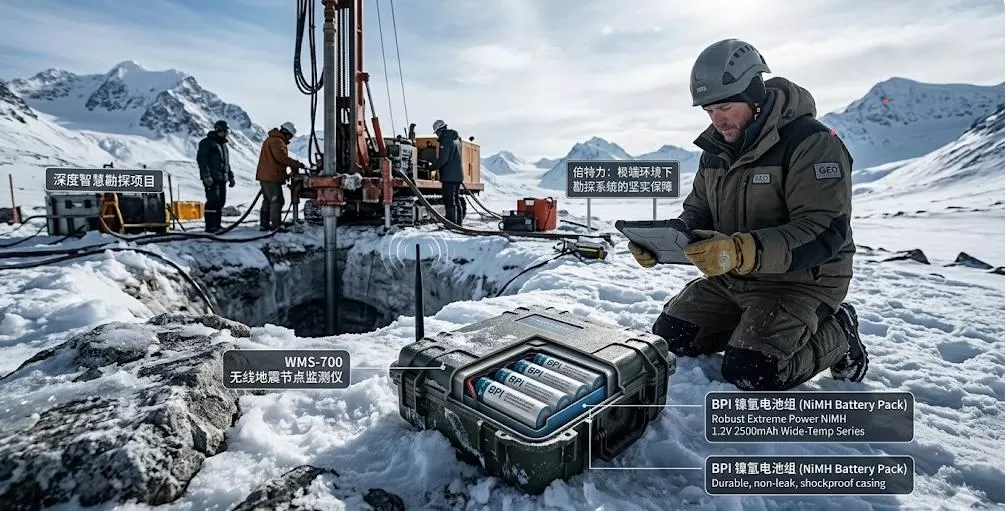
In complex intelligent exploration systems, the most critical components are often hidden. Exploration batteries must operate reliably for years through extreme temperatures without leakage or sudden performance degradation.
With stable, reliable, and predictable performance, BPI Ni-MH batteries provide steady support in these invisible yet mission-critical positions, safeguarding geological exploration systems.
For exploration batteries, choose safety, choose reliability — choose BPI!