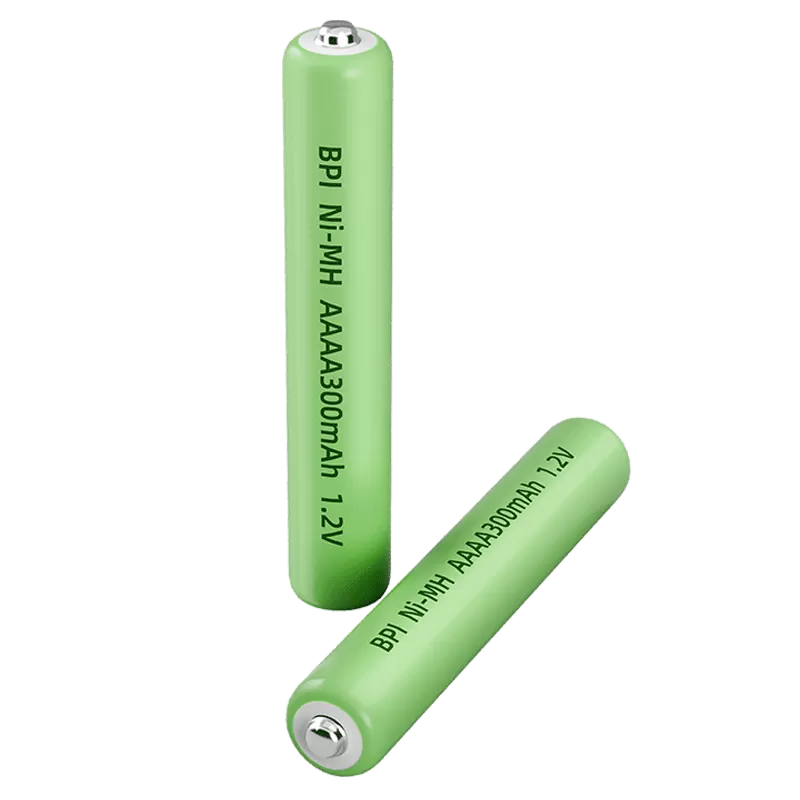
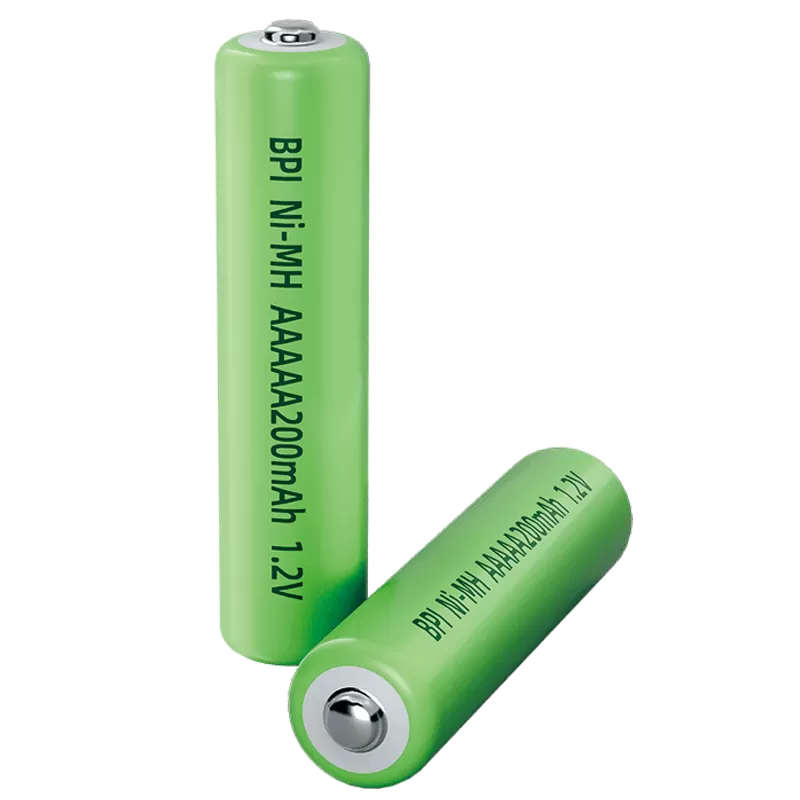
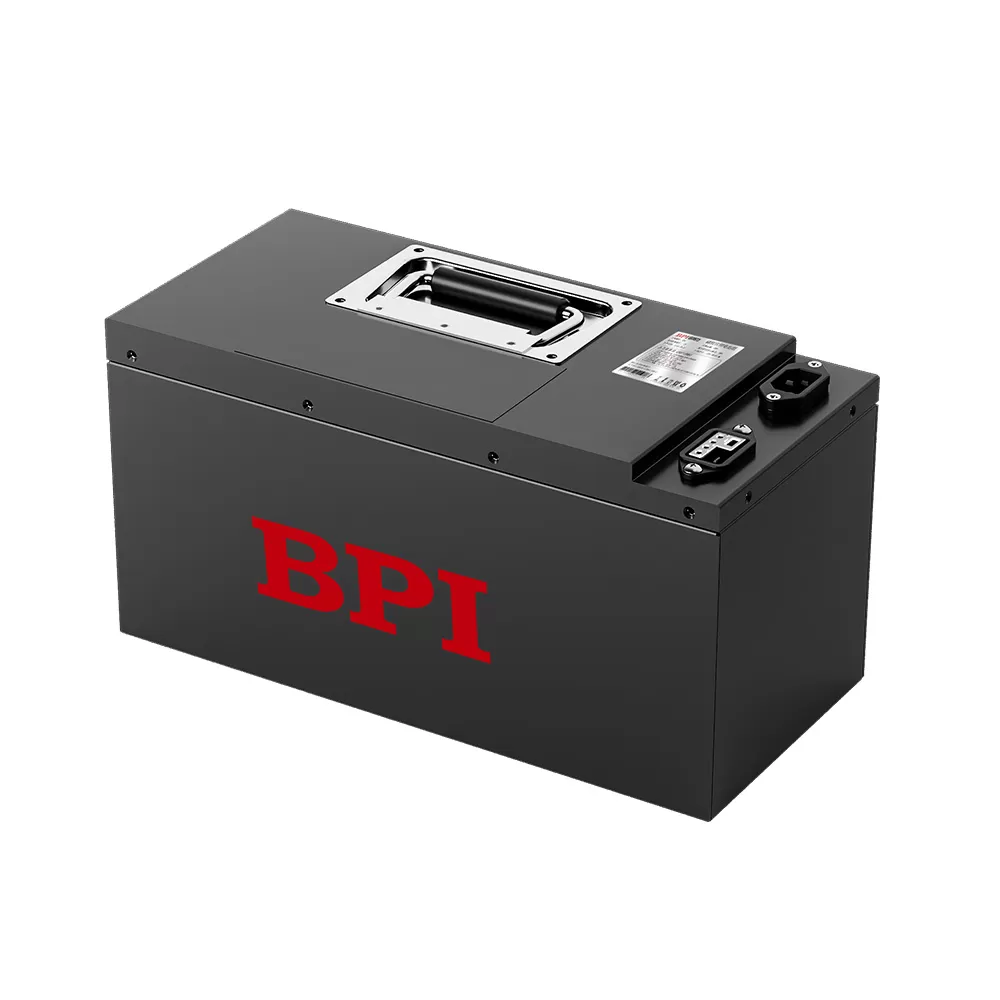
These devices normally run on mains power, and most models come with built-in backup batteries that remain in float charging standby for extended periods. During thunderstorms, power grid maintenance or unexpected blackouts, the backup battery independently drives heavy door panels to fully open or close without manual pushing, greatly guaranteeing convenient access.
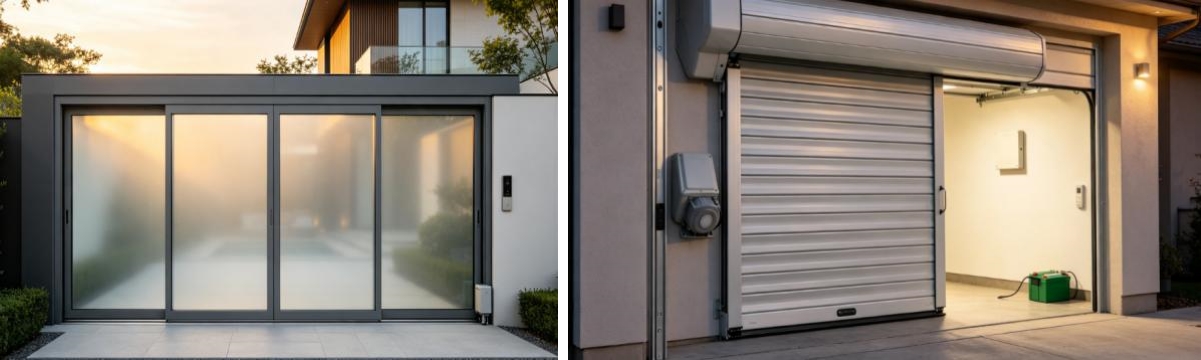
At present, most overseas door and window manufacturers prioritize visible hardware indicators such as panel material and motor power in R&D and quality control, while paying insufficient attention to the quality of built-in backup power. To cut overall production costs, many OEM factories adopt lead-acid batteries or single-use alkaline batteries as matching power sources.
Unstable performance: Capacity degradation and device failure easily occur under extreme high and low temperatures, making them unable to drive door operation normally.
High risk of equipment damage: Electrolyte leakage may happen during operation, corroding the door motor mainboard and causing hardware breakdowns.
High after-sales expenses: Short service life requires frequent replacements. Combined with cross-border logistics and labor costs for overseas repairs and returns, this severely damages brand reputation.
With the global popularization of smart homes and automated access equipment, sliding and sectional doors have expanded their application scope, evolving from premium villa exclusive fittings to mainstream residential and commercial hardware. Electric automatic door systems are widely installed in detached villa garages across Europe and suburban warehouses & retail premises in Australia.
The battery can activate and operate door panels normally after months of idle storage or sudden blackouts amid extreme weather;
It adapts to daily high-frequency reciprocating vibration of door mechanisms, resisting leakage and circuit faults over long-term use;
It delivers steady power output in diverse local climates including frigid cold, scorching heat and high humidity.
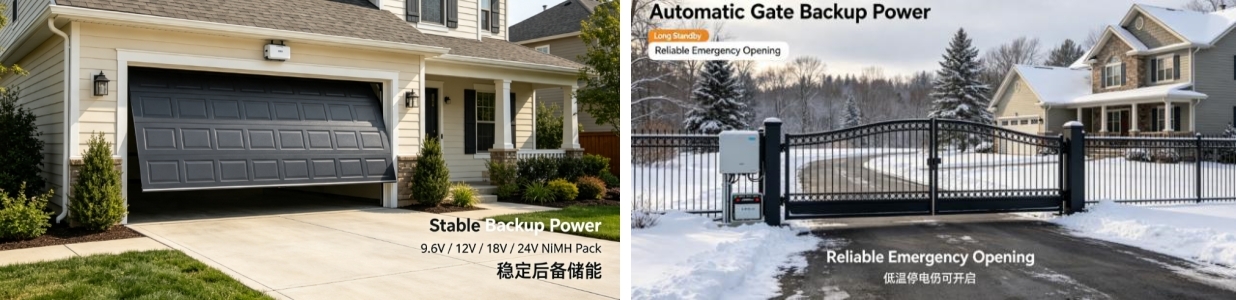
Overall, garage door backup power is shifting from low-cost disposable solutions to industrial-grade, long-life, wide-temperature, high-shock-resistant high-quality batteries. The stability and durability of batteries have become key competitive advantages for overseas automatic door products to win consumer trust and expand market share.
Though compact in size, electric door motors operate under complicated, variable environments, imposing stricter comprehensive performance standards on backup batteries than common consumer electronics. Five core demands are listed below:
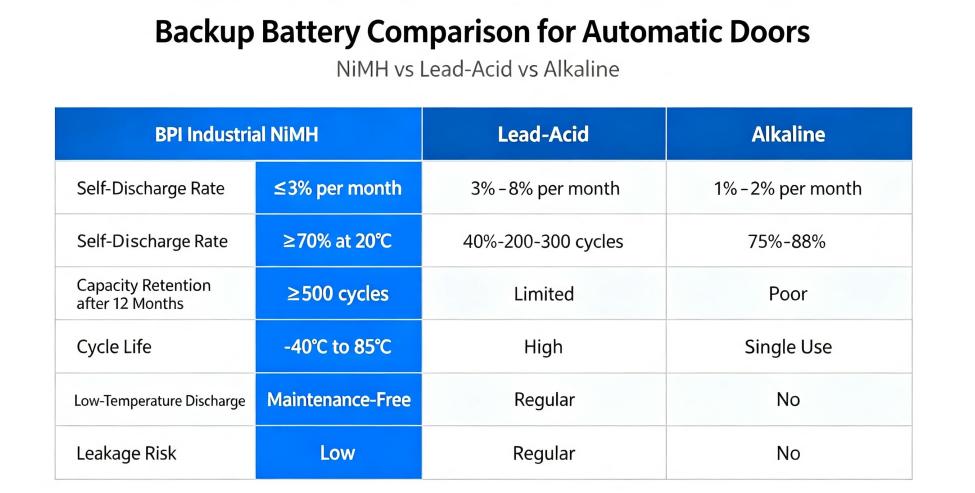
Low self-discharge for long-term float charging standby: Backup batteries stay on mains float charge most of the time and may sit idle for months without discharge. Low self-discharge is required to avoid power depletion, enabling instant startup during power failures.
High shock and impact resistance for frequent vibration environments: Doors open and close 30–60 times per day on average. Batteries must maintain intact internal structures under continuous vibration to prevent tab fracture, loose solder joints and electrolyte leakage.
High-rate discharge to meet motor startup demands: Thick aluminum door panels generate large startup resistance, requiring sustained 3C–5C discharge current with instantaneous peak discharge up to 10C. The battery must maintain a flat voltage curve to avoid stalling or falling door panels during operation.
Wide-temperature compatibility for global climates: Sold worldwide, devices need stable discharge performance from -40°C to 85°C to adapt to frigid Northern Europe, hot Southern Europe and humid coastal regions.
Long service life, maintenance-free design to reduce overseas after-sales pressure: Overseas on-site service and cross-border logistics incur high costs. Batteries must deliver 3–5 years of service with fully sealed construction requiring zero routine maintenance.
Long-term float charging & ultra-low self-discharge
Self-discharge rate ≤3% at 25°C; retains sufficient standby capacity after 12 months of full charge storage, ideal for long-idle backup power scenarios.
High-rate steady discharge
Supports sustained high-current discharge with a flat voltage platform, delivering stable startup current to handle instantaneous motor load spikes.
Shock and impact resistant
Robust structural design withstands vibration and impact, suitable for demanding installation environments including construction sites, garages and commercial entrances.
Full-range wide-temperature power output
Stable discharge performance from -40°C to 85°C, reliable power supply under extreme hot and cold weather for global climate adaptation.
Long cycle eco-friendly lifespan
Minimum 500 charge-discharge cycles; retains usable capacity after repeated high-low temperature operation, eco-friendly construction free of mercury and cadmium.
Eco-compliant for export
Zero mercury, cadmium or lead pollution, meeting international environmental standards for overseas project matching and finished product exports.
With 24 years of NiMH battery manufacturing and export experience, BPI mass-produces industrial cylindrical NiMH cells in strict accordance with international standards at two automated production bases in Shenzhen and Jiangxi. We have developed standardized and customizable NiMH pack systems tailored to the real complex working conditions of overseas automatic doors, fully meeting global market demands.
Targeted material formula optimization enables steady discharge from -40°C to 85°C, with monthly self-discharge firmly controlled within 3%. Cells retain high capacity after 28 days of storage, adapting to frigid Northern Europe, hot Southern Europe and humid coastal areas. Long-term float charging avoids power depletion, drastically reducing user complaints about doors failing to open during blackouts.
Built on series-parallel combinations of 1.2V standard cylindrical cells, we offer mainstream standardized modules of 9.6V, 12V, 18V and 24V compatible with overseas sliding and sectional door motors such as Somfy (France) and GEZE (Germany). Customization is available: cell layout, wire outlet direction and connector specifications can be adjusted to fit equipment cavities without modifying original door motor circuits.
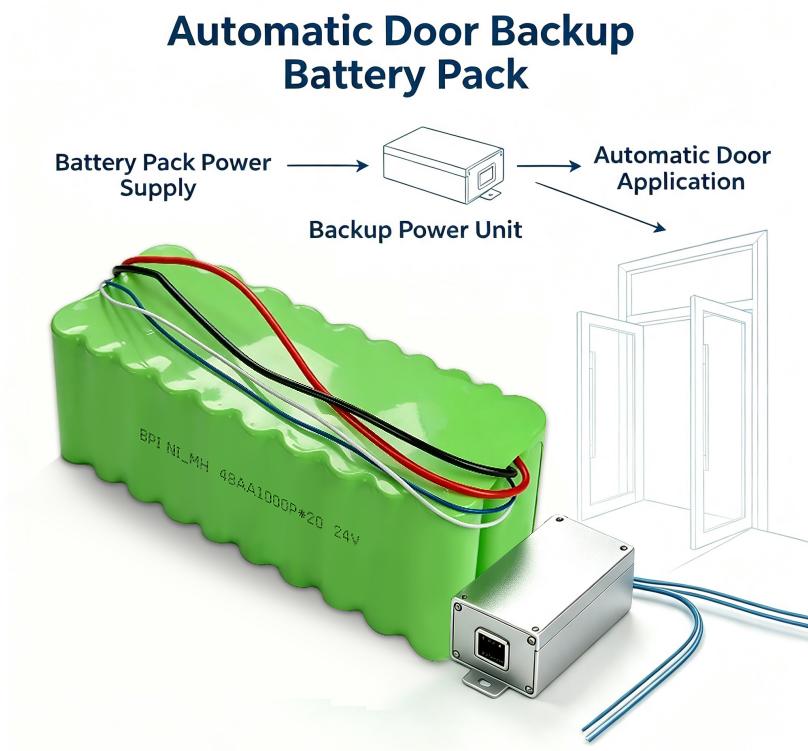
Every NiMH pack is equipped with a dedicated battery management board featuring five layers of intelligent protection that cuts circuit power within milliseconds under abnormal conditions to eliminate safety risks. Full international certifications including CE, RoHS, UN38.3, KC and PSE are supplied to enable smooth customs clearance for exports to Europe, the Americas, Southeast Asia and Australia.
Fully automatic laser welding reinforces cell tabs paired with dedicated fixing brackets to counteract continuous impact from door lifting and sliding. All packs undergo long-duration daily vibration simulation before shipment, ensuring no internal wire breakage or abnormal internal resistance, with far lower mass failure rates than traditional lead-acid alternatives.
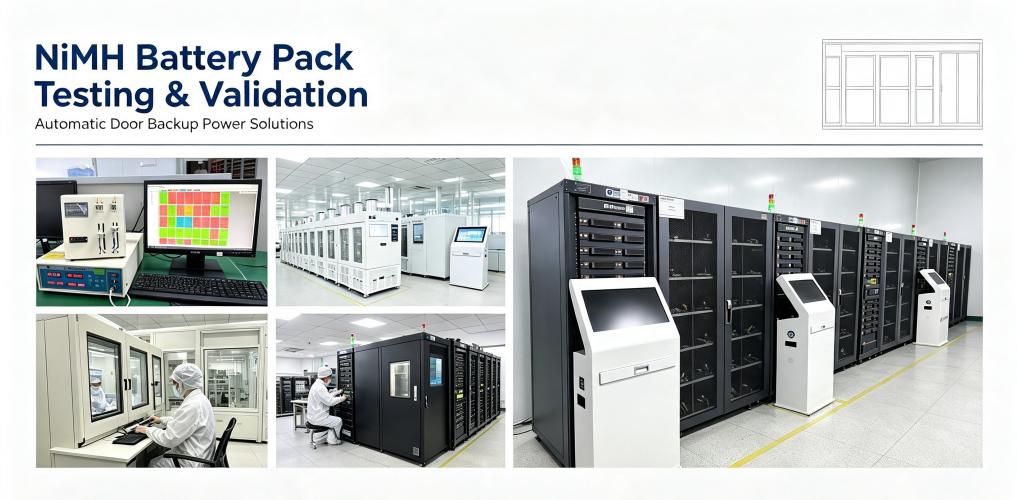
All export NiMH packs pass three full-scenario simulation tests before leaving the factory: high-low temperature cycling charge-discharge, long-duration triaxial vibration, and repeated startup discharge testing. Strict cell consistency control narrows gaps in single-cell capacity and internal resistance to guarantee uniform, stable performance across bulk shipments.
Within automatic access equipment, backup power is an invisible yet critical core component that directly impacts user experience, equipment stability and access safety. BPI industrial NiMH battery packs integrate low self-discharge, wide-temperature performance, shock resistance, long cycle life and full safety compliance to adapt to all complex operating conditions of overseas automatic doors.
BPI NiMH packs effectively resolve common equipment pain points including power depletion failure, vibration damage and frequent replacement, delivering one-stop solutions for overseas manufacturers’ product breakdowns and after-sales troubles. Supported by international-standard production and rigorous quality control, BPI provides long-lasting, reliable backup energy storage for overseas sliding and sectional garage doors, boosting product reputation and market competitiveness globally.
Q: Can customized NiMH packs be developed for niche motor housing dimensions?
A: Yes. Flexible series-parallel assembly of standard 1.2V cylindrical cells supports adjustments to overall pack size, wire routing and connector formats. Standard modules fit mainstream overseas motor mounting spaces, while rapid mold opening and sampling are available for niche model customization.
Q: How often should the battery be recharged if a villa remains vacant long-term overseas?
A: Cells retain ≥70% capacity after 28 days of storage with annual self-discharge ≤20%. We recommend recharging once every 3 months during prolonged vacancy; over 80% rated capacity is preserved after 12 months of room-temperature storage for excellent long-duration charge retention.
Q: Are complete test documents available for export customs clearance?
A: Full technical datasheets, UN38.3, CE, RoHS and other test reports & compliance certificates are provided to satisfy customs clearance and market access standards in all countries worldwide.
Q: What mainstream motor voltage platforms do BPI NiMH packs support?
A: Our product line covers mainstream voltage specifications of 9.6V, 12V, 18V and 24V, matching backup power systems for overseas motor brands including France’s Somfy Dexxo Pro and Germany’s GEZE automatic doors.