A container tracker is an IoT device that uses GPS to determine the location of a container and monitors conditions such as temperature, humidity, vibration, impact, and light intensity in real time. By transmitting data wirelessly, it enables remote and accurate cargo monitoring while improving transportation and inventory-management efficiency.
As global supply chains and cross-border logistics continue to expand rapidly, container trackers play a central role in real-time cargo monitoring, making transportation more visible and traceable.

Whether a container tracker can “operate for how long,” maintain a stable signal, and withstand exposure to wind and sunlight often depends on the key nickel-metal hydride battery hidden inside the device housing that powers its positioning and data-transmission modules.
In recent years, the scale of global cross-border trade has continued to grow, along with companies’ demand for digital management and control. Container trackers serve multiple functions.
In ocean shipping, they monitor the environment and location of containers in real time. During inland transportation, they provide real-time vibration and impact alerts, addressing the problem of delayed logistics information.
Container trackers are no longer niche experimental devices. They have become essential industrial IoT equipment for refined supply-chain management and for reducing cargo damage, delays, and related costs.
Against this background, the supporting battery is not merely an energy-storage component. It is also central to the tracker’s long-term stable operation and the achievement of full-process visibility.
When selecting batteries, the industry is less concerned with impressive capacity figures alone and more focused on whether the battery can remain reliable under complex operating conditions:
Can the battery maintain stable capacity over time?
Can it provide power for several months without frequent replacement?
Can its internal structure and sealing remain safe and reliable after prolonged exposure to salt spray and continuous vibration?
These requirements are directly driving dedicated nickel-metal hydride batteries for container trackers toward high cycle life, resistance to high and low temperatures and vibration, and industrial-grade safety.

Therefore, the battery’s environmental adaptability, operating stability, cycle durability, and safety protection have become critical factors in container-tracking applications.
Container trackers operate in complex environments. They are mounted on metal containers, transported across oceans, and exposed to seasonal changes. These conditions impose far higher requirements on the battery than those of ordinary electronic products.
Ultra-Long Standby Time and Extremely Low Self-Discharge
Container trackers typically need to operate maintenance-free for three to five years. The battery must have an extremely low self-discharge rate and retain sufficient energy during years of standby, ensuring that it can immediately respond when location data needs to be transmitted.
Wide-Temperature Durability
Ocean transport and inland storage yards can involve significant temperature variations. Batteries may face high temperatures inside sealed containers in summer and low temperatures in open-air storage yards at high latitudes in winter.
The battery must discharge reliably across a wide temperature range without suffering a sudden capacity drop or causing the device to go offline.
Long-Term Vibration and Impact Resistance
Container loading and unloading, as well as continuous road transportation, involve prolonged vibration and impact. The battery’s internal structure must be reinforced to prevent electrode detachment, wire breakage, or cell displacement during long-term vibration.
Water, Dust, and Salt-Spray Corrosion Resistance
Marine salt spray, dust in storage yards, and heavy rain are common operating conditions. Without effective sealing and protection, the battery may corrode or leak, potentially damaging the tracker’s mainboard and resulting in complete device failure.
Industrial-Grade Intrinsic Safety
Cross-ocean transportation can last for months, often without on-site maintenance. The battery must eliminate safety risks such as overheating, short circuits, and leakage to ensure long-term stable operation.
Among various battery technologies, high-performance nickel-metal hydride batteries have become a preferred power solution for container trackers due to their distinctive technical characteristics and comprehensive advantages.
| Core Requirement | Nickel-Metal Hydride Battery Solution |
|---|---|
| Wide-temperature performance | The electrochemical system of nickel-metal hydride cells is suitable for a broad temperature range of -40°C to 105°C. Whether used inside sealed, high-temperature containers during ocean shipping or in low-temperature open-air storage yards in northern regions, the battery can maintain stable discharge without sudden voltage drops at low temperatures or sharp capacity loss at high temperatures. |
| High safety | The electrolyte is non-flammable. The battery is resistant to compression and vibration. With IP65-rated packaging, it can withstand port salt spray and handling impacts while minimizing the risk of leakage during long-term use. |
| Low self-discharge | Nickel-metal hydride batteries using low-self-discharge formulations experience very low energy loss during storage. Even after several months of standby during cross-ocean shipping, they retain sufficient energy, helping prevent power loss and missing location data. |
| Stable operating voltage | The discharge curve is smooth, with minimal voltage fluctuation throughout operation. This helps ensure the continuous and stable operation of the tracker’s positioning, sensing, and communication modules, avoiding signal disconnection or data-collection failure caused by unstable voltage. |
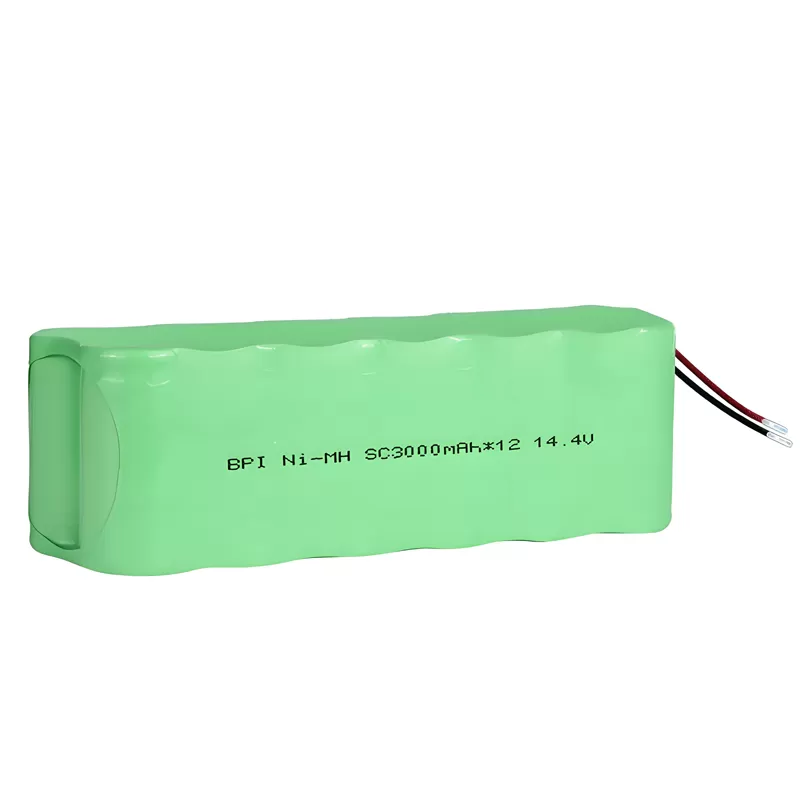
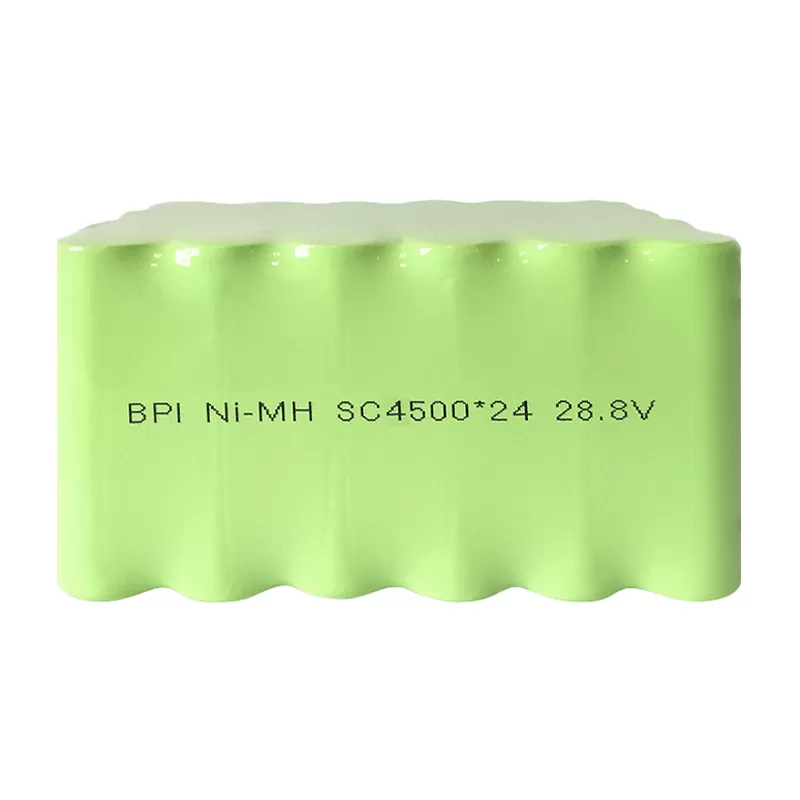
As a battery manufacturer with many years of industry experience, BPI has established a mature and comprehensive product portfolio in the field of nickel-metal hydride batteries. The company has accumulated extensive experience in industrial IoT and cross-border logistics monitoring—applications that demand all-weather reliability and adaptation to extreme environments.
BPI nickel-metal hydride batteries cover wide-temperature, weather-resistant series and low-self-discharge power series. They can be combined and customized for the varied operating conditions of container trackers, including:
High temperatures inside sealed containers during ocean shipping
Low temperatures in open-air storage yards in northern regions
Continuous vibration during long-distance road transportation
Industrial-grade, long-life nickel-metal hydride cells are used in logistics visibility terminals that require exceptional wide-temperature adaptability, long-term standby performance, vibration resistance, and safety.
From the product-design stage, BPI consistently focuses on real-world logistics conditions. In response to the key challenges faced by container trackers, BPI has optimized the cell’s electrochemical formulation and internal structure.
The company uses dedicated wide-temperature positive and negative electrode materials to expand the high- and low-temperature discharge range. It also optimizes the low-self-discharge cell formulation to significantly reduce energy loss during long-term storage.
At the same time, BPI strictly controls cell consistency to ensure a stable discharge platform for battery packs. Even in long-term cycling and multi-cell configurations, the battery is designed to avoid rapid capacity degradation and device offline failures.


Mistake 1: Using Ordinary Consumer-Grade Cells while Ignoring Ultra-Long Standby Requirements
Ordinary digital-device cells generally have relatively high self-discharge rates and may retain very little energy after several months of standby.
If such cells are used in container trackers, the device may run out of power and go offline after only a few days at sea, leaving cargo owners uncertain about the location and status of their goods.
Mistake 2: Ignoring the Impact of Wide Temperature Ranges on Battery Performance
Containers may travel from the Equator to the Arctic Circle and from deserts to seaports, resulting in extremely large temperature variations.
Ordinary batteries experience accelerated capacity degradation at high temperatures. At low temperatures, their internal resistance rises sharply and discharge capability drops significantly.
Without wide-temperature optimization, a battery may become practically ineffective under extreme environmental conditions.
Mistake 3: Focusing Only on Capacity while Ignoring Enclosure Protection and Internal Reinforcement
Many purchasing decisions compare capacity parameters while overlooking IP protection and vibration-resistant structural design.
Containers are exposed to outdoor conditions, ocean transport, loading and unloading, and continuous vibration. Batteries without IP65 sealing or internal shock-absorbing reinforcement are highly vulnerable to water ingress and cell damage, potentially causing short circuits and complete device failure.
Simply increasing capacity does not solve the fundamental problem of equipment failure in harsh environments.
In advanced cross-border IoT monitoring equipment, the components that determine year-round stable operation and help reduce enterprise maintenance costs are often hidden inside the device and receive little visual attention.
The same is true of container trackers and their built-in nickel-metal hydride power batteries.
BPI dedicated nickel-metal hydride batteries for container trackers are optimized through customized cell formulations, IP65 fully sealed protection, efficient heat-dissipation structures, and comprehensive industrial quality testing.
With long-lasting runtime, stable performance across a wide range of conditions, and industrial-grade safety, they are designed to support the extreme operating conditions encountered in land and sea transportation within the IoT sector, providing a reliable power core for global container asset-tracking equipment.
For container-tracking batteries, choose safety, choose reliability, choose BPI!
Q: Do BPI’s battery solutions for container trackers support customized development according to the device structure?
A: Yes. Based on the waterproof enclosure design, installation-space limitations, and voltage-platform requirements of the container tracker, BPI can provide customized battery solutions, including tailored overall designs and external dimensions.
Q: How do BPI nickel-metal hydride batteries ensure normal operation under extreme temperatures?
A: BPI’s dedicated nickel-metal hydride batteries for container trackers use optimized electrode materials and electrolyte formulations. They offer wide-temperature adaptability and can support stable charging and discharging across an extreme temperature range of -40°C to +105°C.
Q: Do the products meet certification requirements for entry into global markets?
A: Yes. BPI products have passed major international safety and compliance certifications, including UN38.3, UL, CE, RoHS, REACH, and KC. They are manufactured in strict accordance with ISO 9001 and ISO 14000 environmental quality-management standards, helping customers market their products successfully worldwide.
Q: How well do BPI nickel-metal hydride batteries retain capacity after long-term standby?
A: BPI nickel-metal hydride batteries use low-self-discharge technology, with a self-discharge rate of less than 20% per month. During the tracker’s standby period, which may last for several years, the battery can retain sufficient energy to ensure a reliable response whenever location data needs to be transmitted.
Q: How long can the nickel-metal hydride battery last under normal operating conditions, and how often does it need to be replaced?
A: The battery can achieve a charge-discharge cycle life of up to 1,000 cycles. Under standard container transportation conditions involving both land and sea, it can operate reliably for approximately three to five years, significantly reducing battery-replacement, equipment-inspection, and maintenance labor costs for logistics companies.