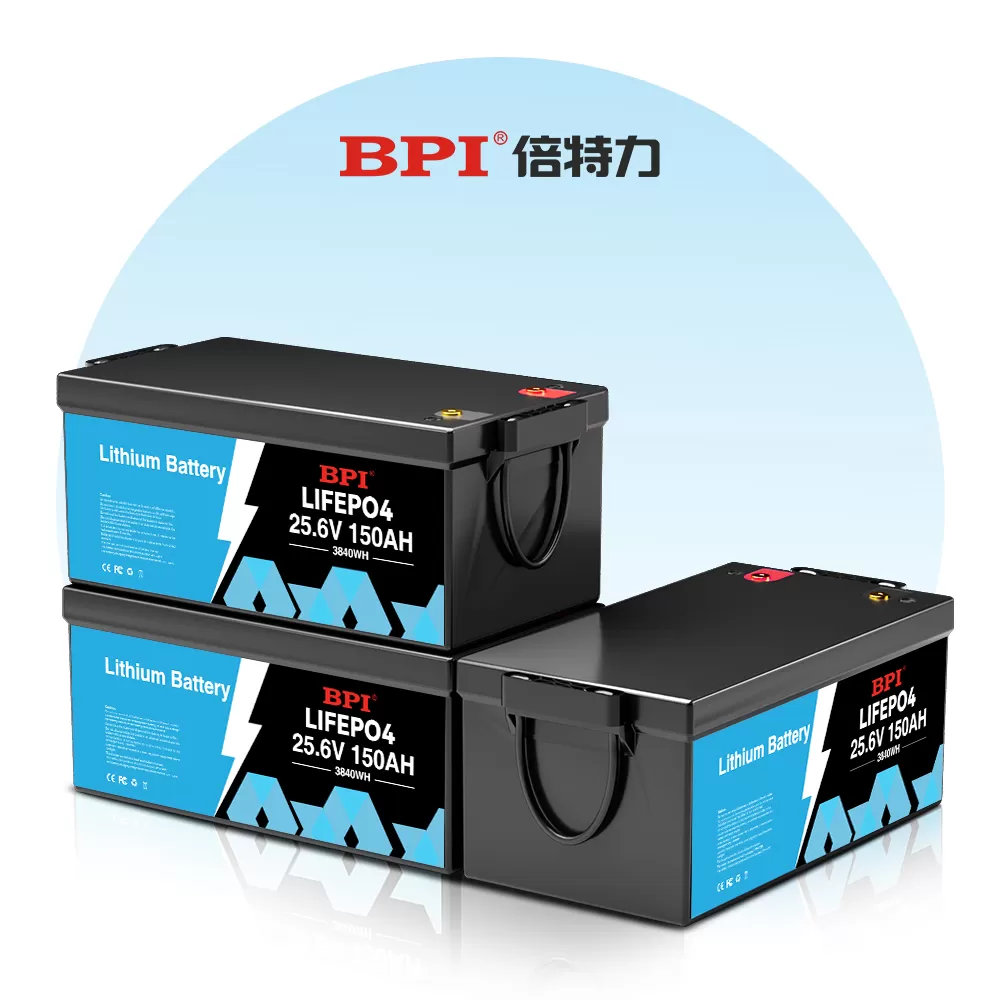
With the growing use of golf carts, electric sightseeing vehicles, low-speed mobility scooters and other applications, more customers are upgrading from traditional lead-acid batteries to lithium batteries. Compared with lead-acid batteries, lithium batteries offer clear advantages in weight, cycle life, charge-discharge efficiency, maintenance cost and space utilization. For lithium batteries truly suitable for golf carts, voltage and capacity are not the only considerations; multiple critical technical indicators must be prioritized.
As a professional lithium battery manufacturer, BPI has extensive experience in golf cart lithium battery design, BMS protection systems, cell matching, structural safety and export applications. From a factory technical perspective, we share the 5 key technical indicators that must be considered when selecting golf cart lithium batteries.
Common voltage platforms for golf cart lithium batteries include 36V, 48V, 51.2V, 60V and 72V, with 48V and 51.2V being the most widely used. A matching voltage platform directly affects stable operation of the motor, controller, charger and entire vehicle system. For example, when upgrading a traditional 48V lead-acid system to lithium power, many customers choose the 51.2V LiFePO4 solution. Composed of 16 series-connected LiFePO4 cells, 51.2V provides stable nominal voltage and high safety, ideal for the long-time, low-speed, high-current operating conditions of golf carts. When designing golf cart lithium batteries, BPI confirms the appropriate voltage platform based on the customer’s original vehicle system, motor power, controller parameters, charger specifications and usage scenarios to avoid issues such as controller alarms, insufficient power or abnormal charging caused by voltage mismatch.
Many customers first consider capacity when purchasing golf cart lithium batteries, such as 48V 100Ah, 51.2V 105Ah, 51.2V 150Ah, 72V 100Ah, etc. From a technical standpoint, total energy (Wh = Voltage × Capacity), not just ampere-hours (Ah), determines actual range.
For example, the energy of a 51.2V 100Ah battery is approximately:
51.2V × 100Ah = 5120Wh
This means the battery provides about 5.12kWh of energy. Actual range is also affected by vehicle weight, passenger load, road gradient, tire resistance, motor efficiency, driving habits and ambient temperature. When recommending capacity, BPI does not provide a single parameter but evaluates based on customer usage requirements: daily driving distance, frequency of climbing, vehicle load, and whether the cart is used on golf courses, hotel resorts, campus patrols or community mobility. Only with these data can we design a golf cart lithium battery solution that closely matches real-world needs.
Although golf carts have low speed, they require high instantaneous current during starting, climbing and full-load operation. Therefore, continuous discharge current and peak discharge current are critical. Continuous discharge current determines whether the battery can output stable power for long periods; peak discharge current determines whether the vehicle has sufficient burst power for starting, accelerating and climbing. Insufficient discharge capability of the BMS or cells may result in weak power, poor climbing performance or BMS protection shutdown. For example, golf cart lithium batteries are often designed to support 100A, 150A, 200A or higher peak current, depending on motor power and controller settings. When designing battery solutions, BPI prioritizes matching cell rate, BMS current rating, nickel strip/copper bar current-carrying capacity, wire harness specifications and connector load capacity to ensure stable output under high-load conditions. For golf cart applications, batteries must not only pursue large capacity but also sufficient discharge capability. Capacity determines how far you can go; current output determines how smoothly you can run and how well you can climb.
The BMS (Battery Management System) is the brain of the lithium battery system and is especially critical for golf cart lithium batteries. Vehicle applications involve frequent starting, stopping, vibration, climbing, charging and discharging cycles; without reliable BMS protection, battery safety and lifespan will be compromised. A qualified BMS for golf cart lithium batteries typically includes: overcharge protection, over-discharge protection, overcurrent protection, short-circuit protection, temperature protection, balancing function, charge-discharge management, SOC display and communication. For high-end applications, Bluetooth, CAN, RS485, LCD display, heating and remote monitoring can be integrated. BPI provides multiple BMS solutions tailored to different customer markets and scenarios: basic protection BMS for standard golf carts; intelligent BMS with Bluetooth (for voltage, current, temperature, cycle count and fault log viewing) for European/American export or high-end vehicles; and custom CAN/RS485 communication protocols for vehicle system integration. BMS stability directly affects battery safety, vehicle stability and after-sales issues. Therefore, BPI always prioritizes BMS solution matching in golf cart lithium battery design.
One of the biggest advantages of LiFePO4 batteries over lead-acid batteries is long cycle life. Under proper use, high-quality golf cart lithium batteries typically achieve 2000, 3000 or more cycles. Although the upfront cost of lithium batteries is higher than lead-acid, the average long-term usage cost is lower.
However, cycle life depends not only on the cells themselves but also on cell consistency, PACK manufacturing process, BMS balancing capability, charge-discharge conditions and operating temperature. Poor consistency in cell capacity, internal resistance or voltage leads to uneven capacity degradation, increased voltage difference and premature protection after long-term use.
In producing golf cart lithium batteries, BPI strictly controls cell sorting, voltage consistency, internal resistance consistency, capacity consistency and aging testing. Through rigorous cell matching and PACK process control, we improve overall pack consistency and stability, reducing after-sales risks for customers. For golf cart customers, the key focus should not only be “how long the battery lasts” but “whether it remains stable over time, has controllable capacity degradation and lower maintenance costs” – the core focus of BPI’s ongoing product design optimization.
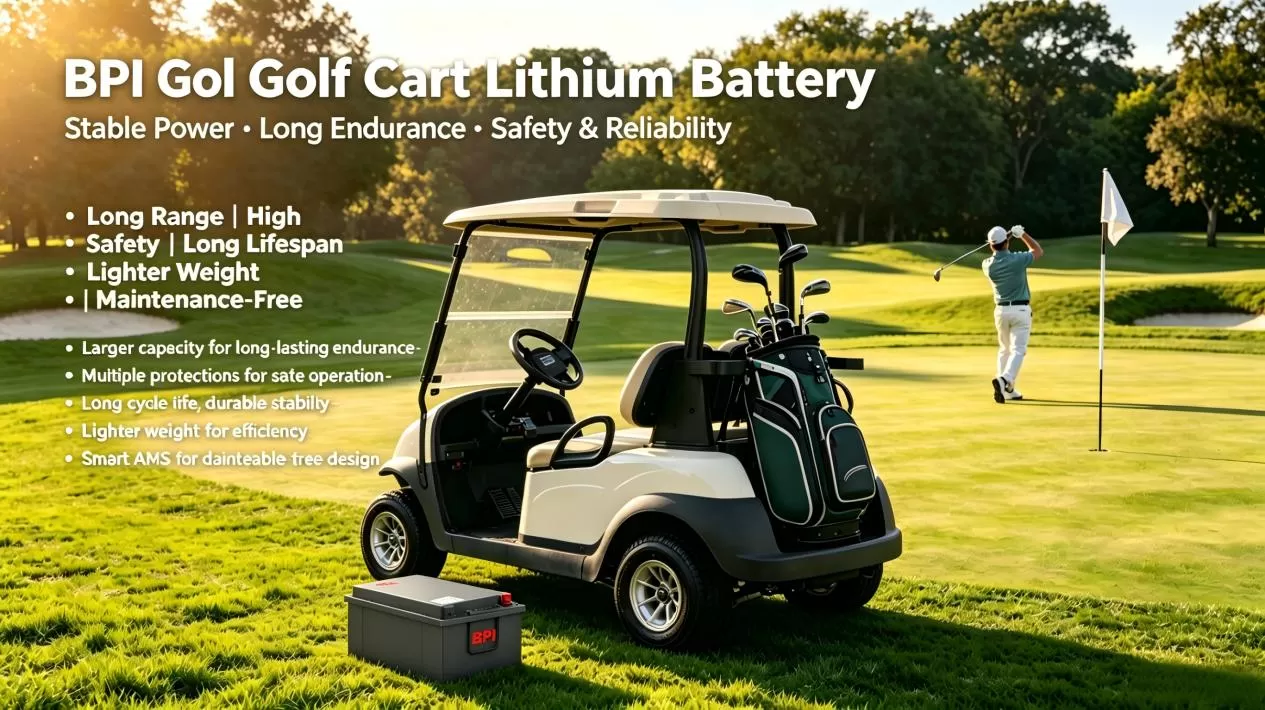
As a lithium battery manufacturer, BPI provides a variety of golf cart lithium battery solutions based on customer needs, including 36V, 48V, 51.2V, 60V, 72V and other voltage platforms, as well as customized solutions with different capacities, housing structures, BMS functions and communication methods. Our golf cart lithium batteries are suitable for golf courses, hotel resorts, tourist sightseeing vehicles, community mobility scooters, campus patrol vehicles, farm vehicles and low-speed electric vehicles. Custom options include LiFePO4 cells, intelligent BMS, Bluetooth monitoring, CAN/RS485 communication, metal housing, waterproof structure, LCD display, fuel gauge, heating function and custom wire harness connectors. BPI focuses not only on battery parameters but also on stability, safety and service life in real vehicle environments. From solution evaluation, cell selection, structural design, BMS matching, production testing to shipping packaging, we prioritize practical application to help customers obtain more stable, safer and more cost-effective golf cart lithium battery solutions.
When selecting golf cart lithium batteries, do not only look at price or capacity. The core indicators affecting performance are: voltage platform, capacity and energy, continuous/peak discharge current, BMS protection system, cycle life and cell consistency.