Electric windows and doors are integrated structures driven by motors instead of manual pushing/pulling. They are widely applied in residential sunrooms, villa skylights, commercial curtain walls, smart curtains, industrial sliding windows and tilt windows, serving as core equipment for smart homes and building automation.
They can be automatically opened and closed via remote controllers, wall switches, mobile APPs or smart home central control systems, as well as wind & rain sensors without manual operation. Suitable for indoor, open-air, high-temperature sun-exposed and frigid low-temperature environments, they are divided into five main categories: electric window openers, electric roller shutters, electric blinds, electric curtains and industrial electric linear actuator windows.
Window/door mechanical frame body
Drive actuator (power core)
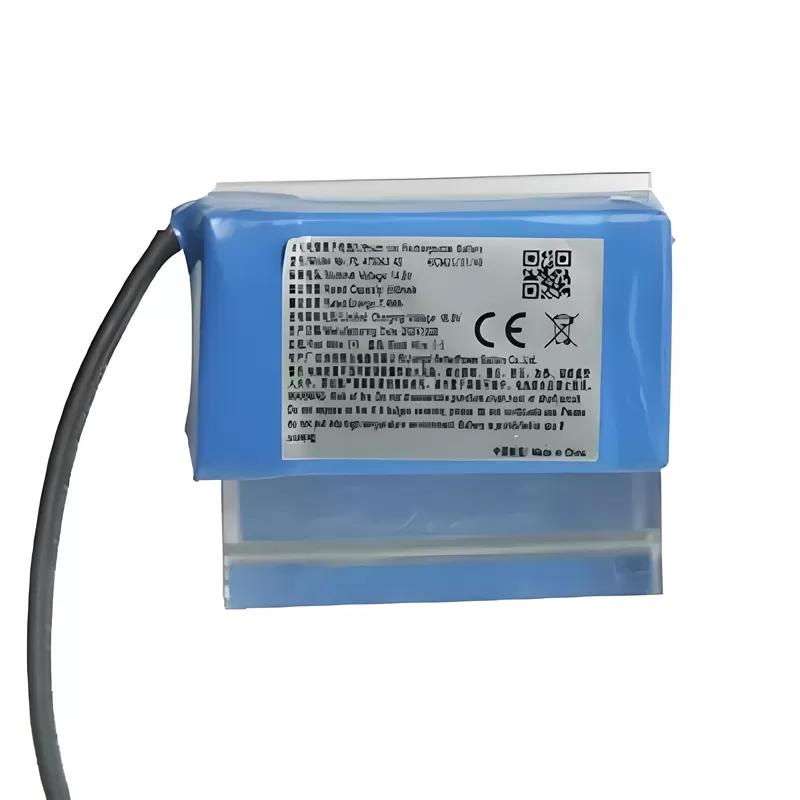
Power battery pack system
Control signal module (human-machine interaction + automatic sensors)
Safety auxiliary accessories
Electric window openers, curtain motors and electric blinds fall under low-frequency high-load electrical equipment. They consume negligible power during standby but demand instantaneous pulse current of several amperes upon actuation to overcome mechanical resistance. This pulsed discharge pattern differs completely from the continuous discharge of consumer electronics, posing three core challenges for batteries:
Instant high current: A pulse current of up to 7.5A lasting over 5 seconds is generated during opening/closing. Standard alkaline batteries feature high internal resistance, causing significant voltage drop and triggering motor protective shutdown.
Wide-temperature operation: Skylights and sunrooms operate from -15°C (northern winters) to 60°C (summer direct sunlight). Temperature fluctuations directly alter battery chemical reaction rates.
Ultra-low self-discharge for long standby: Window systems may sit idle for months after installation. Batteries with high self-discharge will run flat and fail when needed.
These stringent operating conditions make nickel-metal hydride (NiMH) batteries the mainstream power solution for electric windows and doors, rather than lithium-ion or single-use alkaline cells.
| Comparison Item | NiMH Battery | Lithium-ion Battery | Single-Use Alkaline Battery |
| Nominal voltage per cell | 1.2 V | 3.6~3.7 V | 1.5 V (fast voltage decay during discharge) |
| High-current discharge performance | ★★★★★ Excellent | ★★★★ Good | ★★ Poor (high internal resistance) |
| Operating temperature range | -40°C ~ 65°C full coverage | -20°C ~ 60°C (severe capacity loss at low temperatures) | Sharp capacity drop below -15°C |
| Low self-discharge (LSD grade) | ≤20% per year | ≤5% per year | Disposable, non-rechargeable |
| Cycle life | 1,000~1,500 cycles minimum | 500~1,000 cycles minimum | Single use only |
| Safety performance | No thermal runaway risk | Risk of thermal runaway and explosion | Risk of electrolyte leakage |
| Cost structure | Moderate, amortized over cycles | Higher upfront cost | Low unit price, recurring replacement cost |
| Suitability for window applications | ★★★★★ Optimal fit | ★★★ Average (requires dedicated management circuits) | ★★ Not recommended |
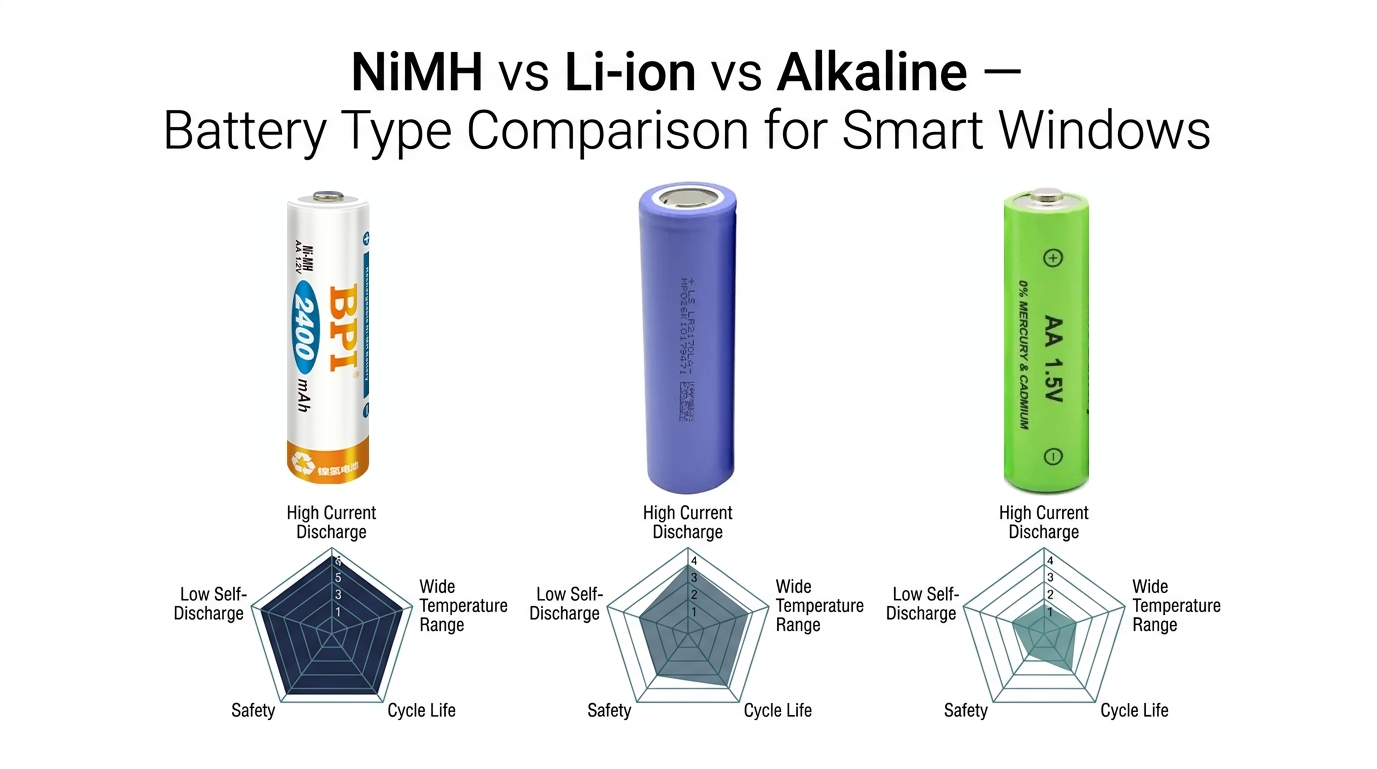
Conclusion: NiMH batteries are nearly irreplaceable for electric window and door applications due to their wide-temperature adaptability, thermal runaway-free safety and mature charging management ecosystem.
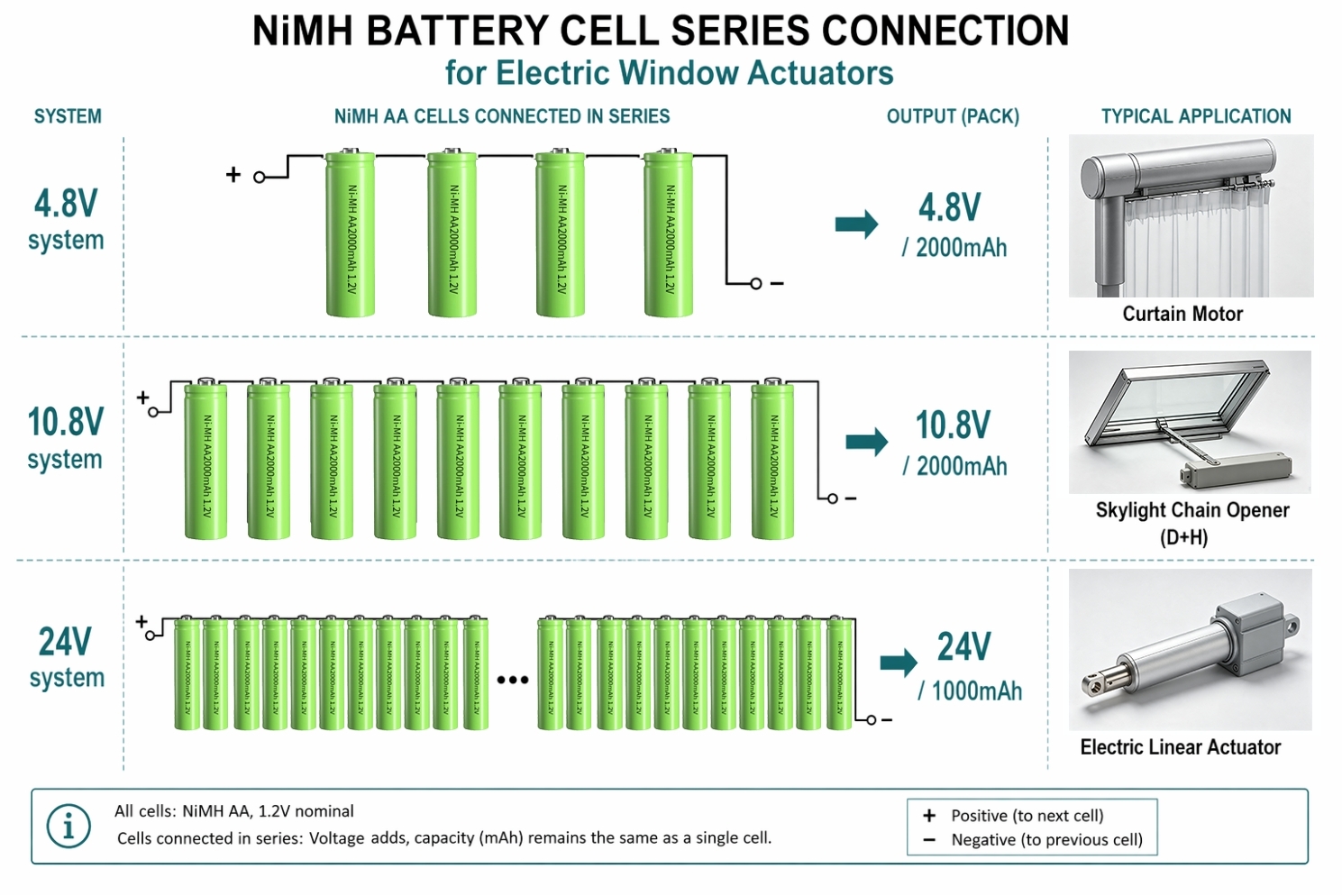
A single NiMH cell carries a nominal voltage of 1.2V. Main drive voltages for electric window host systems are 4.8V (4 cells in series) or 9.6V/10.8V (8~9 cells in series); some industrial linear actuator systems require 24V packs with 20 series-connected cells.
4 cells in series (4.8V): For lightweight curtain motors and small blind motors, output torque ≤150 N·cm
9 cells in series (10.8V): For heavy-duty chain window openers such as German D+H Partner series, capable of driving heavy skylights and sloped roof windows
20 cells in series (24V): For industrial linear actuators and large tilt windows, load capacity up to hundreds of Newtons
Capacity (mAh) determines the number of operation cycles achievable per full charge and low-temperature retention capacity. Customer specifications mandate a minimum capacity of 1000mAh, defined as continuous discharge for at least 5 hours under a 0.2C (~200mA) rate down to the cut-off voltage.
| Performance Tier | Typical Scenarios | Battery Specification | Core Value Proposition |
| High-performance / harsh environment | Electric skylights, sunrooms | 4.8V / 10.8V 2000mAh NiMH | High temperature & humidity resistance, passes 18-week long-cycle testing |
| Mid-tier / standard environment | Horizontal windows, tilt window linear actuators | 4.8V 1000mAh NiMH | Wide-temperature operation, low self-discharge, ≥1000 cycles |
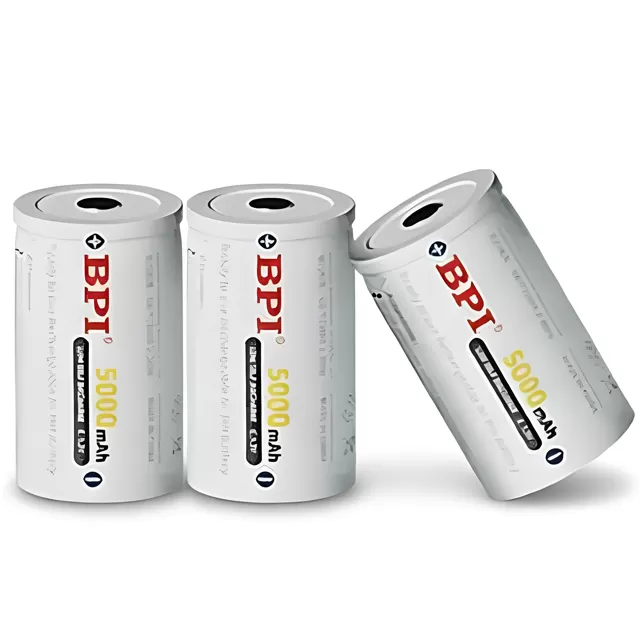
| Consumer DIY grade | Smart curtains, roller shutters | AA × 4 / 8 NiMH battery pack | Maintenance-free, replaceable, USB-C chargeable |
Per market research data, the global electric window and door market (including openers and curtain motors) reached approximately 16.5 billion RMB in 2024, projected to grow at a CAGR of 7.7%. The matching battery market totals around 9.9 billion RMB with a 9.2% CAGR. High-end harsh-environment skylight/sunroom segments carry the largest product premium and the strictest quality standards.
| Term | Definition |
| C Rate | Ratio of charge/discharge current to rated capacity. 0.1C = 1/10 capacity current (100mA for 1000mAh cells); 1C = full capacity current (1000mA). Higher C rates mean larger current output and stricter cell requirements. |
| Internal Resistance (mΩ) | Internal impedance of the cell; lower values are preferable. High resistance causes severe voltage drop under high current, triggering motor undervoltage shutdown. |
| Trickle Charging | Low-current continuous charging (≥40mA) after full charge, simulating long-term standby power connection. Cells must remain leak-proof and non-overheating. |
| Self-Discharge Rate | Percentage of capacity lost naturally during storage. Low Self-Discharge (LSD) cells retain over 70% capacity after 1 year of storage. |
| Pulse Discharge | Intermittent high-current cycling (e.g., alternating 7.5A for 5s and 0A for 5s), simulating repeated window opening/closing. |
| Float Charge Test | 30-day constant-voltage charging at 45°C, simulating permanent mains connection. This is a critical reliability validation standard for high-end customers. |
| IEC 61951-2 | Core international standard for rechargeable NiMH cells, covering full testing protocols for capacity, cycle life and safety. |
| Test Item | Requirement / Test Condition | Pass Criterion |
| Nominal Voltage | 24V (1.2V per single NiMH cell) | Single cell ≥1.2V |
| Rated Capacity | ≥1000 mAh | Measured capacity ≥1000 mAh |
| Pack Internal Resistance | ≤280 mΩ | Single cell ≤14 mΩ (lower = better) |
| Open-Circuit Voltage (Full Charge) | 1.25 V | Fully charged cell ≥1.25 V |
| Operating Temperature Range | -15°C ~ 60°C | Stable charge & discharge across full range |
| Maximum Discharge Current | ≥10 A, sustained ≥10 s | Meets minimum duration |
| High-Temperature Discharge | Minimum 180 min at 85°C | Passes 3 consecutive cycles |
| Low-Temperature Discharge | Minimum 180 min at -40°C, cut-off 0.7 V per cell | Maintains runtime threshold |
| IEC Standard Cycle Life | ≥1500 cycles per IEC61951-2 ED3.0 | Meets cycle threshold |
| Accelerated Cycle Life | ≥500 cycles at 1C discharge, cut-off 1.0V per cell | Meets cycle threshold |
| High Humidity Storage | 14 days at 33°C, RH 80% | No electrolyte leakage |
| Long-Term Storage | Minimum 6 months storage from -40°C to 45°C | Retains ≥70% initial capacity |
| Float Charge Aging | 30 days at 45°C, constant 1.48V ±0.02V per cell | Discharge capacity ≥80% rated capacity |
| Trickle Charge Endurance | 7 days at ≥40mA charging | Retains ≥1000mAh discharge capacity |
| Safety Tests (Safety Valve / Short Circuit / Drop) | Forced discharge, short circuit, 100cm free fall | No explosion, fire or electrolyte leakage |
| Test Item | Core Difficulty | General Industry Performance |
| 14-Day High Humidity Test (33°C, RH80%) | Strict sealing requirements | 20~30% of cells with substandard sealing leak fluid, corroding circuit boards or triggering short circuits |
| 30-Day 45°C Float Charge Test | Endures long-term high-temperature constant voltage charging to verify chemical & sealing stability | Over 60% of suppliers cannot pass the extended 24-week version, a mandatory threshold for high-end skylight clients |
| Alternating High/Low-Temperature Pulse Cycle Test | Pulse discharge across -15°C ~ 50°C simulates extreme field operation | Internal resistance surges at low temperatures; many cells drop below 50% rated capacity after only 15~20 cycles |
Stabilize at 25°C for 6h → 0.2C discharge → 0.2C charge for 6h; repeat 5 cycles. The 5th cycle must deliver 100% rated capacity.
Stabilize at -15°C for 6h → repeat 25 cycles of 7.5A 5s pulse discharge + 5s rest → 0.2C charge for 6h.
Recover to 25°C and test discharge capacity; must retain ≥50% rated capacity to proceed.
Stabilize at 50°C for 6h → 7.5A pulse discharge for 5s (cell temp ≤70°C), repeat 25 cycles.
Recover to 25°C and recheck capacity; ≥50% rated capacity allows alternating cold/hot cycles again.
Core evaluation metric: Cells must sustain over 50% nominal capacity through repeated pulse shocks under temperature swings. Low-cost cells are eliminated at this stage.
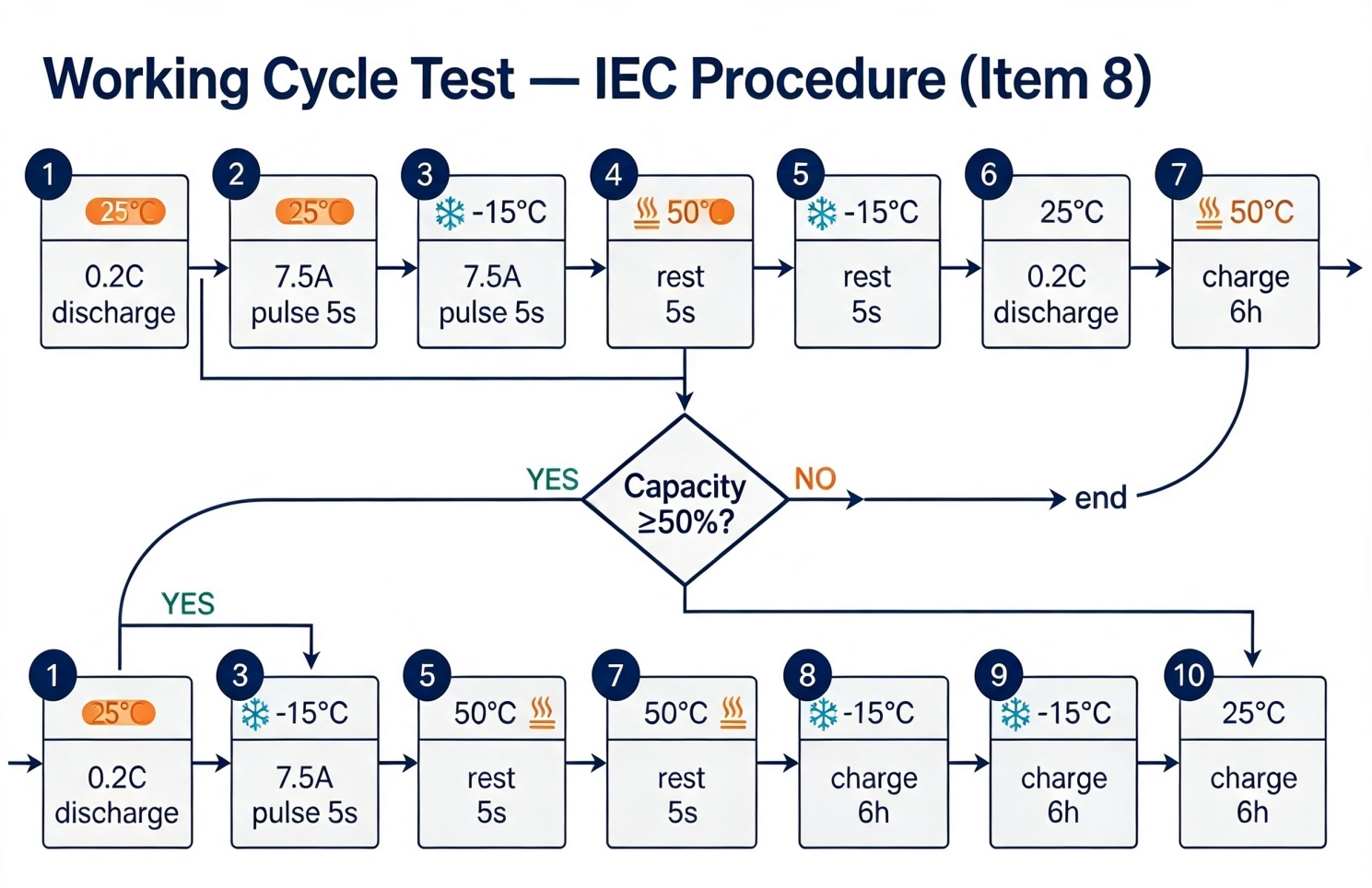
Note: NiMH cell internal resistance rises 2~4 times at -15°C, exacerbating voltage drop during pulse discharge. High-purity electrode active materials and optimized separator structures are core technical solutions to pass this test.
Production Layout: Shenzhen headquarters with a 2,000㎡ R&D center; 6,000㎡ energy storage PACK pilot base in Nanshan, Shenzhen; 200-acre industrial park in Jiangxi Province
Team: Over 1,000 employees, four joint laboratories for core battery raw materials
Certifications: 14+ international certification systems including CE, CB, FCC, UL and BSCI
Intellectual Property: Over 200 battery patents (including NiMH explosion-proof technology), 23 years of industry experience
Honors: National High-Tech Enterprise, National Specialized, Refined, Unique & Little Giant Enterprise; industry-university-research cooperation base for Tianjin University, Central South University and other top universities
| Competitive Edge | Detailed Description |
| Full-Temperature NiMH Technology | BPI NiMH cells pass full-range validation; standard charge/discharge range -15°C~60°C, storage range -40°C~45°C, fully compliant with outdoor skylight operating conditions |
| Ultra-Low Internal Resistance Manufacturing | Optimized electrode formulations and separator designs; single AA cell internal resistance ≤14mΩ, far lower industry average voltage drop under high-current pulse startup |
| Long-Cycle Design | ≥1500 cycles per IEC61951-2 standard; ≥500 accelerated 1C cycles, translating to over 10 years of service with twice-daily actuation |
| Full Pass Rate for All Safety Evaluations | No deformation after 48h overcharging; voltage variation ≤0.02V per cell after 100cm drop; no fire or short-circuit hazard under forced safety valve discharge; fully meets all 21 customer specification test items |
| Customization Capability | Custom voltage (4.8V / 9.6V / 10.8V / 24V), capacity (800~3000mAh) and connection structures; small-batch sampling and mass production supported |
| Global Certification Support | CE & CB for EU market entry; UL & FCC for North America; OEM/ODM certification documentation provided |
| Step | Stage | BPI Support Content |
| 01 | Demand Confirmation | Collect device voltage, capacity, temperature and motor specifications, provide optimal cell recommendations |
| 02 | Sample Customization | Test samples delivered within 7 working days, complete factory test reports including internal resistance, capacity and open-circuit data |
| 03 | Customer Testing Phase | Detailed testing guidelines, test bench setup assistance and online technical support |
| 04 | Certification Assistance | Support CE/CB/UL test document preparation for overseas market filing |
| 05 | Mass Shipment | Flexible minimum order quantity, sea & air freight options, batch traceability documents for every delivery |
| 06 | After-Sales Support | 12-month product warranty; free replacement for manufacturing defects, rapid complaint response |
| Matched Brand / Scenario | BPI Recommended Specification | Certifications | Core Advantages |
| German D+H Partner Chain Window Openers | 10.8V 2000mAh NiMH (9 series AA cells) | CE / CB | Passes 18-week high humidity low-temperature testing at -15°C |
| Somfy / Hunter Douglas Curtain Motors | 4.8V 1000mAh NiMH (4 series AA cells) | CE / UL | Low self-discharge, retains >70% capacity after 12 months storage |
| Industrial Electric Linear Actuators | 24V 1000mAh NiMH (20 series AA cells) | CB / CE | Supports maximum 10A discharge, passes all 21 full specification tests |
| DIY Smart Curtains (Amazon Channels) | LSD AA 1000mAh NiMH cell packs | UL / FCC | Direct replacement for standard AA cells, compatible with mainstream curtain remotes |
A: Replacement is not recommended for outdoor or heavy-duty window equipment. Lithium-ion cells carry a nominal voltage of 3.7V and require extra step-down protection boards that raise overall costs. They lose over 40% capacity at -15°C and carry thermal runaway ignition risks under direct sunlight. Lithium shipments also require special UN38.3 dangerous goods packaging with higher logistics expenses. Lithium may only be used temporarily for small indoor lightweight curtains; skylights and northern outdoor window systems must adopt NiMH batteries.
A: Standard NiMH loses over 40% capacity per year, fully draining within 3~6 months of standby. LSD grade NiMH limits annual self-discharge to ≤20%, retaining over 70% capacity after 12 months of storage. Due to the long standby nature of window equipment, all outdoor and infrequently operated systems must use LSD cells; standard NiMH may be adopted for frequently used indoor curtains to cut costs.
A: Complete one-stop compliance materials including CE, CB, UL test reports, RoHS certificates, MSDS chemical safety sheets and UN transport identification documents. Bilingual English documentation is available for customs inspection in EU, North America and Southeast Asia. Unlike lithium cells, NiMH batteries are not classified as high-risk dangerous goods, eliminating complex special packaging requirements for air and sea shipping.
A: Higher internal resistance creates larger voltage drops during high-current startup. With total pack resistance controlled under 280mΩ, voltage drop stays below 0.8V under 7.5A actuation, avoiding motor undervoltage shutdown. Low-quality packs often exceed 350mΩ total resistance, frequently causing incomplete window opening/closing and mid-operation stalls in cold weather.