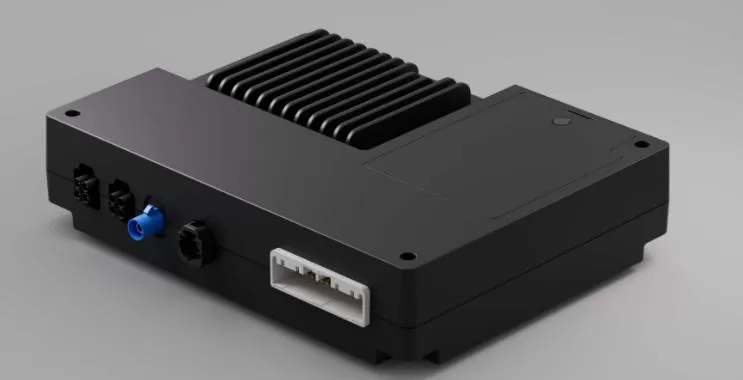
T-Box, short for Telematics Box, can be understood as the "networked communication brain" of an automobile. In intelligent vehicles, the T-Box is responsible for connecting the vehicle to the outside world. It transmits vehicle data to the cloud and receives background instructions via communication methods such as cellular networks and GPS. The vehicle location, remote unlocking, and vehicle status reminders you see on mobile apps are almost all dependent on the T-Box. Whether a vehicle is "online" often hinges on an unremarkable battery.
In recent years, national requirements for intelligent connected vehicles and driving safety have been continuously raised. A vehicle's ability to "connect to the network, be traceable, and respond" is no longer a bonus feature, but is gradually becoming a basic configuration.
In relevant regulations and standard systems, functions such as emergency call (eCall), remote monitoring, and data reporting have been clearly identified as important components of vehicle safety and compliance.
Against this backdrop, the T-Box is not only an intelligent configuration, but also a key node for policy compliance. The core focus of policies is not on whether a vehicle is "intelligent", but on its reliability in critical scenarios — whether communication can still be completed normally when the vehicle loses power, an accident occurs, or the system malfunctions.
This has directly driven the evolution of vehicle-mounted backup power supplies from "usable" to "must be reliable and stable for the long term". Therefore, in the T-Box system, which is highly concerned by policies, the safety, stability and predictability of batteries have become an important foundation for meeting regulatory requirements.

In intelligent vehicles, the T-Box is not a prominent component. It does not participate in driving or affect control, yet it runs through almost the entire life cycle of a vehicle from factory shipment and usage to accident response. Whether a vehicle can connect to the network, upload data, and locate and send a distress signal immediately after an accident largely depends on whether the T-Box can still function.
Precisely for this reason, the T-Box has a very special design requirement: even if the entire vehicle loses power, it cannot go offline immediately.
When the vehicle is turned off, the main power supply is abnormal, or even the high-voltage system is cut off in a severe collision, the T-Box still needs to complete positioning, communication and data reporting. This means that the T-Box must have an independent, reliable and long-term standby backup power supply system inside.
This backup battery is often far more important than one might imagine.
.webp "the-value-of-bpi-ni-mh-batteries-in-vehicle-mounted-communication-3.jpg")
From the perspective of usage logic, T-Box batteries do not pursue high energy density, but instead emphasize reliability and stability. They remain in a low-power standby state for a long time, yet need to release energy quickly at critical moments to complete positioning and communication.
.webp "the-value-of-bpi-ni-mh-batteries-in-vehicle-mounted-communication-4.jpg")
What makes it more complex is the environmental conditions. T-Boxes are usually installed inside the vehicle cabin or in relatively enclosed spaces. In winter, they may face low temperatures of minus 40 degrees Celsius, and in summer, the cabin temperature may approach 90 degrees Celsius under direct sunlight. Such application scenarios with a wide temperature range, long cycle and low fault tolerance place extremely high demands on battery technology.
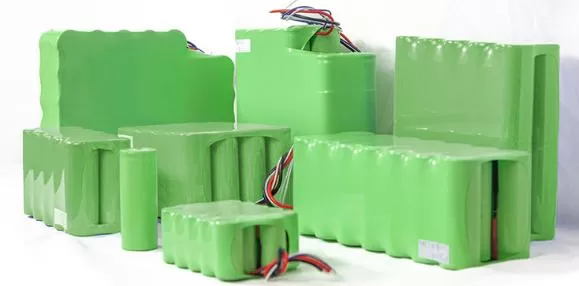
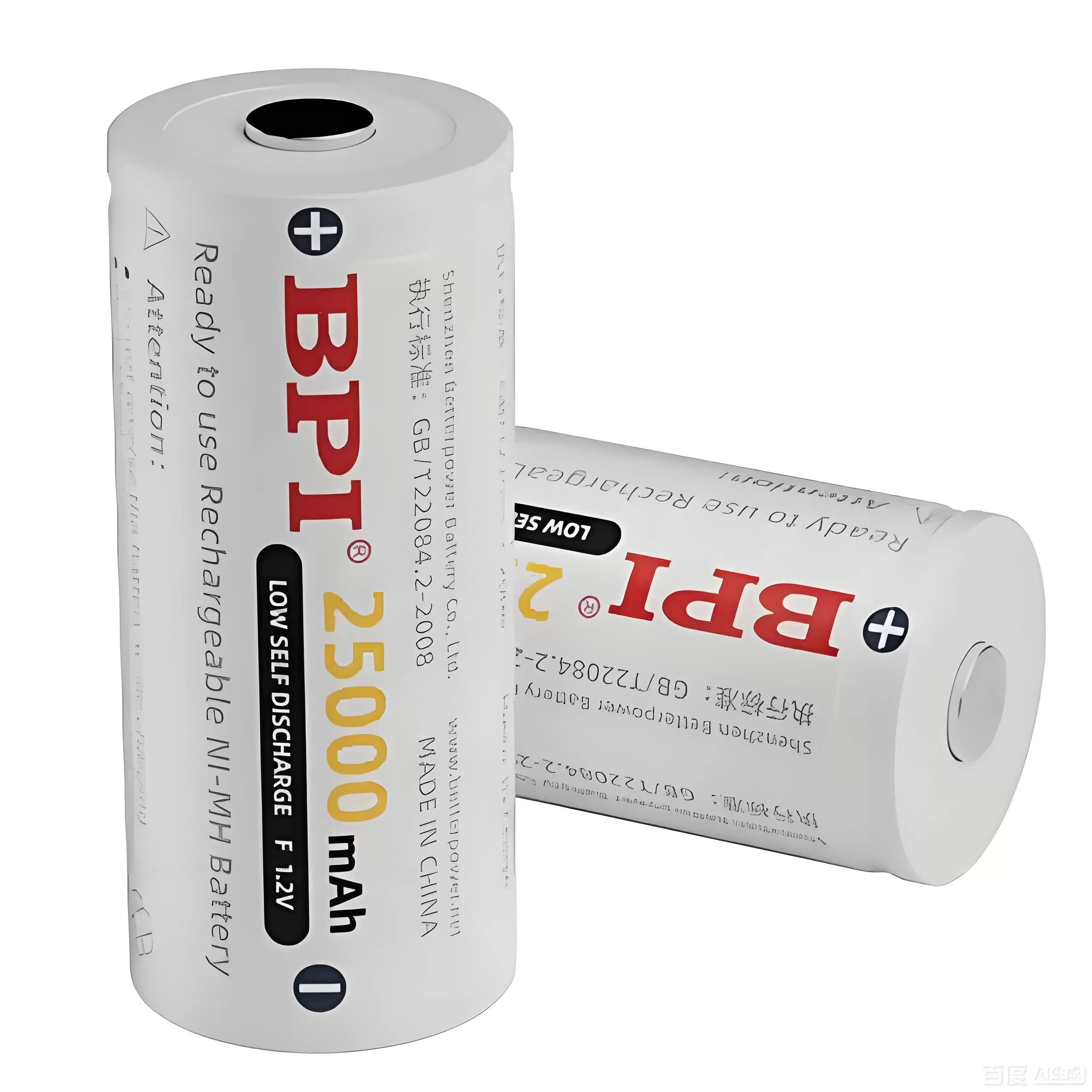
Among various battery technology routes, low self-discharge nickel-metal hydride (Ni-MH) batteries are still one of the mainstream solutions for T-Box backup power supplies, not because of "the age of the technology", but for their comprehensive reliability.
Ni-MH batteries have a good wide temperature adaptability, with relatively gentle performance changes in high and low temperature environments, making them suitable for long-term operation in vehicle-mounted environments. At the same time, their low self-discharge rate enables them to maintain sufficient power after long-term standby, ensuring the completion of critical communication tasks in power failure or accident scenarios.
More importantly, they feature excellent safety performance. Ni-MH batteries have a relatively mild failure mode under abnormal working conditions and good thermal stability, which is particularly crucial for automotive-grade systems that emphasize safety redundancy and long-term reliable operation.
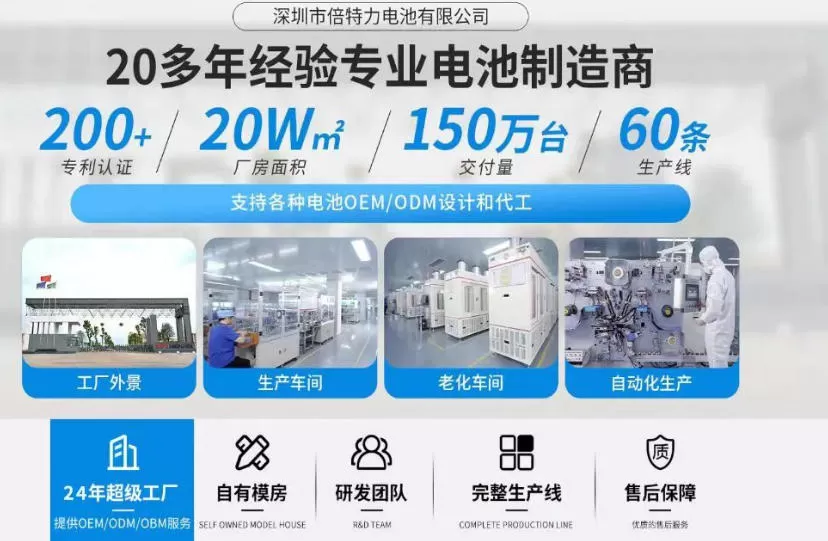
As a manufacturing enterprise with years of experience in the battery industry, BPI has formed a complete and mature product system in the field of Ni-MH batteries and accumulated rich experience in vehicle-mounted applications.
BPI's Ni-MH batteries cover multiple technical directions such as high rate, high voltage, low self-discharge, wide temperature and high safety, and can be combined and customized according to different vehicle-mounted application requirements. Among them, low self-discharge and wide temperature series products have been widely used in vehicle-mounted electronic systems with extremely high stability requirements.
In the product design stage, BPI is guided by vehicle-mounted applications, emphasizing consistency control, long-term reliability and safety redundancy, rather than simply pursuing capacity parameters.
In actual vehicle-mounted applications, T-Box batteries often need to go through a multi-year service cycle, undergoing repeated charging and discharging during this period without bulging, leakage or sudden performance changes.
This is one of the important reasons why BPI's Ni-MH batteries are recognized in the vehicle-mounted field.
Their stable output capability in wide temperature environments, low self-discharge characteristics and good safety performance enable them to meet the core demand of T-Box for backup power supplies — "always available and reliable for the long term".
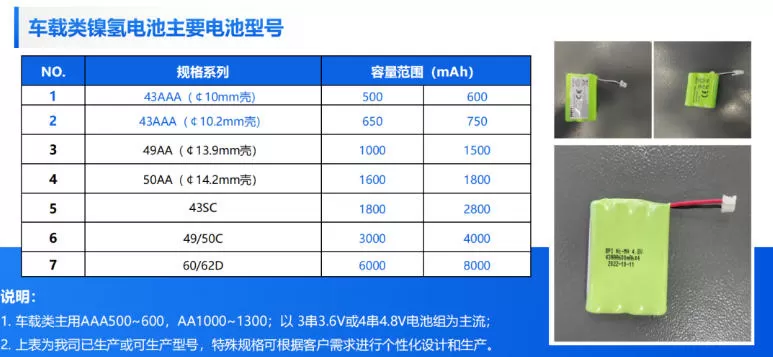
T-Boxes of different vehicle models and platforms have obvious differences in structural and spatial design. In response, BPI can provide a variety of Ni-MH battery specifications and battery pack solutions to meet different voltage, capacity and structural requirements, supporting customers in personalized design and matching.
From miniaturized solutions to high-capacity combined solutions, BPI's Ni-MH batteries can provide reliable backup power support for T-Boxes on the premise of ensuring safety and stability. Reliability is determined in the unseen places.
.webp "the-value-of-bpi-ni-mh-batteries-in-vehicle-mounted-communication-8.jpg")
In intelligent vehicle systems, the truly critical components are often not prominent. This is true for the T-Box, and equally so for the backup battery inside the T-Box.
Through stable, reliable and predictable performance, BPI's Ni-MH batteries continue to deliver value in these "unseen yet error-free" positions, providing a solid guarantee for vehicle-mounted communication systems.
In vehicle-mounted applications, batteries are never simple components, but an integral part of the overall vehicle quality system.
Especially in systems such as T-Box involving safety and communication, products must not only meet performance requirements, but also comply with strict automotive-grade quality management systems.
BPI has always taken automotive-grade standards as the basic criterion for product development and manufacturing, and strictly implements the whole-process control in accordance with the IATF 16949 quality management system. From R&D and design, raw material management, production and manufacturing to delivery inspection, the whole process is traceable and controllable.
This is exactly the value valued by vehicle-mounted customers — the product's performance changes are predictable, risks are controllable, and quality is guaranteed during the multi-year service cycle.
For this reason, BPI's Ni-MH batteries can be stably applied to vehicle-mounted electronic systems with extremely high reliability requirements, providing long-term and trustworthy backup power support for T-Boxes.